

30 July: the same message shared hundreds of times
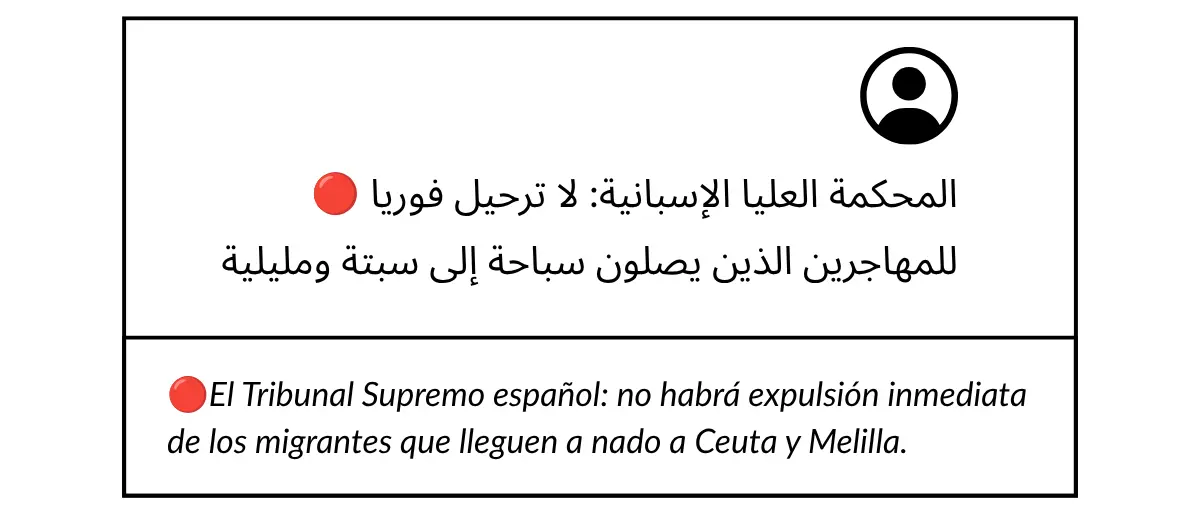
It was on 30 July that a total of 215 posts began circulating with exactly the same text: "The Spanish Supreme Court: there will be no immediate expulsion of migrants who reach Ceuta and Melilla by swimming."
The message was shared both by users with few followers and by profiles with more than 800,000 followers. Among the first to spread this chain was Youssef Belhaissi, a presenter on the Moroccan public broadcaster Al Aoula, who has a Facebook profile with over 1.3 million followers.
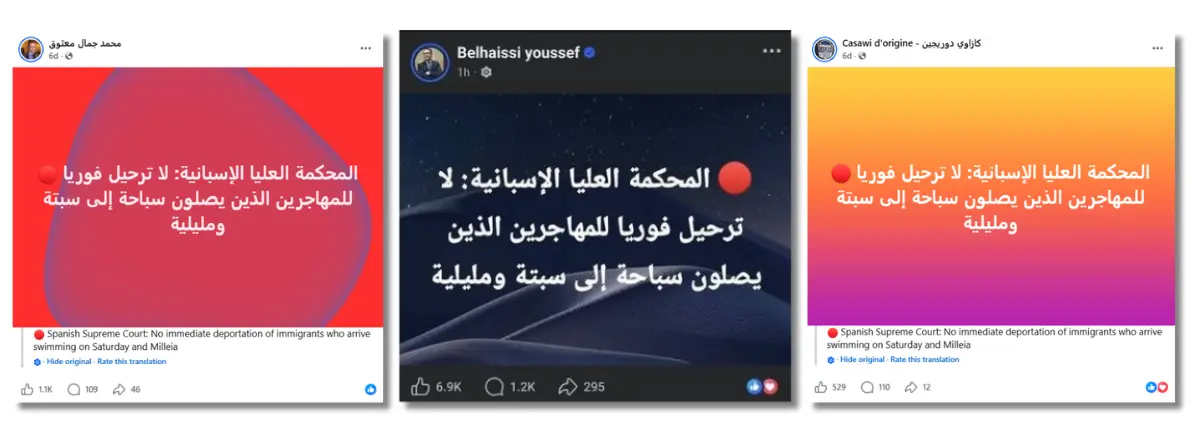
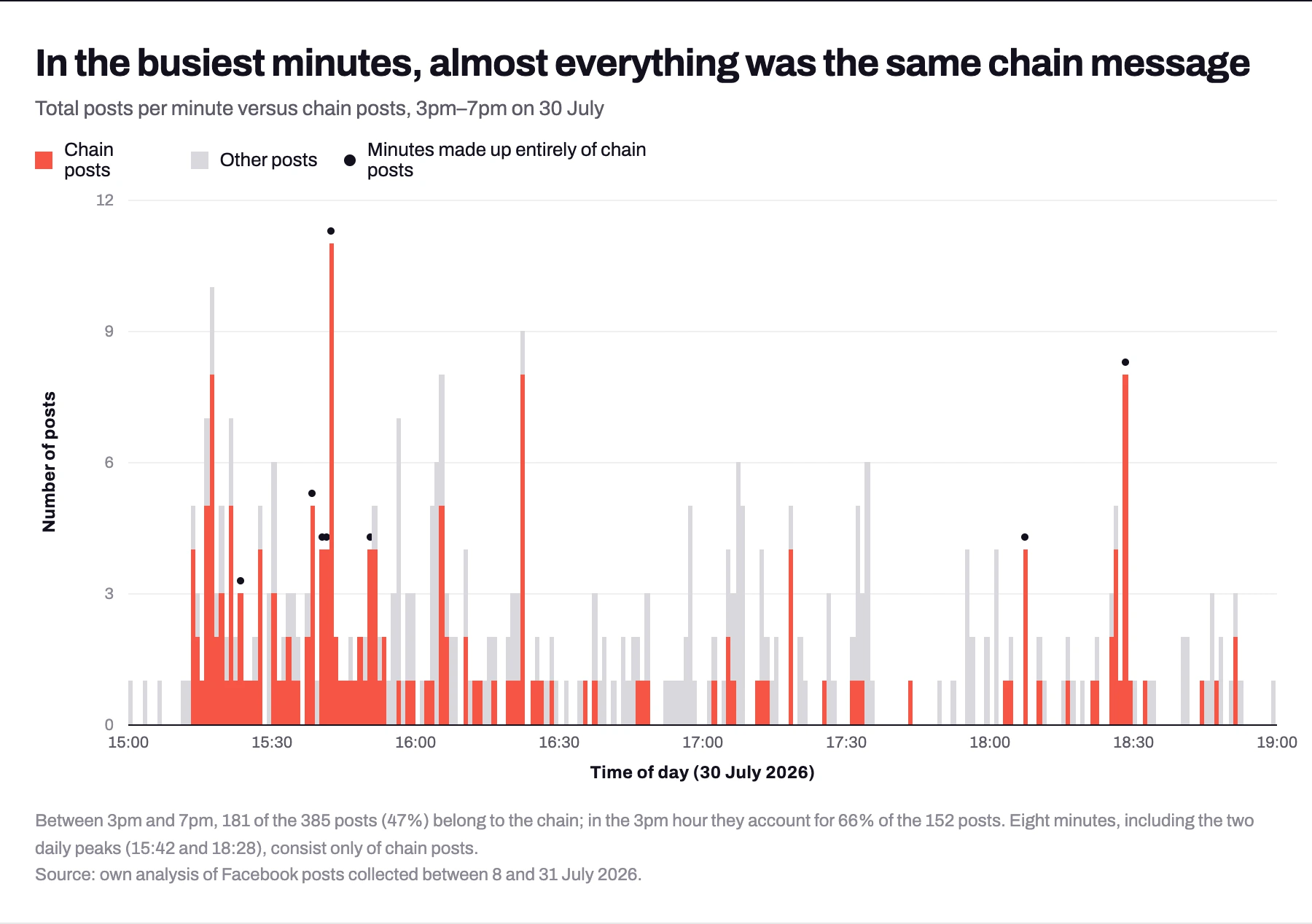
Some users posted this exact same message up to ten times within just a few minutes.
How the Spanish Supreme Court ruling appeared in the online conversation in Morocco
The ruling, issued on 29 June 2026, states that this type of "pushback" cannot be applied to people who reach Ceuta or Melilla by swimming, since they have not crossed any physical barrier. Instead, the authorities must initiate a return procedure within a maximum of 72 hours or order the temporary detention of the intercepted person.
After it became public, the first posts from profiles appearing to be media outlets led to more than 1,170 Arabic-language Facebook posts by hundreds of users mentioning both the ruling and the autonomous city of Ceuta.
Together, the analysed posts received more than 150,000 reactions and 14,000 comments. In addition to the volume of posts, more than 1,100 in just 23 days, there were more than 7,000 reposts, and the content was shared in more than 200 Facebook groups. Among them were several groups previously analysed by Maldita.es in which users organise crossings to Ceuta. These figures reflect the interest in sharing information about the Spanish Supreme Court ruling across these online networks.
Beyond Facebook, a few days after the ruling became public, many young people, most of them minors, also began sharing it on Instagram. Dozens of Moroccan users posted photos of themselves alongside screenshots of headlines about the ruling.

30 July: the day the conversation surged
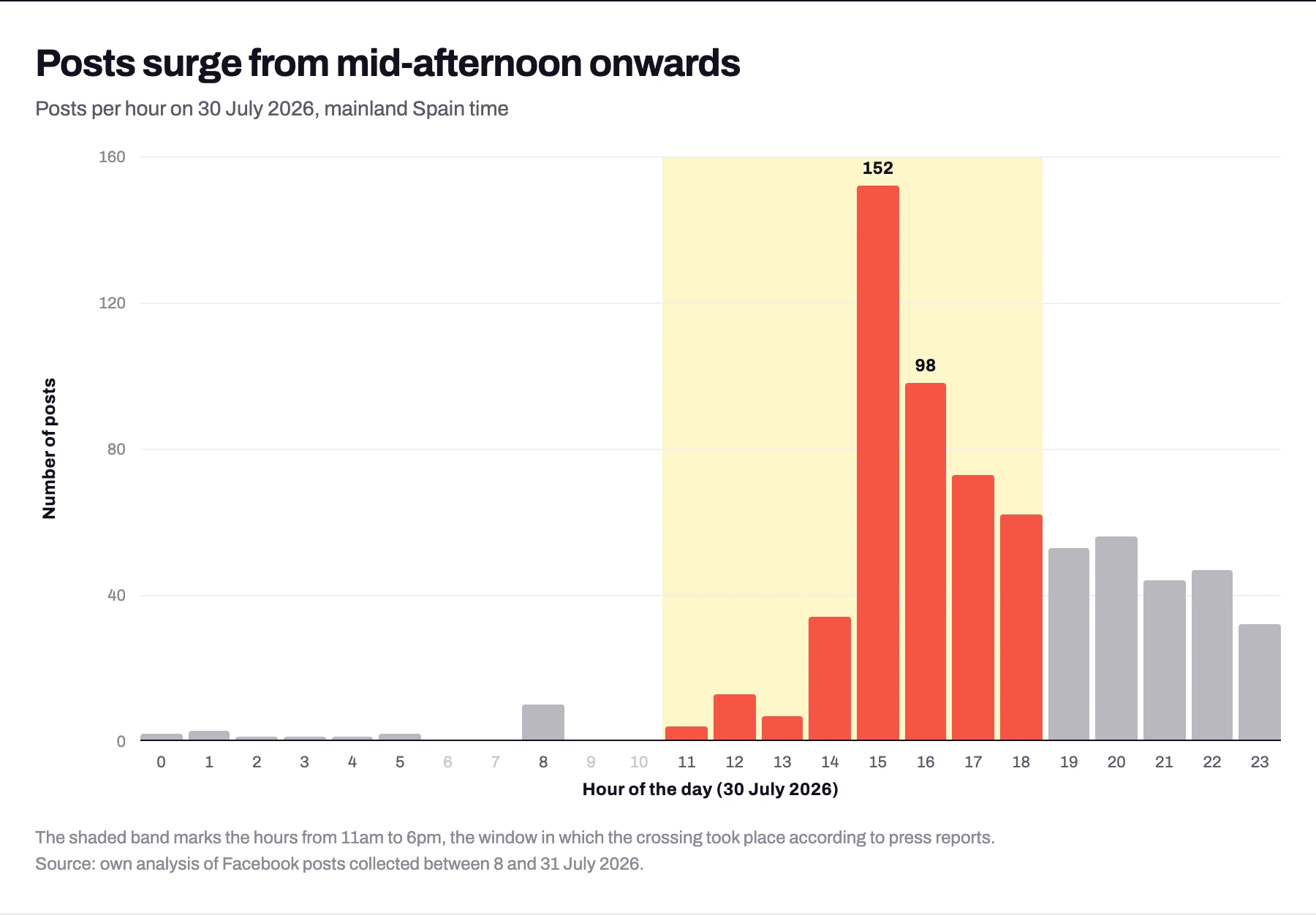
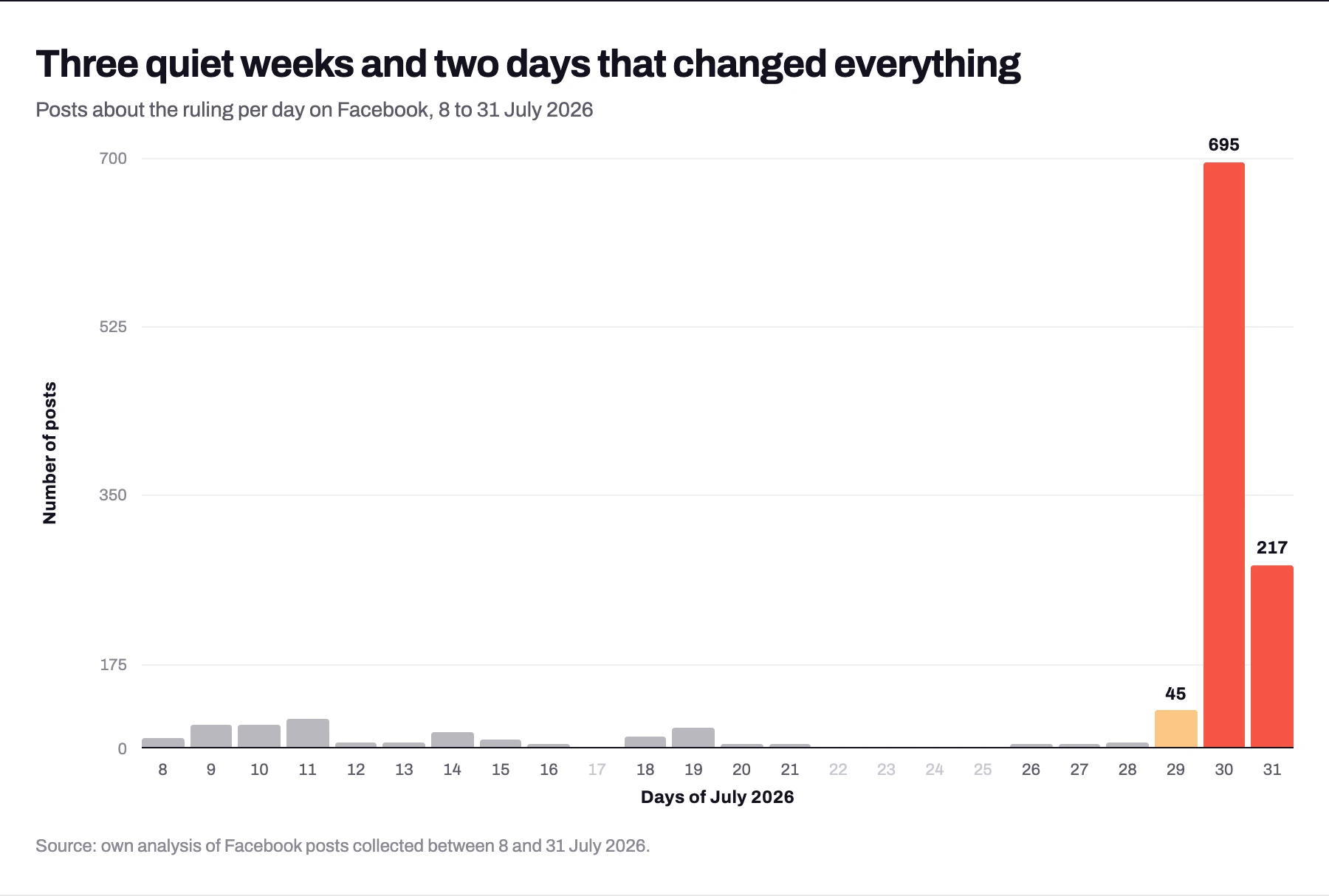
The discussion did not develop steadily over several weeks. Instead, it was concentrated in a flood of posts within just a few hours, coinciding with the arrival of thousands of migrants in Ceuta. Throughout Thursday, 30 July, the number of posts increased at the same time that people were crossing from Morocco.
That single day accounted for 60% of all posts and more than half of the total reach recorded during the 24-day period analysed: 695 posts on 30 July, compared with an average of ten posts per day during the previous three weeks.
In some cases, these posts appeared alongside profiles following the latest developments in Ceuta, which could have led readers to interpret the ruling as a response to that exceptional situation, when in fact it had been issued a month earlier.
A ruling simplified on social media becomes disinformation
Many posts omitted an essential part of the ruling: the return procedure that must be followed after a person is intercepted. Comments on these posts included messages such as, "Anyone who reaches Ceuta by swimming proves they are a strong person who can be relied upon to help build the country in the future," "because it needs labour," and "Spain needs cheap labour," suggesting that those who managed to reach Spain were guaranteed to remain there.
However, the ruling does not authorise migrants who cross irregularly to remain in Spain. It only clarifies the legal procedure that must be followed when these people are intercepted.

Three weeks of limited circulation
The Facebook analysis shows that, after an initial wave of coverage beginning on 8 July from profiles appearing to be media outlets, mentions of the ruling circulated with very little impact until 28 July.
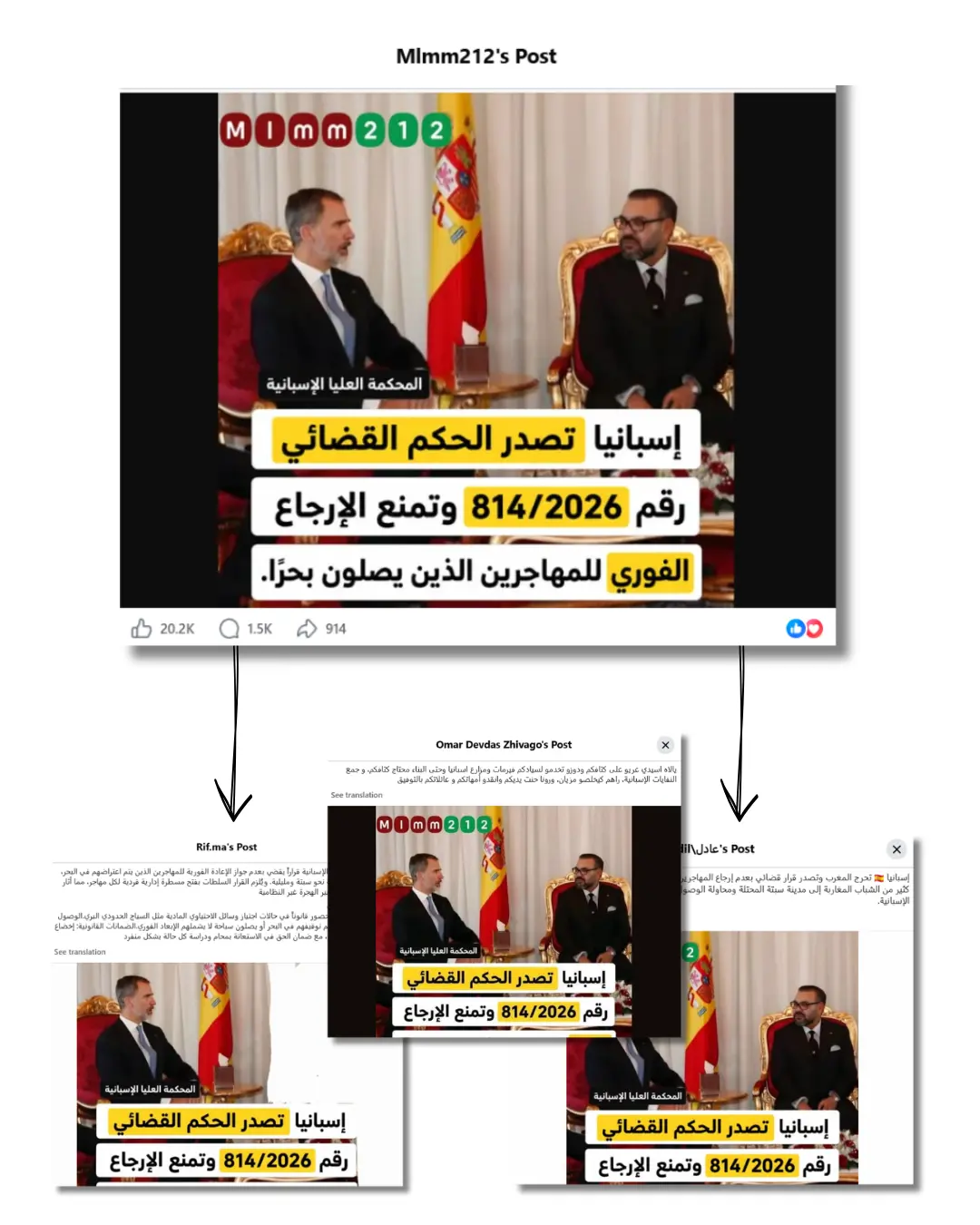
On 29 July, the post with the highest engagement in our sample was published, receiving 20,200 reactions and 914 reposts. Users in Morocco left comments such as, "Well then, I'm leaving the country too," and "This news brings great joy to hearts that have suffered. We sincerely wish them every success and good luck." The post included an image featuring the ruling's headline, which was subsequently shared at least another 100 times by different users.
727 users promoted the Supreme Court’s ruling
A total of 727 unique users published the 1,171 posts analysed, including media outlets, high-profile accounts, influencers and many users with smaller followings.
Alongside the simplified messages that circulated throughout the month, the conversation also evolved. The earliest posts in our sample appeared alongside links to news articles analysing the ruling's consequences and reporting on the reactions it had prompted in Spain.
Later, posts emerged suggesting that the ruling may have been one of the factors encouraging Moroccan citizens to attempt to swim to Ceuta, particularly after 6 p.m. on 30 July, after Spain's Ministry of the Interior stated that migrant smuggling networks may have exploited the circulation of this information.
For this article, we collaborated with AFCN (Arab Fact-Checking Network), who belongs to the Arab Reporters of Investigative Journalism (ARIJ) organization.
*7/8/2026: After reviewing the profile of journalist Youssef Belhaissi, we verified that his post has not been deleted and remains available, so we have removed that mention.