
{{t.avisoContenido}}
[EN PENDIENTE] {{x.txt}}

Durante 35 días, el equipo de Maldita.es ha recorrido la plataforma como lo haría un pederasta: ha entrenado su algoritmo, ha usado su buscador, ha entrado en directos hechos por menores y ha seguido a los vendedores de material de abuso sexual infantil hasta Telegram y Zangi. El resultado muestra que el abuso no se esconde en un rincón, sino que se apoya en las propias herramientas de TikTok. Son el propio buscador de TikTok y sus algoritmos de recomendación los que te llevan a material explícito de abuso sexual infantil, en sus directos es común acosar a menores en sus casas y en sus colegios, y las monedas y regalos de la plataforma convierten ese acoso en negocio, también para TikTok. La investigación documenta redes que alcanzan a España, Latinoamérica, el resto de Europa y el sudeste asiático, y evidencia el fracaso de los sistemas de protección de TikTok incluso cuando se les avisa directamente de que el contenido existe. La conclusión es que TikTok no actúa, y eso cuestiona que cumpla las leyes. Por eso Maldita.es ha denunciado todas las pruebas ante la Fiscalía de Criminalidad Informática española.
For 35 days, the Maldita.es team navigated the platform as a predator would: training its algorithm, using its search engine, joining livestreams hosted by minors and following sellers of child sexual abuse material to Telegram and Zangi. The findings show that the abuse is not hidden away in some dark corner, but relies on TikTok’s own tools. It is TikTok’s own search engine and recommendation algorithms that lead users to explicit child sexual abuse material; harassing children in their homes and schools is commonplace on its livestreams; and the platform’s coins and gifts convert that harassment into business gains, including for TikTok. The investigation documents networks that reach Spain, Latin America, the rest of Europe and Southeast Asia, and exposes the failure of TikTok’s protection systems, even when they are directly alerted that the content exists. The conclusion is that TikTok does not act, and this calls into question whether it complies with the law. That is why Maldita.es has submitted all the evidence to the Office of the Public Prosecutor for Cyber Crimes in Spain.
[TÍTULO DE EJEMPLO] La investigación completa [TÍTULO DE EJEMPLO] The full investigation
[TEXTO PENDIENTE: resumen de redacción]
{{t.esencial}}
- [TEXTO PENDIENTE]
- [TEXTO PENDIENTE]
- [TEXTO PENDIENTE]
- [TEXTO PENDIENTE]
{{dia1.fechaTxt}}
En solo 35 días, hemos encontrado más de 200 perfiles que publicaban abiertamente imágenes explícitas de abuso sexual infantil, accesibles para cualquier usuario de TikTok.
In just 35 days, we found more than 200 profiles openly posting explicit images of child sexual abuse, accessible to any TikTok user.

No están escondidas.
Son evidentes.
Incluso son la imagen de perfil de los pederastas.
They are not hidden.
They are in plain sight.
Some are even used as predators’ profile pictures.
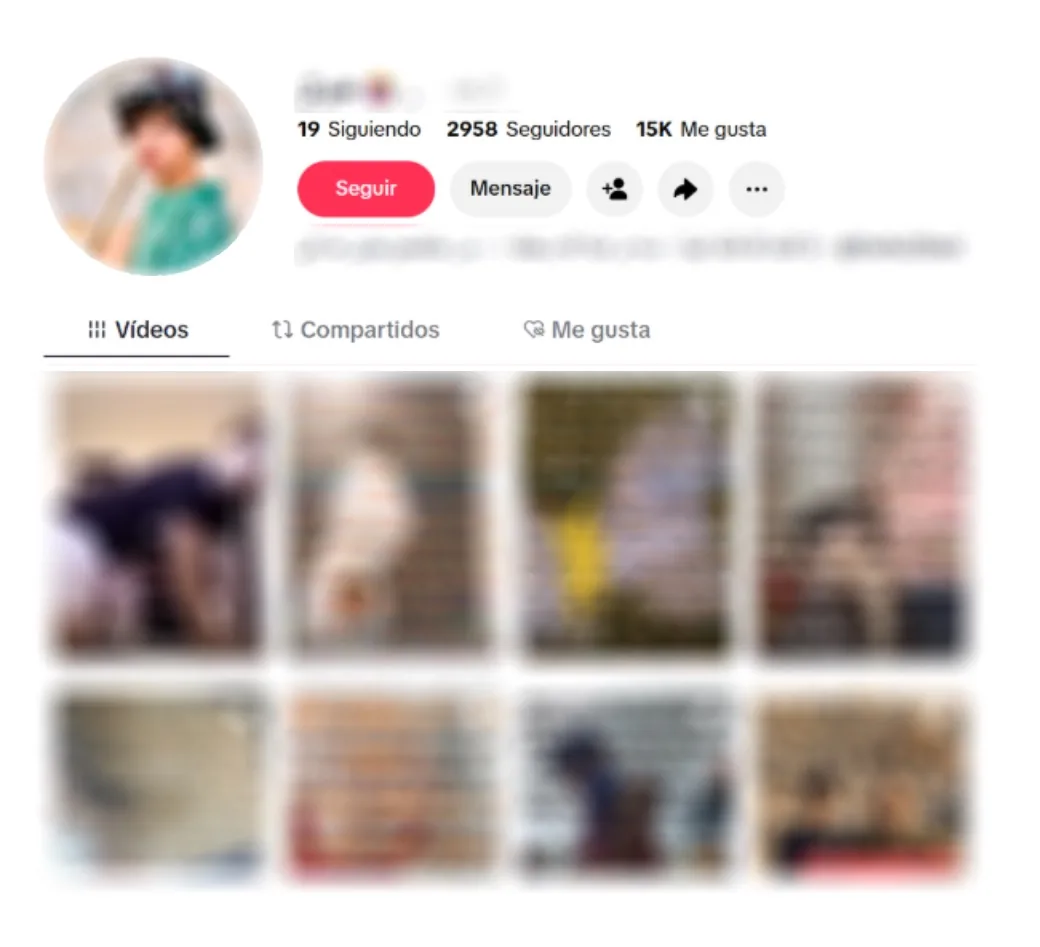
Algunas llevan publicadas desde mayo de este año sin que TikTok haga nada. Las comparten 200 perfiles pero las ven millones de usuarios en todo el mundo.
Some have been online since May this year without TikTok doing anything about it. They have been shared by 200 profiles but seen by millions of users around the world.
La plataforma en la que más horas pasan al día los menores en todo el mundo se convierte en un catálogo del horror donde pederastas pueden elegir la perversión que desean consumir cada día. Todo es delito, pero TikTok permite que esas imágenes de niños siendo abusados sexualmente estén publicadas en su servicio. En 35 días hemos encontrado miles de imágenes de niños siendo abusados; de niños con adultos en la ducha, en la cama; fotos de menores con restos de semen en la cara; niños con los ojos vendados; niños esposados...
The platform where children around the world spend the most hours a day has become a catalogue of horror where predators can choose the depravity they want to consume each day. All of it is a crime, but TikTok allows these images of children being sexually abused to remain on its service. In 35 days, we found thousands of images of children being abused: children with adults in the shower, in bed; photos of minors with traces of semen on their faces; blindfolded children; handcuffed children...

{{t.esencial}}
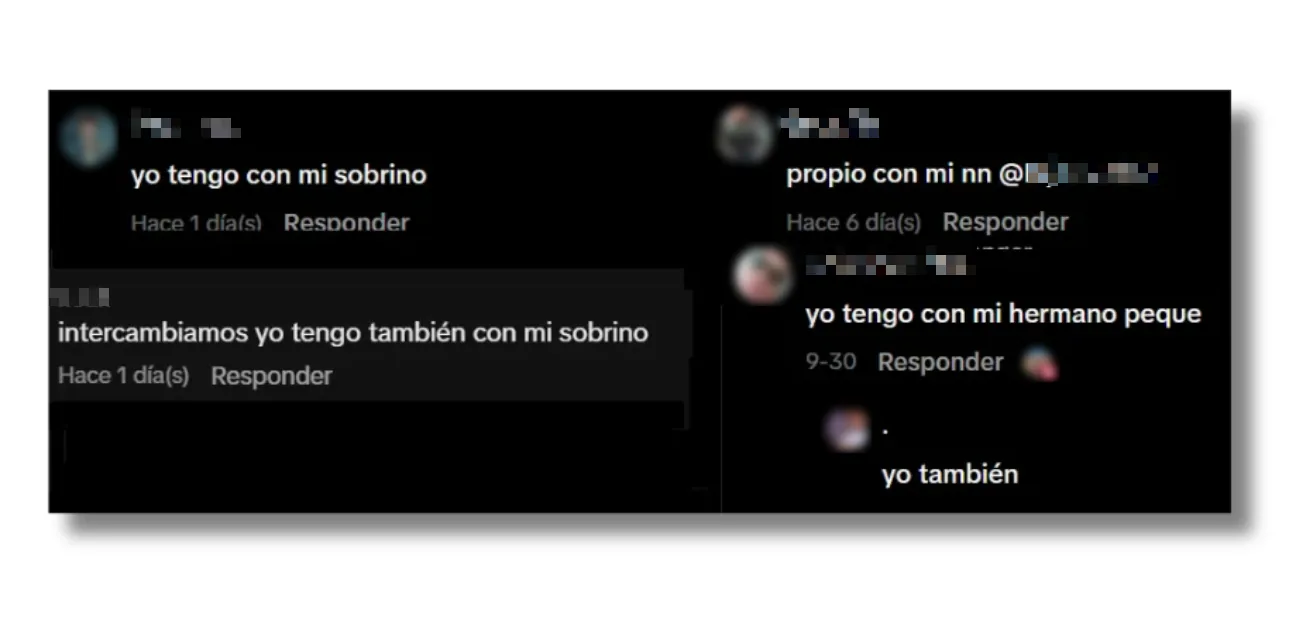
No se esconden: presumen en público de tener material de abuso sexual infantil. They do not hide: they boast in public about having child sexual abuse material. Algunos aseguran que abusan de sus propios hijos, hermanos o sobrinos. Some claim to abuse their own children, siblings or nephews and nieces. En España, cada día hay niñas acosadas sexualmente en directos que TikTok supuestamente les prohíbe hacer. In Spain, girls are sexually harassed every day in livestreams that TikTok supposedly bans them from hosting.
{{t.politicas}} [EN PENDIENTE] {{p.titulo}}{{dia1.fechaTxt}}
{{dia2.fechaTxt}}
Se supone que los menores de 18 años no pueden hacer directos en TikTok.
Children under the age of 18 are not supposed to go live on TikTok.
Pero los hacen a diario en todo el mundo. Y los pederastas se conectan para mirar y comentar. Y ahí, en la plataforma en la que los niños más horas pasan al día, estos adultos les hacen peticiones de carácter sexual a cambio de regalos de TikTok que se compran con dinero real.
But they do, every day, all over the world. And predators log on to watch and comment. On the platform where children spend the most hours each day, these adults make sexual requests of them in exchange for TikTok gifts that are bought with real money.
Y mientras, TikTok gana dinero con ello.
And all the while, TikTok profits from it.
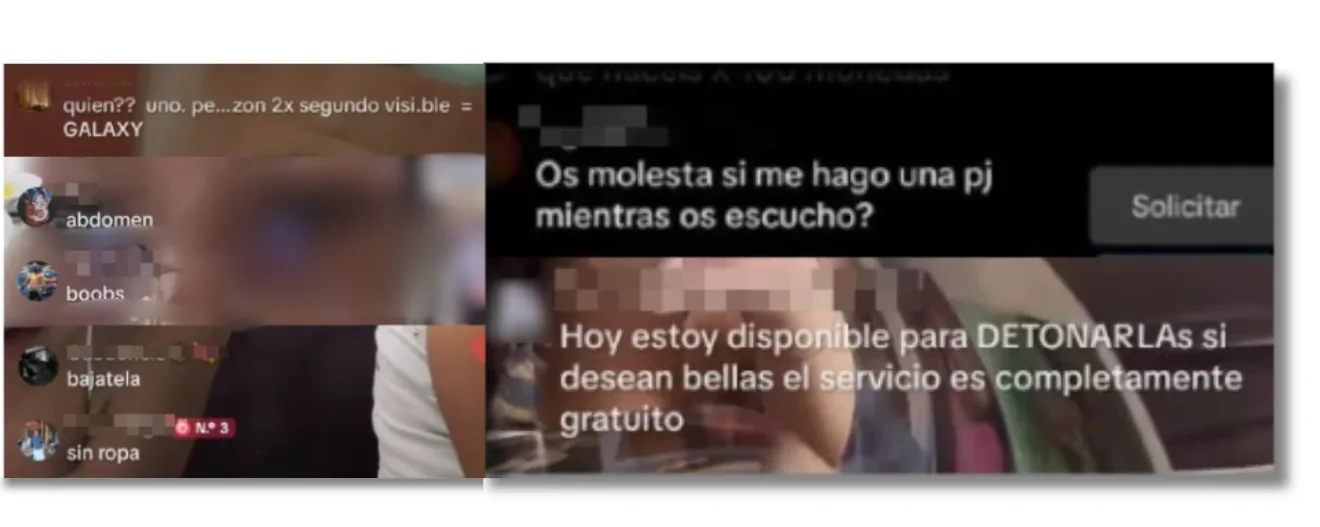
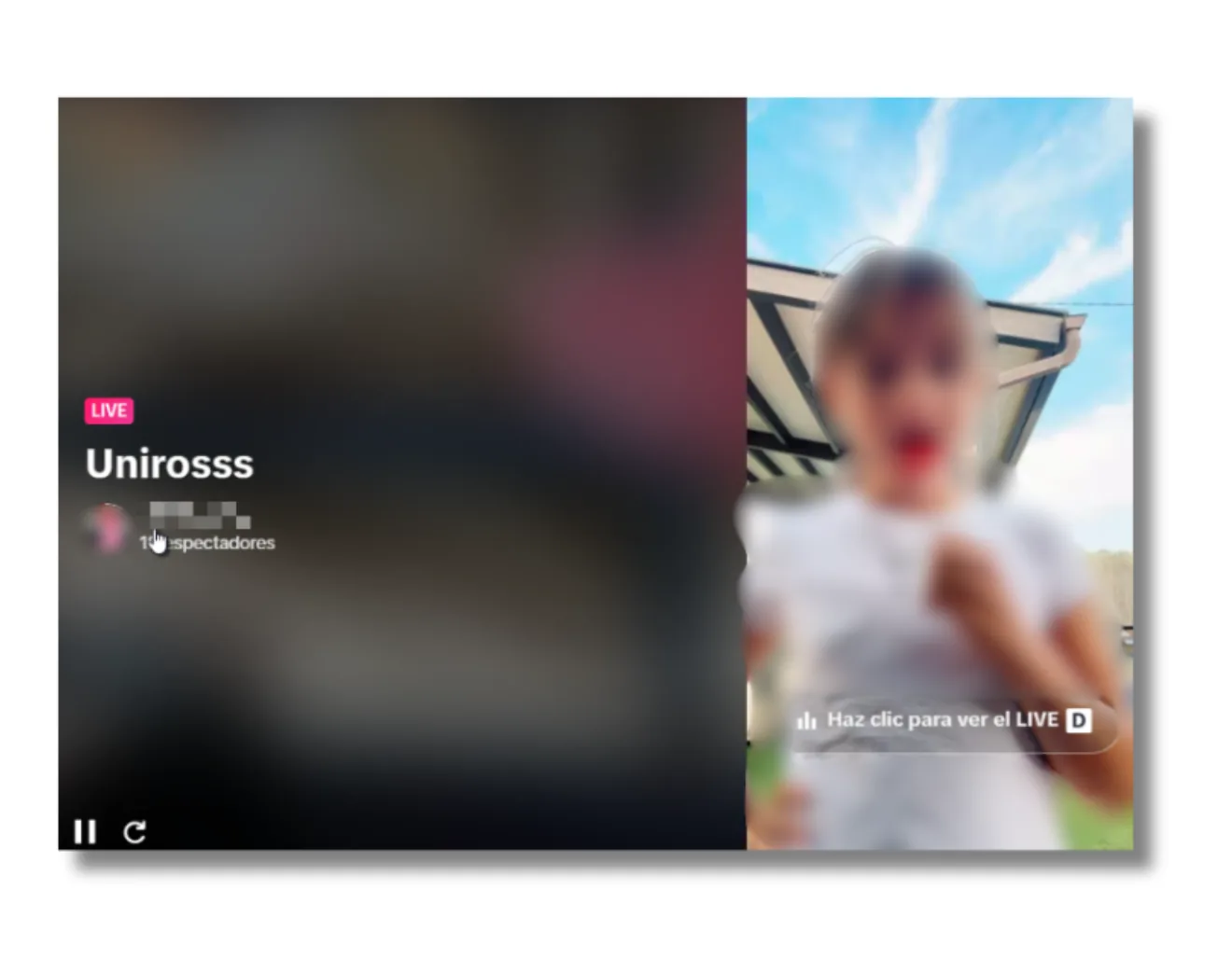
TikTok no sólo se queda con un porcentaje de los regalos de los pederastas mientras permite a los menores hacer estos directos, sino que también los promociona:
TikTok not only takes a percentage of the gifts sent by predators while allowing minors to host these livestreams, but it also promotes them:
TikTok esto ya lo sabe: un informe interno de la plataforma de enero de 2022 documentaba 112.000 directos cuyos protagonistas eran menores de entre 13 y 15 años. Cuatro años después, siguen ocurriendo a diario.
TikTok already knows this: an internal report by the platform from January 2022 documented 112,000 livestreams hosted by minors aged between 13 and 15. Four years later, they are still happening every day.
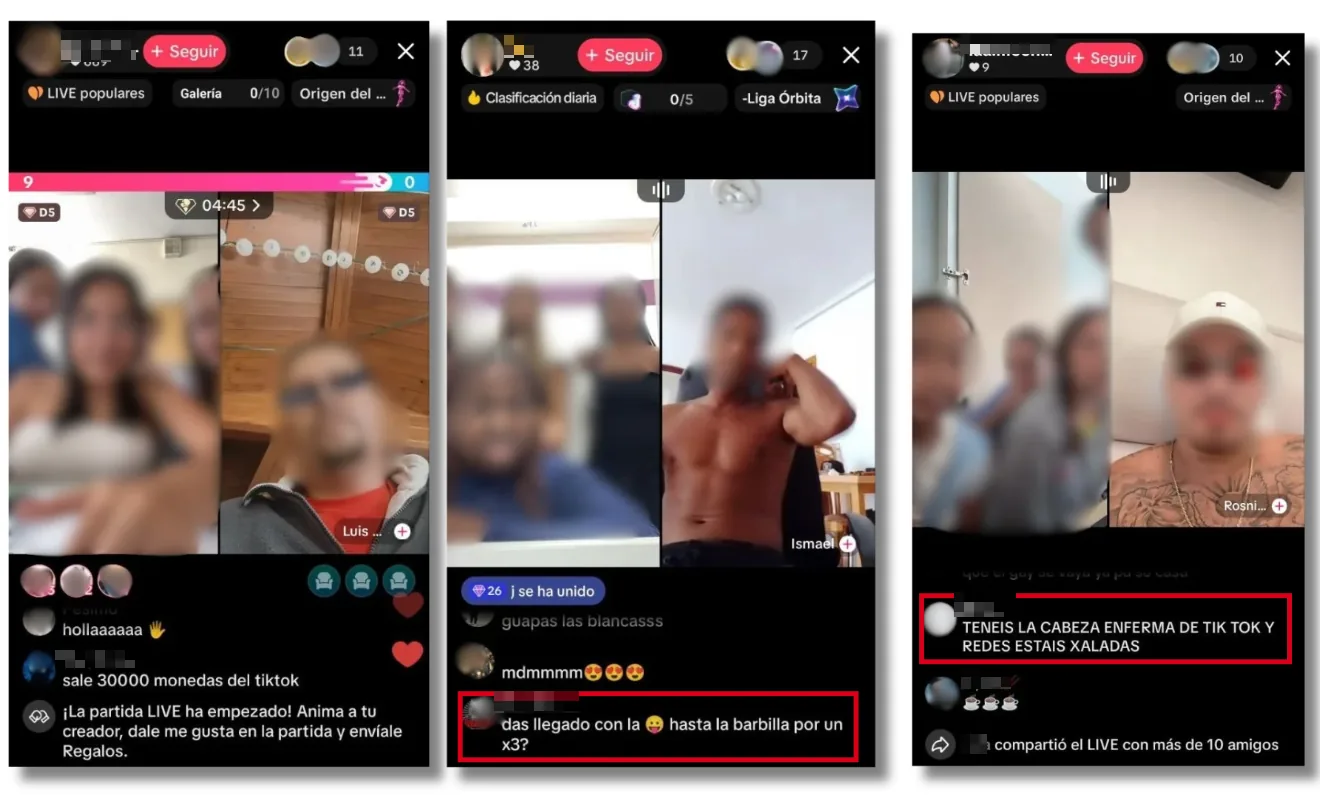
En España, Maldita.es ha documentado cómo tus hijas y sobrinas están haciendo directos desde el colegio, en horario escolar, y cómo hombres adultos semidesnudos entran en esos directos a acosarlas:
In Spain, Maldita.es has documented how your daughters and nieces are livestreaming from school, during school hours, and how half-naked adult men join those livestreams to harass them:
{{t.politicas}} [EN PENDIENTE] {{p.titulo}}{{dia2.fechaTxt}}
{{dia3.fechaTxt}}
Esta investigación ha sido posible gracias a TikTok.
This investigation was made possible by TikTok.
Su buscador nos ha permitido encontrar material de abuso sexual infantil con facilidad. A diferencia de otras redes sociales, como Instagram o Facebook, en TikTok sí se permiten las búsquedas con términos explícitos y ampliamente conocidos en los entornos donde se comparte y comercializa este material.
Its search engine allowed us to find child sexual abuse material with ease. Unlike other social media platforms, such as Instagram or Facebook, TikTok does allow searches using explicit terms that are widely recognised in the circles where such material is shared and traded.
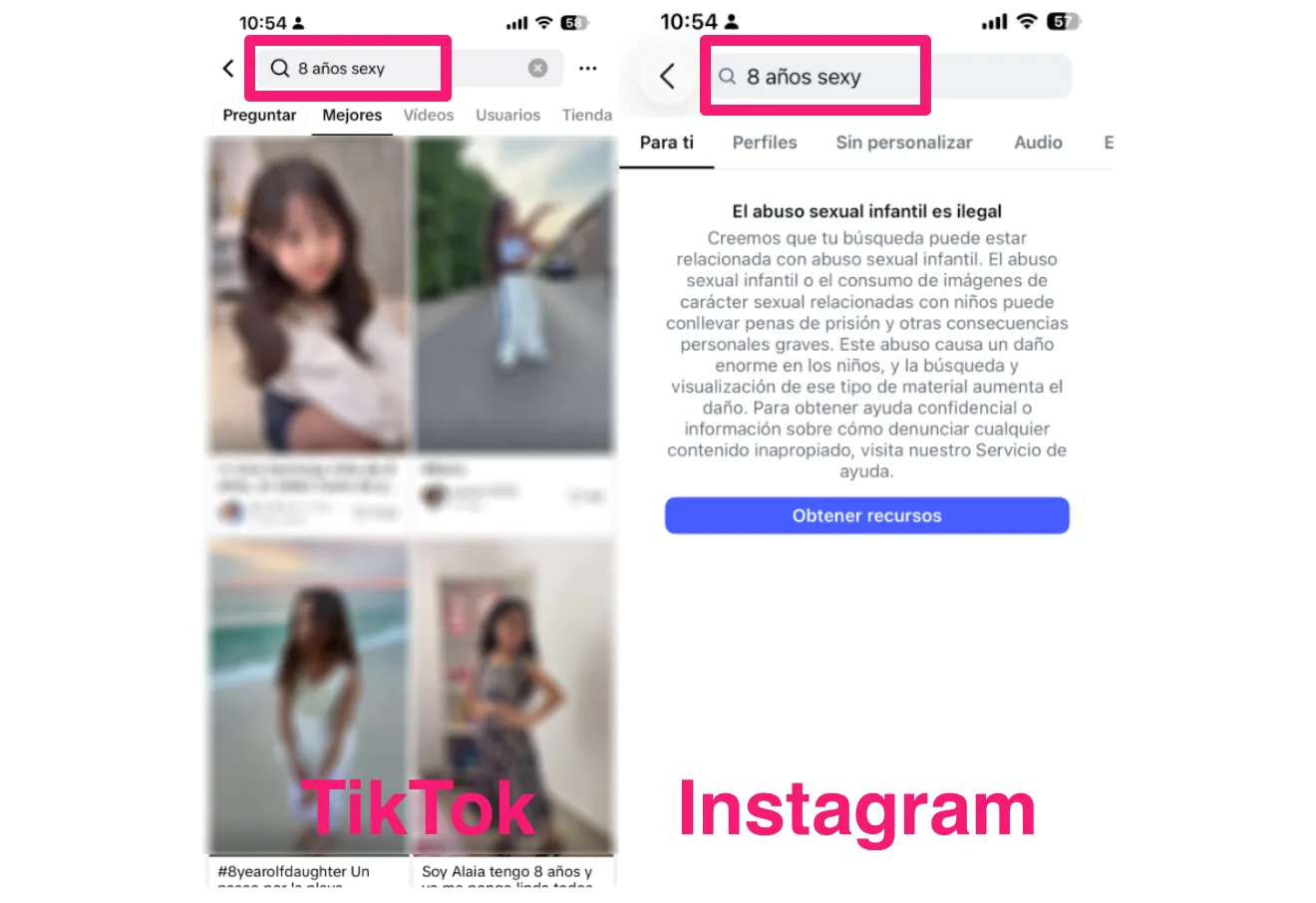
Por ejemplo, ¿qué pasa cuando buscas “8 años sexy”?
For example, what happens when you search for ‘sexy 8-year-old’?
En Instagram te alerta de que puedes estar buscando algo ilegal. En TikTok, te devuelve niñas.
Instagram warns you that you may be searching for something illegal. TikTok gives you girls.
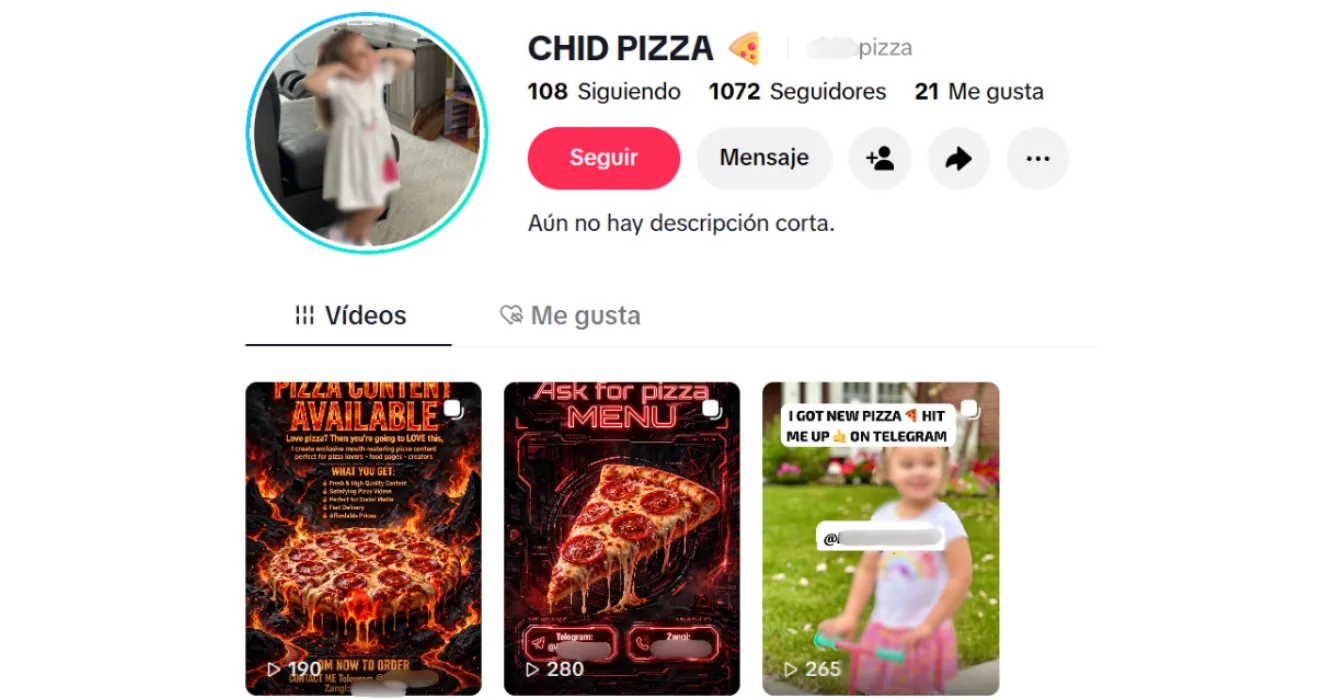
CP son las siglas de Child Pornography (en español, pornografía infantil) y, para intentar saltarse los sistemas de moderación de las plataformas, los pederastas hacen variaciones de las mismas. La más recurrente y la más conocida es ‘Cheese Pizza’, con su abreviatura de uso “pizza” a secas, junto con el emoji 🍕.
CP stands for Child Pornography and, in an attempt to get around the platforms’ moderation systems, predators come up with variations on it. The most common and best known is ‘Cheese Pizza’, often shortened to just ‘pizza’, along with the 🍕 emoji.
Este término no lo filtra ni el buscador de TikTok, ni sus sistemas de moderación: Maldita.es ha localizado 1.017 perfiles que incluyen la palabra “pizza”, 🍕 o derivadas en algún elemento de su perfil o contenido. En algunos casos aparece varias veces:
Neither TikTok’s search engine nor its moderation systems filter out this term: Maldita.es has found 1,017 profiles that include the word ‘pizza’, 🍕 or variations of it somewhere in their profile or content. In some cases, it appears several times:
Además del buscador, en esta investigación también nos ha ayudado el algoritmo de TikTok. Después de 35 días de investigación, TikTok parece haber llegado a una conclusión sobre nuestra cuenta: queremos consumir contenido sexual de menores. Así que actúa en consecuencia.
As well as the search engine, TikTok’s algorithm has also helped us in this investigation. After 35 days of investigation, TikTok appears to have reached a conclusion about our account: we want to consume sexual content involving minors. So it acts accordingly.
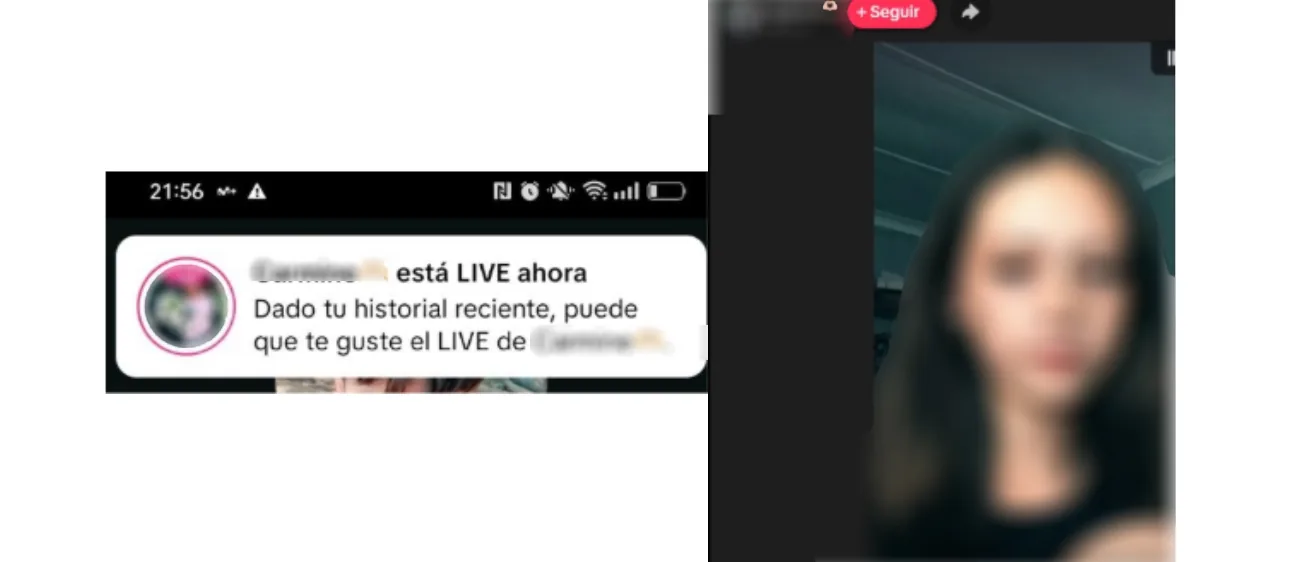
Nos muestra masivamente cuentas que venden material de abuso sexual infantil en el “Para ti”, nos recomienda seguirlas, nos permite mantener conversaciones privadas con sus responsables y empieza a sugerirnos directos protagonizados por niñas.
It shows us a massive number of accounts selling child sexual abuse material in the “For You” feed, recommends that we follow them, allows us to have private conversations with those running them, and starts suggesting livestreams featuring young girls.

Y, pese a todas estas señales, TikTok no parece detectar nada sospechoso en nuestra actividad.
And despite all these warning signs, TikTok does not seem to detect anything suspicious in our activity.
Por último, los sistemas de recomendación de TikTok nos han llevado hasta una comunidad de 2.000 perfiles que siguen y veneran a un violador de bebés que está en la cárcel. Se hacen llamar ‘Team 94’ y uno de sus seguidores ha llegado a retransmitir en directo en TikTok uno de los vídeos de las violaciones cometidas por su particular “Charles Manson”.
Finally, TikTok’s recommendation systems led us to a community of 2,000 profiles that follow and idolise a man jailed for raping babies. They call themselves ‘Team 94’, and one of his followers even livestreamed on TikTok one of the videos of the rapes committed by their very own “Charles Manson”.
{{t.politicas}} [EN PENDIENTE] {{p.titulo}}{{dia3.fechaTxt}}
{{dia4.fechaTxt}}
El problema va más allá de 1.000 vídeos de contenido de abuso sexual infantil en TikTok: es un problema sistémico.
The problem goes beyond 1,000 videos of child sexual abuse content on TikTok: it is a systemic problem.
Hemos identificado 26.000 cuentas de pederastas que utilizan la plataforma para cambiar, comprar y vender material de abuso de menores; y acosar a niñas y adolescentes en directo. Y no se esconden.
We have identified 26,000 predator accounts that use the platform to exchange, buy and sell child sexual abuse material, and to harass girls and teenagers on livestreams. And they are not hiding.
Entre esos 26.000, hay más de 1.000 usuarios que en la propia plataforma muestran contenido de abuso sexual no explícito (desde ‘frames’ de vídeos de abuso al menú completo de lo que venden) y además facilitan un mecanismo para conseguir su material vía Telegram y Zangi principalmente. Sólo esos 1.000 perfiles acumulan 6 millones de seguidores.
Among those 26,000, more than 1,000 users display non-explicit sexual abuse content on the platform itself (from stills of abuse videos to the full menu of what they sell) and also provide a way to obtain their material, mainly via Telegram and Zangi. Those 1,000 profiles alone have 6 million followers between them.
El sistema de moderación de TikTok es tan ineficaz que palabras clave conocidas por cualquiera que se dedique a monitorizar estos temas (como pizza, 🍕, caldito de pollo o VGK, ‘video gay kid’) se repiten una y otra vez en comentarios de vídeos e imágenes e incluso en los nombres de las cuentas de los pederastas y sus descripciones.
TikTok’s moderation system is so ineffective that keywords known to anyone who monitors these issues (such as pizza, 🍕, ‘caldito de pollo’ or VGK, ‘video gay kid’) appear again and again in comments on videos and images, and even in the names and bios of predators’ accounts.
{{t.politicas}} [EN PENDIENTE] {{p.titulo}}{{dia4.fechaTxt}}
{{dia5.fechaTxt}}
[TEXTO PENDIENTE]
[TEXTO PENDIENTE]
[TEXTO PENDIENTE]
{{t.politicas}} [EN PENDIENTE] {{p.titulo}}{{dia5.fechaTxt}}
{{imp.medTit}}
1 {{imp.de}} {{imp.nMedios}}
Esta es, con mucha diferencia, la investigación más difícil que ha hecho Maldita.es hasta la fecha. Lo es no sólo por la cantidad ingente de datos analizados, sino sobre todo por la naturaleza de los mismos. Cuando se habla de abuso sexual infantil, el cerebro humano automáticamente genera un mecanismo de autoprotección que nos impide siquiera imaginar a qué nos estamos refiriendo por la dureza y el horror del contenido.
Una parte del equipo de Maldita.es ha tenido que ver esas imágenes, más de 1.000, además de leer una y otra vez, hasta 25.000 veces, comentarios de perfiles de adultos que, en una plataforma abierta, piden intercambiar fotos de niños explícitamente sexuales, alardean de abusar de niños a su cargo o expresan sin tapujos lo que les gustaría hacerle a niñas que podrían ser nuestras hijas o sobrinas. Cuando has visto y oído la retransmisión de la violación a un bebé tardas meses en sacártela de la cabeza. Es insoportable.
Esta es la tercera investigación que hacemos sobre las ilegalidades contra menores que se cometen en TikTok, a ojos de cualquiera, sin que la plataforma haya mejorado sus mecanismos para impedirlo a pesar de nuestras repetidas alertas. Por eso, en esta investigación, mostramos una parte de ese horror. Creemos que es necesario que quien lo lea, tú, desautomatices la mirada al pasar por el término “material de abuso sexual infantil”.
Hemos tenido muchos debates dentro de la redacción sobre qué y cómo enseñarlo. Sobre hasta qué punto enseñar y sobre los efectos que mostrar según qué términos e imágenes pueden tener en el lector y en el impacto de esta investigación. Nuestra conclusión es que para materializar el horror de lo que ocurre en la plataforma que más horas al día utilizan los menores de todo el mundo hace falta que veas al menos una parte.
Con una clara línea roja: no reproducimos ningún abuso sexual infantil sin emborronar y anonimizar totalmente a esos menores. Todos los nombres de los menores que aparecen en esta investigación son inventados y no compartimos ningún dato personal que permita su identificación. Puedes elegir ocultar todas las imágenes en la parte inferior de la pantalla en todo momento.
Tampoco desvelamos términos pederastas de búsqueda de material de abuso sexual infantil que no son plenamente conocidos por los expertos en esta materia: no le estamos facilitando el camino a los pederastas que buscan consumir este tipo de imágenes en TikTok. Ellos ya saben cómo encontrarlos y TikTok les ayuda con su algoritmo y su buscador.
Hemos tomado la decisión de no desvelar públicamente los nombres de los 26.000 pederastas identificados en TikTok: nuestra primera misión es evidenciar el fallo sistémico de la plataforma a la hora de impedir que los pederastas campen a sus anchas. Lo que sí hemos hecho es poner toda la información en manos de las autoridades.
Toda la información recopilada en esta investigación ha sido denunciada ante la Fiscalía de Criminalidad Informática de España. Como ya te hemos contado en ocasiones anteriores, nuestras investigaciones van más allá de lo meramente periodístico: documentamos cada una de las evidencias con el fin de que pueda utilizarse en un proceso judicial. Además, esta investigación cuenta con una revisión legal completa llevada a cabo por nuestros abogados.
Por último, esta investigación ha puesto a parte del equipo en una situación vulnerable de salud mental. Como sabíamos que esto podía pasar, desde antes de empezar a investigar hemos trabajado con un equipo psicológico en sesiones tanto colectivas como individuales y hemos utilizado la inteligencia artificial para evitar tener que revisitar una y otra vez los contenidos detectados a la hora de extraer información. Aun así, esta es una investigación que nos va a pesar durante meses y seguiremos bajo atención psicológica el tiempo necesario gracias a una beca del IFCN para salud mental.
Esta es la mayor investigación sobre responsabilidad de plataformas que Maldita.es ha hecho nunca, y, una vez más, la hemos hecho a pulmón. No contamos con ningún tipo de apoyo específico ni para la investigación en sí misma ni para llevar a TikTok ante los tribunales por su incumplimiento de la ley. Contamos, eso sí, con el apoyo de más de 51.000 malditos y malditas que nos ayudáis a mejorar el ecosistema digital cada día. Hacer esta investigación y emprender acciones legales contra TikTok le ha costado ya más de 50.000 euros a la Fundación Maldita.es. Si crees que lo que hacemos es importante y aún no te has sumado a esta batalla, este es el momento de hacerlo.
Porque a TikTok le da igual.
Pero a nosotros no.
Ayúdanos a seguir investigando.
This is, by a long way, the most difficult investigation Maldita.es has ever carried out. Not only because of the enormous amount of data analysed, but above all because of its nature. When we talk about child sexual abuse, the human brain automatically switches on a self-protection mechanism that stops us from even imagining what we are referring to, because of the brutality and horror of the content.
Part of the Maldita.es team has had to look at those images, more than 1,000 of them, and to read over and over again, up to 25,000 times, comments from adult profiles that, on an open platform, ask to swap sexually explicit photos of children, boast about abusing children in their care or say openly what they would like to do to girls who could be our daughters or nieces. When you have seen and heard the livestream of a baby being raped, it takes months to get it out of your head. It is unbearable.
This is the third investigation we have carried out into the crimes against children committed on TikTok, in plain sight, without the platform improving its mechanisms to stop them despite our repeated warnings. That is why, in this investigation, we show part of that horror. We believe that you, the reader, need to stop glossing over the term “child sexual abuse material”.
We have had many debates in the newsroom about what to show and how. About how far to go, and about the effect that certain terms and images could have on readers and on the impact of this investigation. Our conclusion is that, to make real the horror of what happens on the platform where children around the world spend the most hours a day, you need to see at least part of it.
With one clear red line: we do not show any child sexual abuse without blurring and fully anonymising the children. All the names of the children in this investigation have been changed, and we do not share any personal information that could identify them. You can choose to hide all the images at any time, at the bottom of the screen.
Nor do we reveal search terms used by predators to find child sexual abuse material that are not already well known to experts in the field: we are not making it easier for predators who want to consume this kind of material on TikTok. They already know how to find it, and TikTok helps them with its algorithm and its search engine.
We have decided not to publish the names of the 26,000 predators identified on TikTok: our first mission is to expose the platform’s systemic failure to stop predators from roaming freely. What we have done is put all the information in the hands of the authorities.
All the information gathered in this investigation has been reported to the Office of the Public Prosecutor for Cyber Crimes in Spain. As we have told you before, our investigations go beyond journalism: we document every piece of evidence so that it can be used in court proceedings. This investigation has also been fully reviewed by our lawyers.
Finally, this investigation has left part of the team in a vulnerable situation in terms of mental health. Because we knew this could happen, from before we started we have worked with a team of psychologists in both group and individual sessions, and we have used artificial intelligence so as not to have to revisit the content over and over again when extracting information. Even so, this investigation will weigh on us for months, and we will continue to receive psychological support for as long as necessary, thanks to an IFCN mental health grant.
This is the largest investigation into platform accountability that Maldita.es has ever carried out and, once again, we have done it on our own. We have no specific funding, either for the investigation itself or for taking TikTok to court for breaking the law. What we do have is the support of more than 51,000 ‘malditos’ and ‘malditas’ who help us improve the digital ecosystem every day. Carrying out this investigation and taking legal action against TikTok has already cost the Maldita.es Foundation more than 50,000 euros. If you believe what we do matters and you have not yet joined this fight, now is the time.
Because TikTok doesn’t care.
But we do.
Help us keep investigating.
Esta investigación se ha desarrollado mediante un proceso de búsqueda, recopilación y análisis de contenidos publicados en TikTok que se desarrolló en 35 días, entre el 11 de septiembre y el 15 de octubre de 2026; algunas muestras, como las de los directos, se recogieron entre el 18 de junio y el 22 de octubre. Entre el 16 de octubre y el 6 de noviembre de 2026, se evaluó el funcionamiento de los sistemas de moderación de TikTok mediante el reporte de contenidos y el seguimiento de las medidas adoptadas por la plataforma en respuesta a esas denuncias.
Identificación de contenidos
La identificación de los perfiles y publicaciones se realizó manualmente a través de búsquedas con palabras clave en TikTok y del seguimiento de las recomendaciones del algoritmo de la plataforma, que permitió localizar nuevas cuentas y contenidos relacionados.
Clasificación
Los contenidos documentados en esta investigación se han clasificado en distintas categorías y subcategorías según su naturaleza y características:
Categoría 1
Perfiles que muestran material explícito de abuso en sus publicaciones
Puede estar difuminado, tener letras encima o colar el fragmento entre varias imágenes pero es lo suficientemente distinguible para considerarlo explícito.
Perfiles con un canal de venta visible
En algún lugar del perfil, ya sea la bio, o en alguno de sus vídeos, publicitan un canal secundario de venta (Telegram, Zangi o WhatsApp) en el que adquirir el material de abuso. En este caso los vídeos del canal en sí no son explícitos, pero sí contienen imágenes de menores y/o términos pederastas como ‘pizza’ o VGK (y sus derivadas).
Perfiles que utilizan términos asociados al abuso sexual infantil sin canal de venta visible
Cuentas que utilizan términos y códigos habituales en redes de intercambio de material de abuso sexual infantil, como “pizza”, “VGK” y sus equivalentes, pero en las que no hemos identificado un canal de venta o intercambio. Este podría operar mediante mensajes privados (DM) o a través de vías que no hemos logrado localizar.
Perfiles que buscan material sexual de menores o se hacen pasar por menores
Usuarios que se hacen pasar por menores de edad para solicitar contenido sexual a otros usuarios que afirman ser menores, así como perfiles de adultos que reconocen su edad y buscan obtener material sexual de menores, incluso de niños de menos de 14 años. En esta investigación, esta categoría incluye los perfiles que utilizan el pretexto de “comparar espadas” para solicitar imágenes de genitales de menores.
Categorías 2 y 3: comentarios
Las categorías 2 y 3 se centran en perfiles que comentan en los vídeos de la categoría 1 y directos.
El ‘reseller’
Perfiles que ofrecen material de abuso sexual infantil y buscan activamente compradores en los comentarios de las publicaciones. Facilitan de forma explícita un canal de venta o contacto, como un usuario de Telegram verificable (que existe y permite acceder al perfil o canal) o un contacto de Zangi, indicando que a través de ellos se puede conseguir el material.
Acosadores sexuales de menores en directos
Perfiles que acosan sexualmente a menores de edad durante retransmisiones en directo de TikTok, pese a que las normas de la plataforma prohíben a los menores de 18 años realizar estas emisiones. Les hacen peticiones de contenido sexual o les exigen realizar actos de connotación sexual ante la cámara, ofreciéndoles o no dinero, regalos virtuales u otras recompensas a cambio.
Los trapicheadores
Perfiles que intentan conseguir, intercambiar o distribuir material de abuso sexual infantil, pero que no cumplen los criterios de ninguna de las categorías anteriores. Incluye cuentas que solicitan material, ofrecen compartirlo, proponen intercambios o piden recibirlo gratuitamente, en cualquier idioma y utilizando códigos conocidos a tal fin. Es la categoría más numerosa de la investigación.
Clasificación de comentarios
Con ayuda de un agente de inteligencia artificial recopilamos y clasificamos los comentarios de los vídeos y directos analizados. Para cada uno de ellos recogimos el nombre de perfil, el enlace del directo en el que interactúan y una transcripción del mensaje. Además, los catalogamos como “muy grave”, “grave” y “fuera” según su contenido de acuerdo a las siguientes definiciones:
- Muy graves: solicitudes de realizar actos sexualizantes, como bailes o que enseñen ciertas partes del cuerpo (como pechos, trasero u ombligo), tanto si es a cambio de regalos y dinero, como si no se ofrece nada. También comentarios sexualmente explícitos hacia las menores. Si el mismo usuario insiste tres o más veces en que la menor muestre otra parte de su cuerpo, como sus pies, se considera en esta categoría. Además, consideramos como muy graves los comentarios en los que se ofrecía o pedía material de abuso sexual infantil.
- Graves: mencionar los pies, piernas o cuerpos de las menores sin pedirles enseñarlos directamente y emoticones relacionados con órganos o actos sexuales. También peticiones como “enseñar el ‘outfit’” y el pedir contactar con las menores fuera de la plataforma, cuando no se dejaba claro si el usuario era mayor o menor de edad y cuál era su intención.
- Fuera: pedir ver a alguna de las menores (por ej. “a ver la de la izquierda”), comentarios como “guapa”, “bonita” o similares.
Recopilación, análisis y preservación de pruebas
Los contenidos identificados se registraron y analizaron con ayuda de un agente local de inteligencia artificial, utilizado para organizar y desglosar los datos recopilados.
Para preservar las evidencias, se generaron registros en formatos CSV y JSON que documentan la identificación de cada publicación, la fecha de captura y, cuando existe un archivo descargado, su huella digital SHA-256. Esta huella permite comprobar si el archivo ha sido modificado desde el momento en que se registró.
La investigación cuenta con distintos niveles de evidencia documental:
- Enlaces originales: las URL de las publicaciones identificadas.
- Capturas de pantalla entregadas a la Fiscalía de Criminalidad Informática española.
- Copias de los vídeos completos entregados a la Fiscalía de Criminalidad Informática española.
La conservación de estas pruebas permite documentar los hallazgos y verificar posteriormente la integridad de los archivos preservados, aunque TikTok elimine las publicaciones o desactive las cuentas.
Los resultados reflejan los contenidos localizados durante el periodo de investigación y no representan necesariamente la totalidad del material de abuso sexual infantil presente en la plataforma.
Tratamiento de material de abuso sexual infantil explícito
El material explícito de abuso sexual infantil identificado durante la investigación ha sido visualizado por el mínimo imprescindible de personas. Las imágenes se han difuminado manualmente mediante procesos realizados en local, sin recurrir a servicios externos.
Todo el material se ha almacenado en servidores privados y seguros de la Fundación Maldita.es, con acceso restringido, y se ha puesto a disposición de la Fiscalía para su investigación.
Uso de inteligencia artificial
Durante la investigación se utilizaron herramientas de inteligencia artificial como apoyo en tareas de organización, análisis y presentación de la información:
- Organización y análisis de datos: se utilizó un agente de inteligencia artificial ejecutado en local para organizar, clasificar y desglosar los datos recopilados.
- Diseño de la página de la investigación: se utilizó Claude como herramienta de apoyo para el diseño y desarrollo de la landing page, sin introducir en esta herramienta imágenes ni vídeos de abuso sexual infantil.
- Asistencia en traducción: se utilizaron herramientas de inteligencia artificial para apoyar la traducción de contenidos al inglés, con posterior revisión humana.
La identificación de contenidos, la verificación de los hallazgos y las decisiones editoriales estuvieron a cargo del equipo humano de Maldita.es.
This investigation was carried out through a process of searching for, collecting and analysing content published on TikTok over 35 days, between 11 September and 15 October 2026; some samples, such as those of livestreams, were collected between 18 June and 22 October. Between 16 October and 6 November 2026, we assessed how TikTok’s moderation systems work by reporting content and tracking the measures the platform took in response to those reports.
Identifying content
Profiles and posts were identified manually through keyword searches on TikTok and by following the platform’s algorithmic recommendations, which enabled us to locate new accounts and related content.
Classification
The content documented in this investigation has been classified into categories and subcategories according to its nature and characteristics:
Category 1
Profiles that show explicit abuse material in their posts
It may be blurred, have text superimposed over it or hide the clip between several images, but it is distinguishable enough to be considered explicit.
Profiles with a visible sales channel
Somewhere on the profile, either in the bio or in one of their videos, they advertise a secondary sales channel (Telegram, Zangi or WhatsApp) where the abuse material can be bought. In this case, the videos themselves are not explicit, but they do contain images of minors and/or predator terms such as ‘pizza’ or VGK (and their variants).
Profiles that use terms associated with child sexual abuse without a visible sales channel
Accounts that use common terms and codes from networks that exchange child sexual abuse material, such as “pizza”, “VGK” and their equivalents, but in which we have not identified a sales or exchange channel. This may operate through private messages (DMs) or through routes we have not been able to locate.
Profiles that seek sexual material of minors or pose as minors
Users who pose as minors to request sexual content from other users who say they are minors, as well as adult profiles that acknowledge their age and seek to obtain sexual material of minors, including children under 14. In this investigation, this category includes profiles that use the pretext of “comparing swords” to request images of minors’ genitals.
Categories 2 and 3: comments
Categories 2 and 3 focus on profiles that comment on category 1 videos and on livestreams.
The reseller
Profiles that offer child sexual abuse material and actively seek buyers in the comments on posts. They explicitly provide a sales or contact channel, such as a verifiable Telegram username (one that exists and gives access to the profile or channel) or a Zangi contact, stating that the material can be obtained through them.
Sexual harassers of minors on livestreams
Profiles that sexually harass minors during TikTok livestreams, even though the platform’s rules prohibit under-18s from hosting them. They ask them for sexual content or demand that they perform sexual acts on camera, whether or not they offer money, virtual gifts or other rewards in return.
The small-time dealers
Profiles that try to obtain, exchange or distribute child sexual abuse material but do not meet the criteria of any of the previous categories. This includes accounts that request material, offer to share it, propose exchanges or ask to receive it for free, in any language and using codes known for this purpose. It is the largest category in the investigation.
Classifying comments
With the help of an artificial intelligence agent, we collected and classified the comments on the videos and livestreams analysed. For each comment, we recorded the profile name, the link to the livestream in which they interacted and a transcript of the message. We then classified them as ‘very serious’, ‘serious’ or ‘excluded’ according to their content, using the following definitions:
- Very serious: requests to perform sexualised actions, such as dancing or showing certain parts of the body (such as breasts, bottom or belly button), whether or not gifts or money are offered in exchange. Also sexually explicit comments directed at girls. If the same user insists three or more times that a girl show another part of her body, such as her feet, this is placed in this category. We also classified as very serious comments offering or requesting child sexual abuse material.
- Serious: mentioning girls’ feet, legs or bodies without directly asking them to show them, and emojis referring to sexual organs or acts. Also requests such as ‘show your outfit’ and attempts to contact girls outside the platform, when it was unclear whether the user was an adult or a minor and what their intention was.
- Excluded: asking to see a particular girl (for example, ‘show us the girl on the left’), and comments such as ‘pretty’, ‘beautiful’ or similar.
Collecting, analysing and preserving evidence
The content identified was recorded and analysed with the help of a local artificial intelligence agent, used to organise and break down the data collected.
To preserve the evidence, we generated records in CSV and JSON formats documenting the identification of each post, the date it was captured and, where a file was downloaded, its SHA-256 digital fingerprint. This fingerprint makes it possible to check whether the file has been modified since it was recorded.
The investigation has several levels of documentary evidence:
- Original links: the URLs of the posts identified.
- Screenshots submitted to the Office of the Public Prosecutor for Cyber Crimes in Spain.
- Copies of the full videos submitted to the Office of the Public Prosecutor for Cyber Crimes in Spain.
Preserving this evidence makes it possible to document the findings and later verify the integrity of the preserved files, even if TikTok deletes the posts or deactivates the accounts.
The results reflect the content found during the investigation period and do not necessarily represent all the child sexual abuse material on the platform.
Handling of explicit child sexual abuse material
The explicit child sexual abuse material identified during the investigation has been viewed by the minimum number of people necessary. The images were blurred manually using local processes, without using external services.
All the material has been stored on private, secure servers belonging to the Maldita.es Foundation, with restricted access, and has been made available to the Prosecutor’s Office for its investigation.
Use of artificial intelligence
During the investigation, artificial intelligence tools were used to support the organisation, analysis and presentation of information:
- Organising and analysing data: a locally run artificial intelligence agent was used to organise, classify and break down the data collected.
- Designing the investigation page: Claude was used as a support tool for the design and development of the landing page, without entering any images or videos of child sexual abuse into this tool.
- Translation support: artificial intelligence tools were used to support the translation of content into English, followed by human review.
The identification of content, the verification of the findings and the editorial decisions were the responsibility of the Maldita.es team.