
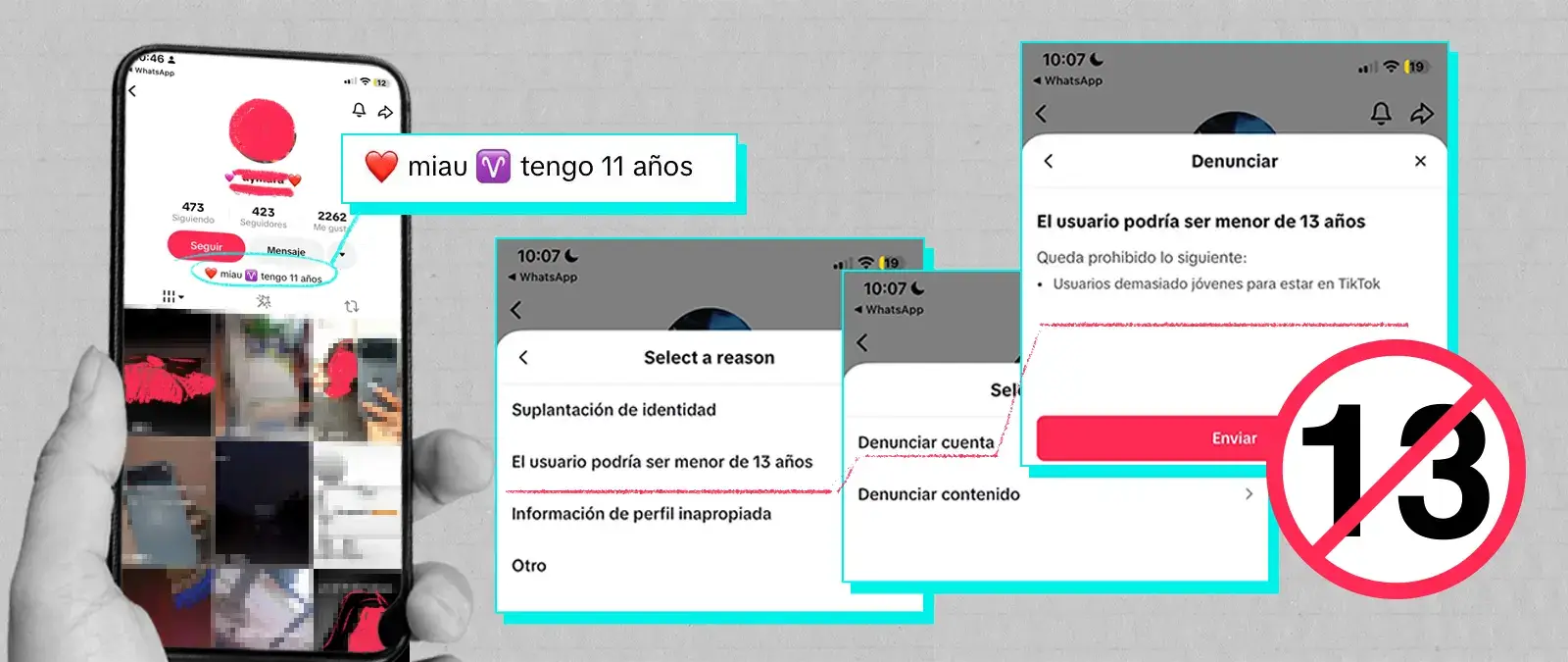
The users are not even hiding it—on the contrary, they are proclaiming to be under 13. And yet TikTok is not only incapable of finding those accounts, it cannot even apply its own ban when notified about their existence. We reported 35 accounts to the platform because they had videos in which the users openly declared to be as young as 9 years old. No code words, no tricks—just text over video saying things like: “11 years old, and you?”. Even after we flagged them, TikTok kept over 97% of the accounts online although we specifically indicated the videos in which the users themselves declared to be under 13.
That refusal raises important questions: does TikTok keep the accounts online because it knows the users are actually over the age of 13 but portray themselves as younger? Or is the platform choosing not to act on clear violations of its rule specifying that “accounts are available for people at least 13 years old”? Either option is ethically tricky and potentially illegal.
If they pretend to be under 13 it is dangerous… if they really are, even more
There are good common sense reasons to prevent an adult from posing as a minor on social media, as that can open the door to grooming and other illegal activity. There is also an important reason why most social media platforms draw the line specifically at not having users under 13: in the European Union, for example, the processing of personal data of a child under that particular age is always illegal unless the platform obtains the consent of the parents or guardians. Same as in the United States, Brazil, Perú, or South Korea.
Now, as many countries around the world adopt or consider legislation banning teens under a certain age from social media altogether, these findings show that one of the world’s most popular platforms for teenagers is unwilling or unable to implement its current age restrictions effectively anyway. In fact, Meta has already been called out by the European Commission under the Digital Services Act for failing to prevent those under 13 from accessing Facebook and Instagram.
An “improved” age verification system that still fails
When creating a TikTok account, users are asked about their age and TikTok will not allow them to have one if they declare to be under 13. However, many children will lie about their age if that is what it takes to get what they want, as kids have done on occasion across history. TikTok knows that, and earlier this year announced it would roll out “enhanced technology” (in Europe alone, though) to improve its capabilities to “detect and remove accounts that belong to someone under the age of 13”.
The new measures were introduced in January 2026, but our investigation shows that 10% of the accounts we tracked that declare to be from children under 13 were created in January and February of 2026 alone, calling into question the effectiveness of such policies. It is clearly a problem on the rise for the platform, as 62.5% of all the under-13 accounts we found were created in 2025 alone.
TikTok says it can verify a user’s age using a “facial age estimation” provided by a third party, through a credit card, or by requiring a “government-approved identification”. However, those measures seem to be implemented only after TikTok’s “technology identifies that an account may belong to someone under 13”. That technology is clearly not up to the task, considering the accounts we flagged are declaring their age themselves in writing on their videos or even their accounts’ biographies.
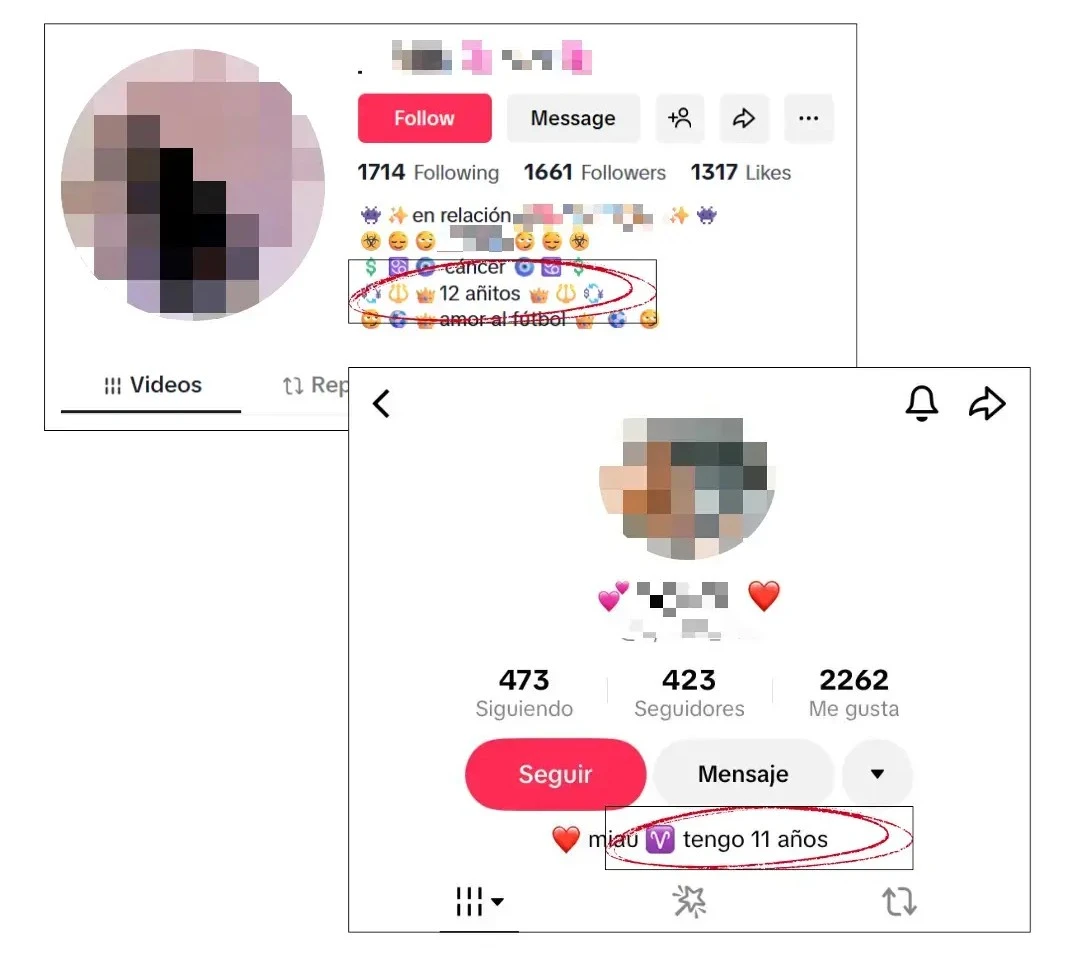
Sometimes they use simple concealing techniques like adding a space between 1 and 2 when they indicate they are 12, but other times not even that. TikTok could also have used other signals to infer that many users are under 13 despite what the platform’s rules say. Starting in 2021, thousands if not millions of users have participated in a trend in which they declare their age in their videos. 180,000 did so by using a video template specifically designed for declaring your age provided by CapCut, the video-editing app that is owned by ByteDance, the same company that TikTok belongs to.
As part of our investigation, we identified a group of 56 videos that participated in the trend of declaring their age and claimed to be younger than 13 despite the fact that TikTok always had a policy of not allowing children under that age to have accounts. According to their own declaration and the account creation date, some of them were only 7 when they created their accounts.
Methodology
For this part of the investigation, we used TikTok’s reporting functionality to flag 35 accounts for violating the platform’s terms of service that say that “you need to be at least 13 years old to create a TikTok account.” We reported them using the following route:
Report an account >>> User could be under 13 years old
TikTok removed just one account in the first instance and rejected all of our appeals in which we argued “The user declares to be under-13 in this video” and added the URL of the specific video from the account in which the user declared to be under 13 years of age.
In total, TikTok removed just that one account (3%).
If you have any questions, you can contact us at [email protected]