
Content warning: this investigation addresses sensitive topics related to the sexualization and sexual abuse of minors.
In the comments, we found users who, despite claiming to be minors, had images stolen from Pinterest; and others where real children posted photos of their faces and bodies, which could be downloaded by anyone with just a few clicks. Despite TikTok's stated age restriction, in 56% of the videos analyzed users claimed to be 12 years old or younger. In fact, 68% of them were not yet 13 years old when they created their profiles, according to data collected by Maldita.es.
Adult men, stolen photos and invitations to chat on encrypted apps: what's hidden in the comments of these videos
The first video we could find of this trend was published in 2021. Four years have passed, but its popularity has only grown thanks to a specific template that makes it easy to participate: of the 100 videos analyzed, the majority (44%) were published between January and February 2026. In fact, the CapCut template, the video editing app from ByteDance (TikTok's owner), which is included in many of these videos, has been used, according to the app, more than 181.000 times.
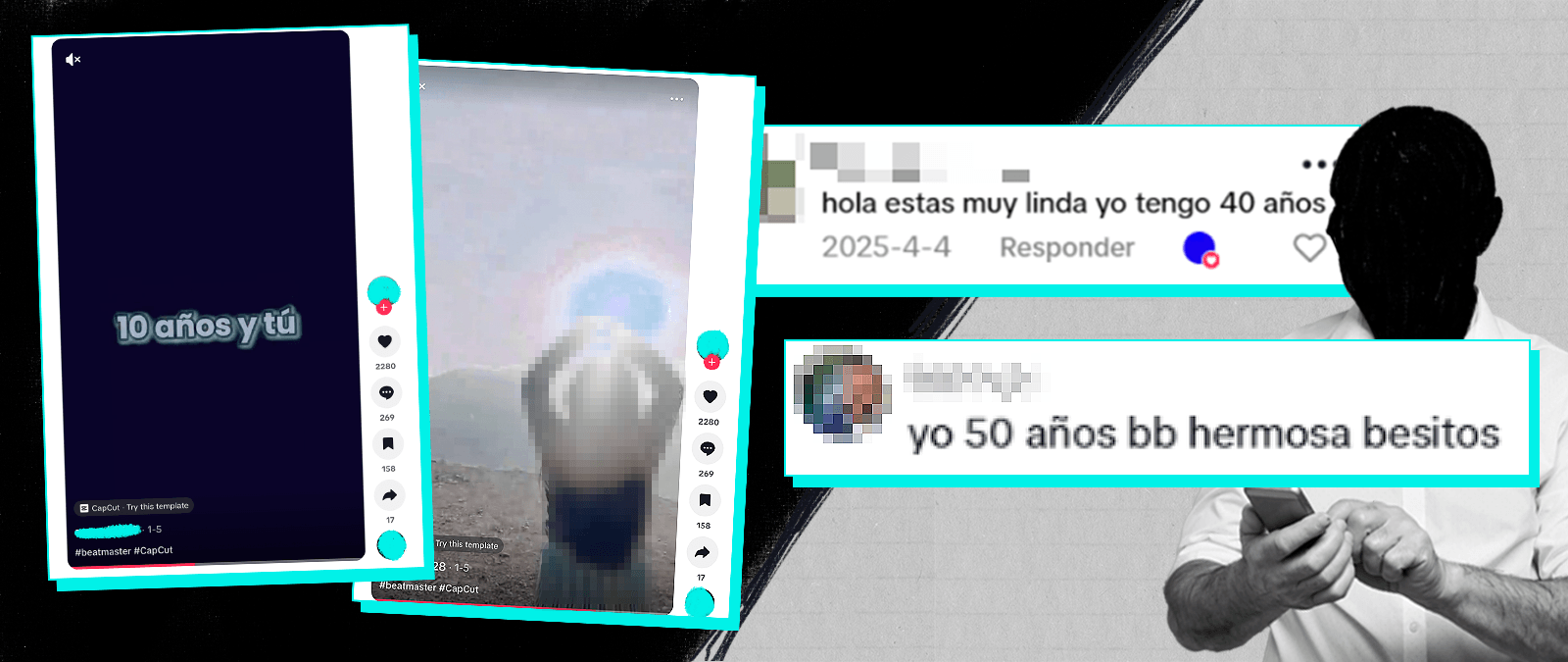
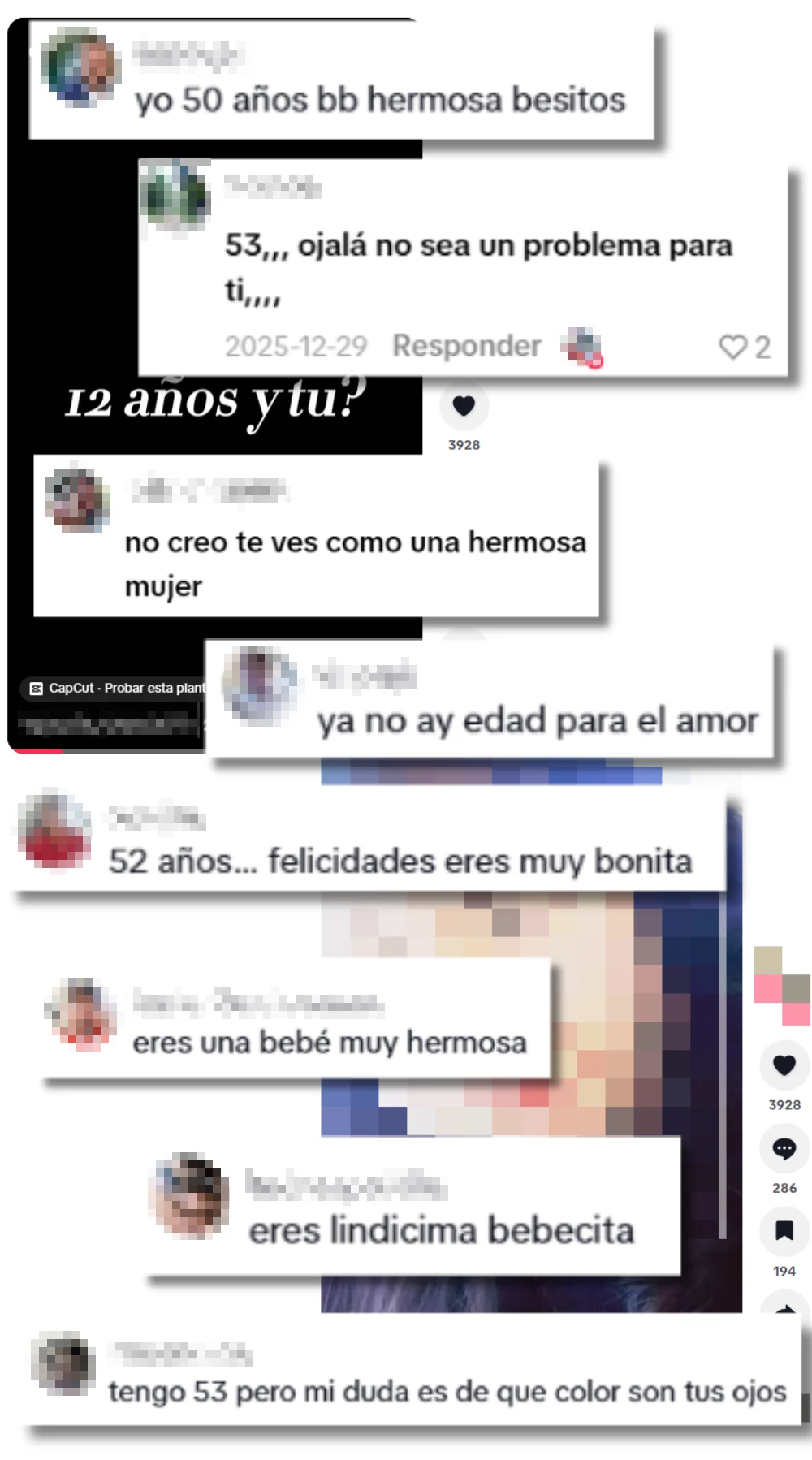
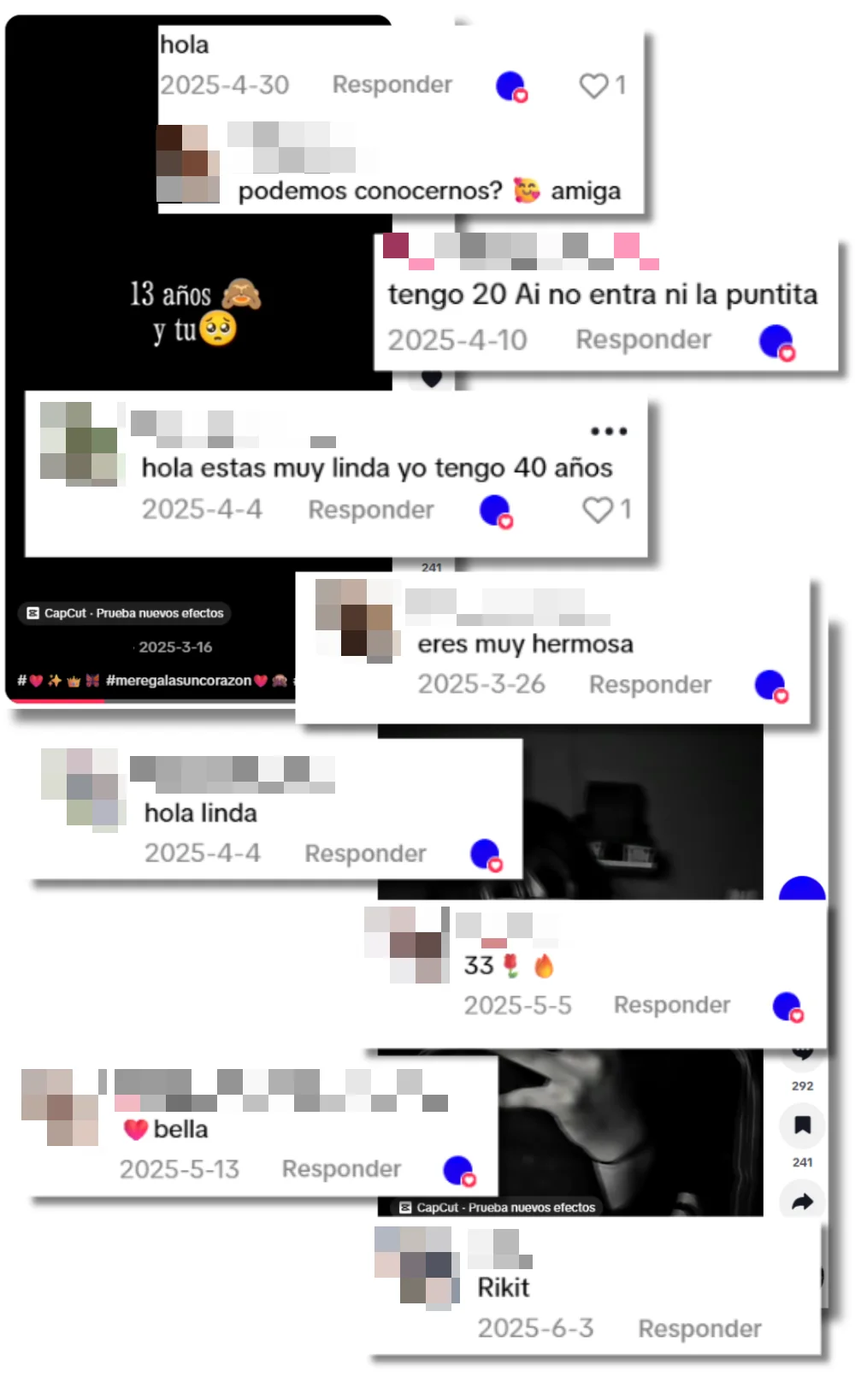
The accounts of users aged 13 and under in the sample are also popular: in total, they have over 392,000 followers. Their videos, depending on the case, have hundreds or thousands of comments. Among them, there are many profiles that openly admit to being adults and leave comments for minors (mostly girls), such as "I'm 20, not even the tip fits", "I'm 26, I hope I'm the lucky one" or "hi, you're very pretty, I'm 40". There are also users whose profile pictures reveal them to be adult men who try to start conversations with girls and boys with messages like "can we get to know each other?", "you're very pretty" or "hi, beautiful". Some minors interact with these messages, liking or replying.
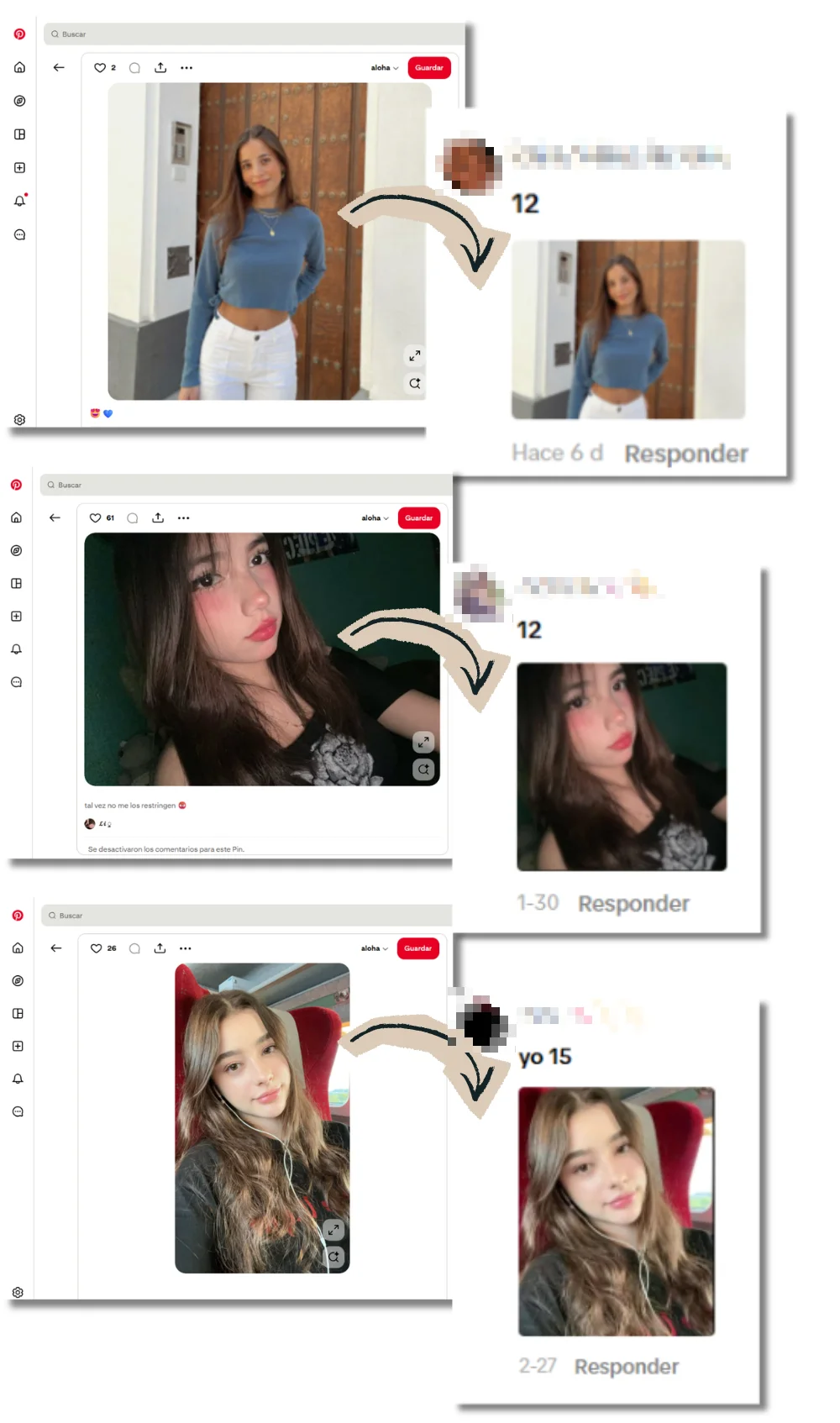
These aren't the only suspicious users in the comments. Other profiles claim to be minors but share images stolen from Pinterest as if they were their own.
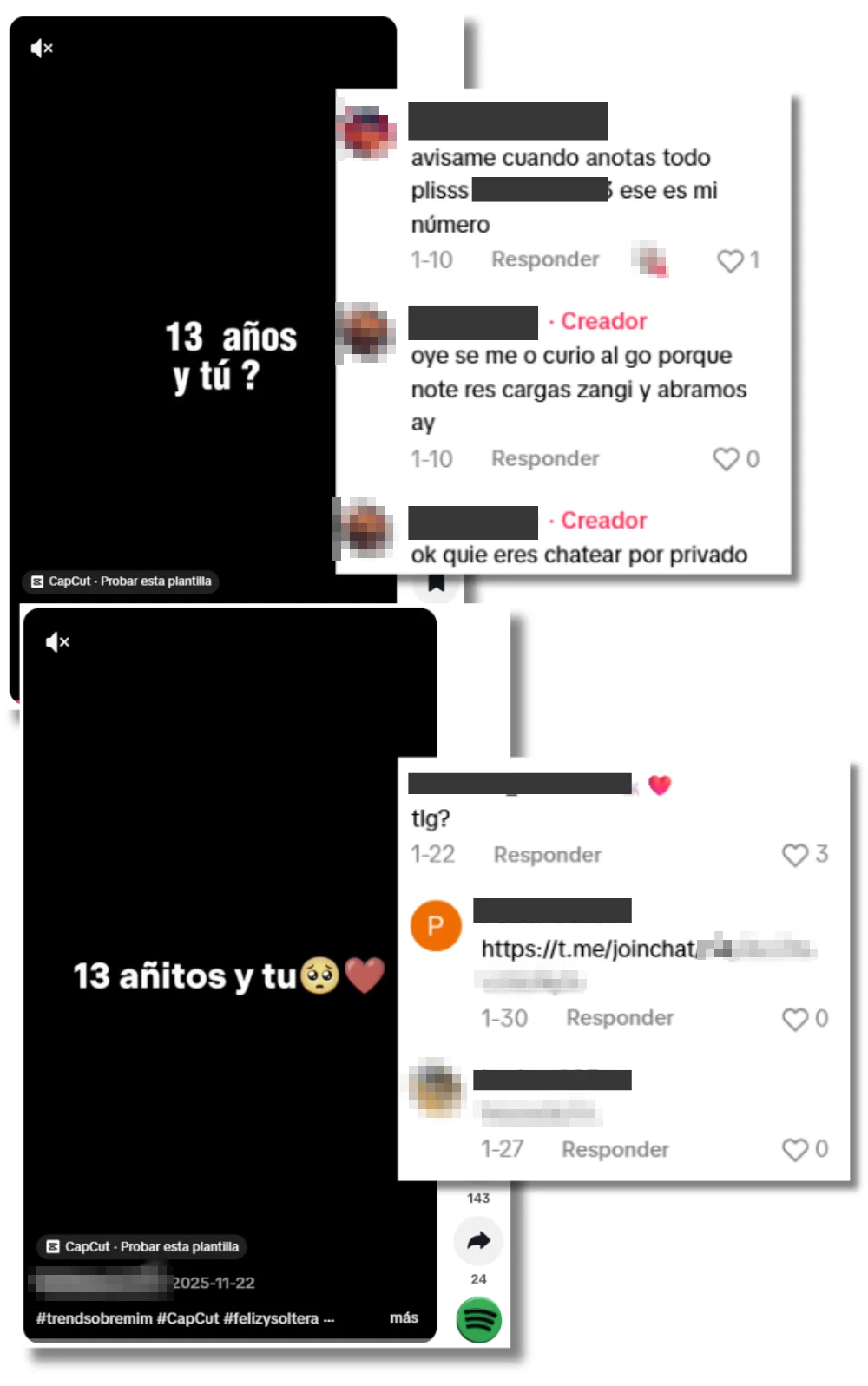
Furthermore, we found comments where these adult users requested to move the conversation to other channels, such as Telegram or Zangi. These are encrypted messaging applications that offer greater privacy and anonymity, and which, in our previous investigation, we revealed are used to share child sexual abuse material. This occurs despite TikTok's rules prohibiting "content that induces or encourages minors to engage in activities outside the platform, due to the risk that the request was made by a wrongdoer".
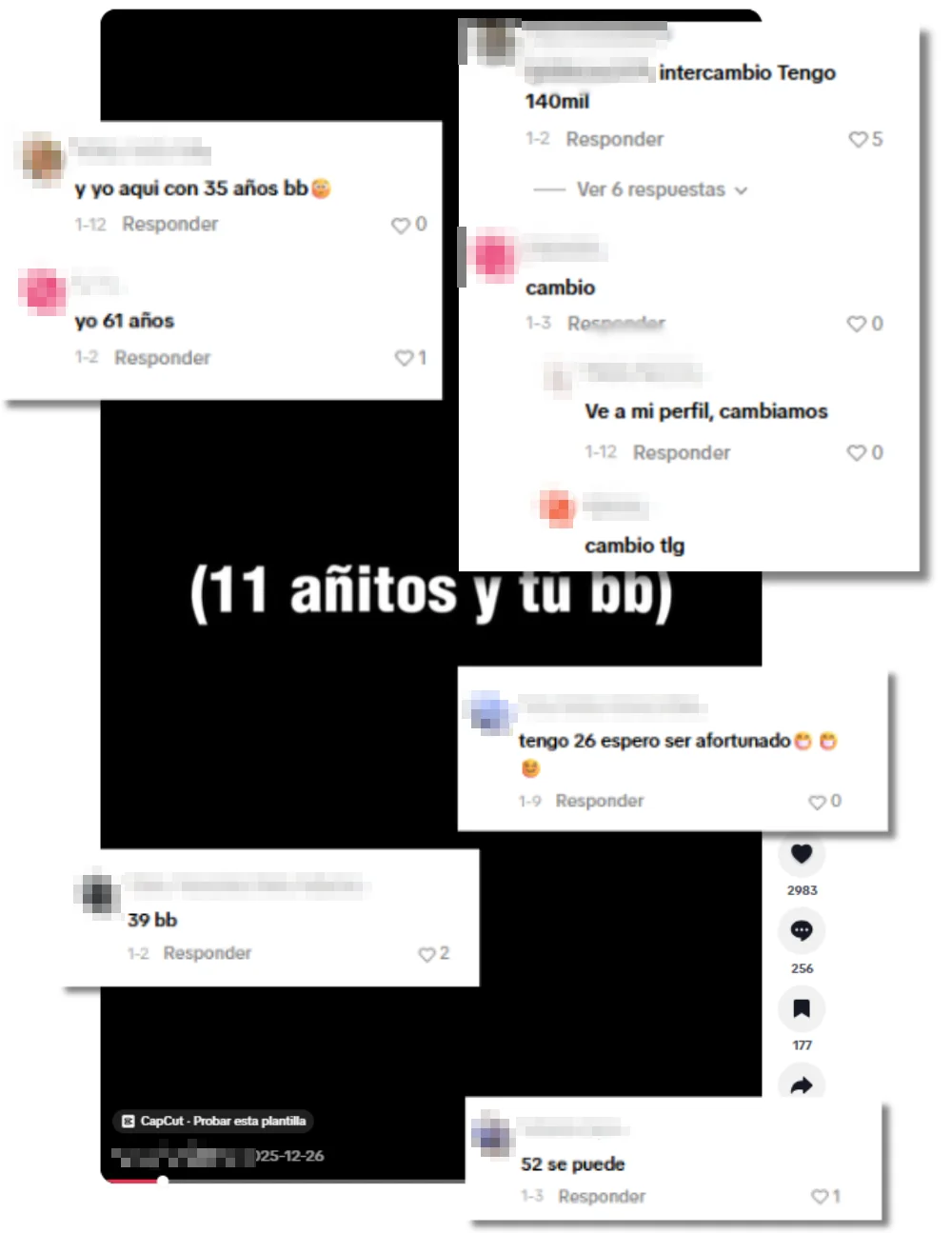
In fact, in a video of this trend featuring an 11-year-old girl, we found comments saying "cambio", a term that refers to the exchange of child sexual abuse material on encrypted platforms.
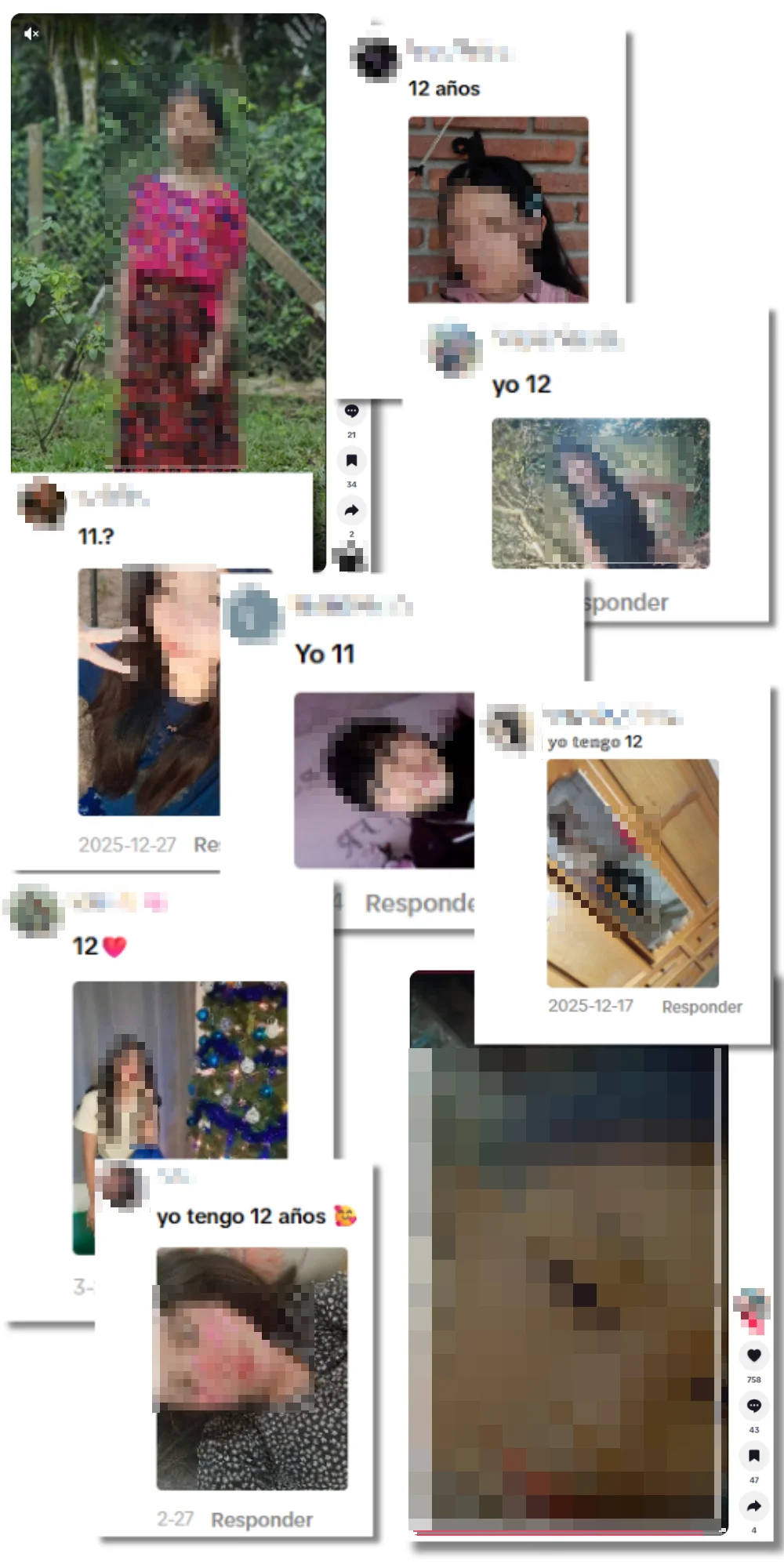
In the comments section, we also find that other minors post photos showing their faces and bodies. With just a few clicks, TikTok allows users to download these photos directly to a computer or mobile device, as is the case with all images included in comments on the social network.
Despite TikTok claiming to prohibit accounts for users under 12 years old, 68% of users were not yet 13 when they created their accounts
TikTok's Terms of Service state that users must be at least 13 years old to create a profile on the social network. However, more than half of the 100 videos we analyzed for this article belonged to users who claimed to be between 9 and 12 years old. In fact, considering the years in which they published their age and the account creation date, 68% were under 13 when they registered on the online platform: the youngest users in the sample would have been around 7 years old when they created their profiles. And TikTok allowed it.
The online platform claims that, to verify the age of its users, it uses an “industry-standard” system: they request the date of birth upon registration, and if they detect that the user is under 13, they suspend their ability to create a profile, even if the date is changed. For Javier Sanz, a criminologist specializing in cybercrime and cyber behavior analysis, this is not a protection mechanism, but rather a “deflection of responsibility”. The prohibition against users under 13 years old “exists in the application's terms and conditions, but not in the actual architecture of the platform”, he argues. The European Commission has qualified these types of self-declaration-based age verification systems as “not very effective or reliable”.
The company claims to train its moderation team to be “alert to indications that an account may be used by a child under 13”. Furthermore, on January 16, 2026, it stated that it would begin implementing “enhanced technology in Europe” in the following weeks to “strengthen” the moderation of accounts belonging to users under 13 years old, using information from profiles, videos that post and “other behavior on the platform”. Despite these announced changes, our research has found that 10.71% of these accounts were created in the first two months of 2026 (January and February), the second highest figure after those created in 2025, which represent 62.5% of the analyzed accounts belonging to users aged 12 or younger.
For Borja Adsuara, a lawyer specializing in digital law, allowing children under 13 years old to create accounts on the social network in Spain violates European and Spanish legislation: “According to LOPD-GDD (Spanish Data Protection Act), minors cannot access social media platforms on their own (without parental authorization) until they are 14 years old, and platforms have an obligation to verify the age of their users”.
The European Union’s Digital Services Act (DSA) requires TikTok to assess whether its features, such as its content moderation systems, could pose risks that negatively impact minors and their rights (Article 34). It also has an obligation to take effective measures to mitigate those risks (Article 35). “Certainly, age verification based on a self-declaration of the year of birth (and nothing else) is hardly defensible as ‘an appropriate and proportionate measure’ to guarantee that safety”, argues Sanz.
At Maldita.es, we reported 35 of these profiles for violating the rules, using the platform's own reporting mechanisms. Three days later, TikTok had taken no action against 97% of them, even though we specifically flagged the videos where they claimed to be under 13 years old.
If you are outside Spain and need help or wish to report child abuse, find your local helpline at Child Helpline International or INHOPE. To report online child sexual abuse material (CSAM) anonymously, you can contact the Internet Watch Foundation (IWF). In an immediate emergency, always contact your local emergency services first.
This article was written with the help of Javier Sanz, a criminologist specializing in cybercrime and cyber behavior analysis and contributor of Maldita.es.
Thanks to your superpowers, knowledge, and experience, we can fight harder and better against lies. The Maldita.es community is essential to stopping misinformation. Help us in this battle: send us any hoaxes you come across to our WhatsApp service, lend us your superpowers, spread our debunkings, and become an Ambassador.
Methodology
For this article, we analyzed 100 videos published on TikTok in which children between the ages of 9 and 13 publicly stated their age and asked other users to reveal theirs, often including photos of the children and pre-adolescents that were visible to anyone. The first video analyzed was published on September 6, 2021, and the last one on February 9, 2026.
To locate this content, we searched TikTok using the phrase “I am [age], and you?”, with each age within the analyzed range (from 9 to 13 years old). We also tried searching with younger ages, but obtained no results. This allowed us to compile a sample of 100 videos published by 100 different accounts, ensuring that there were no duplicate profiles.
For each video, we collected quantitative and qualitative data, such as the publication date, number of views, hashtags used and video text. We grouped each video according to the age the minor declared in it, to analyze which age groups this trend was most prevalent in. In addition, we recorded the account creation date, number of followers and number of videos posted for each profile.
We also reviewed the comments on each video to identify two types of users: on the one hand, adults who explicitly revealed their age or whose profile pictures and videos indicated they were not minors; on the other hand, users who employed terms associated with the sharing of child sexual abuse material.
If you have any questions, you can contact us at [email protected]