
Content warning: this investigation addresses sensitive issues related to the sexualization of minors and child pornography.
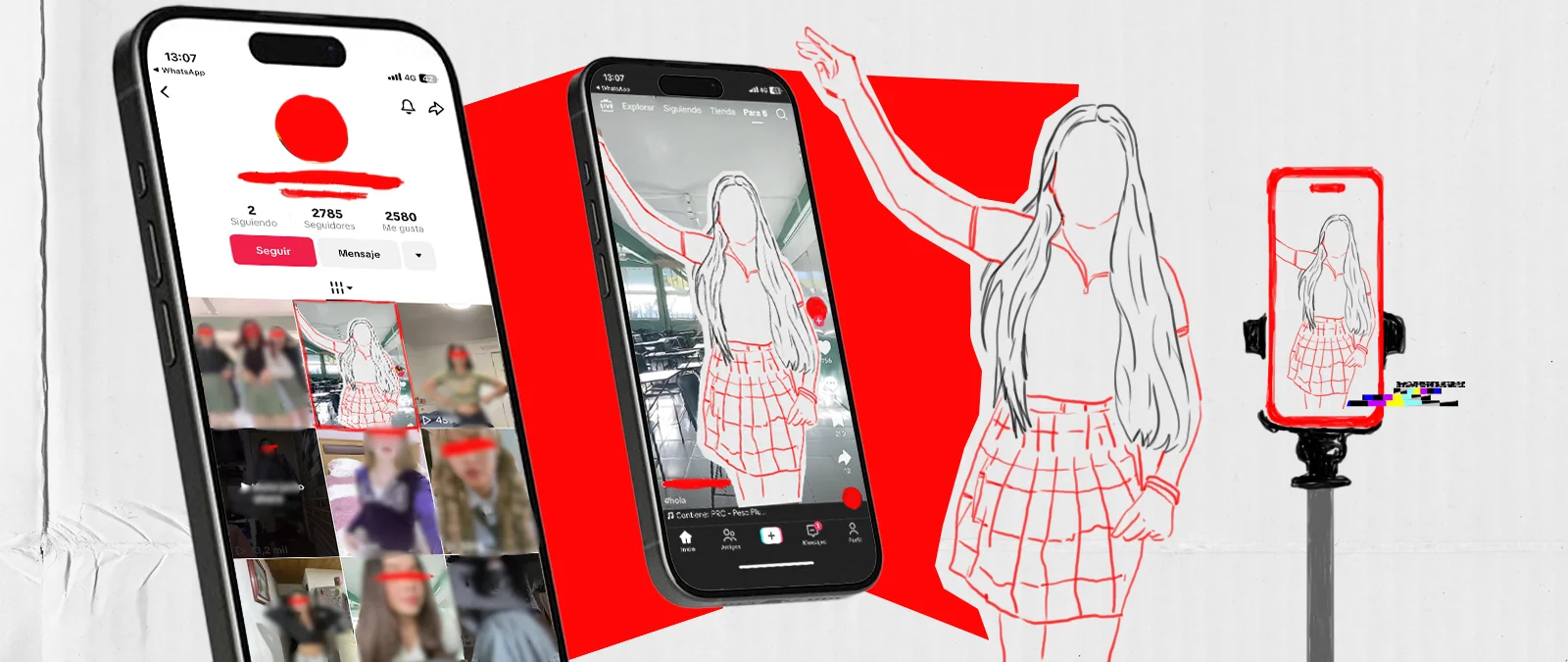
Dozens of minors are being put on display for adults who sexualize them, all accessible from a single TikTok profile. This is what accounts that repost and compile videos of real girls and teenagers dancing, singing, or simply recording themselves in their daily lives offer. What may be normal for them is not taken the same way on these profiles: the videos are filled with sexually explicit comments from users who appear to be adult men; some ask for their names and others promote Telegram accounts where they sell child pornography.
These profiles thus build showcases of videos of minors, at the mercy of being sexualized. At Maldita.es, we have analyzed 20 accounts that have accumulated more than one million followers and seven million likes. In total, they have published more than 3,600 videos: some keep the profile name of the minors who originally posted them; others hide it. According to several experts, this practice may constitute a violation of the rights to one's own image and the unlawful processing of minors' personal data, in addition to having consequences for the mental health of the victims and exposing them to risks such as grooming.
Accounts that collect videos of minors accumulate more than a million followers and are filled with sexual comments from users with adult profile pictures
A girl plays in a swimming pool. Some students dance in their high school courtyard. A teenager sings to the camera. These are all common scenes on TikTok, but when grouped together in these profiles with descriptions such as “elementary, middle, and high school girls,” “I love goddesses from all over the world,” and “the prettiest girls in school,” the tone changes. The 20 accounts we analyzed are dedicated to collecting videos of girls, in many cases wearing uniforms or set in school environments. In fact, 11 of the profiles use the word “schoolgirl” in the account name.
The videos they share belong to real minors who post content on their own accounts on the platform. There are dozens of different girls on the same profile. In addition, several of the posts feature the TikTok watermark with the name of the users who originally posted them, which can lead users to the minors' accounts. On other occasions, the accounts analyzed by Maldita.es hide the original watermark with drawings.
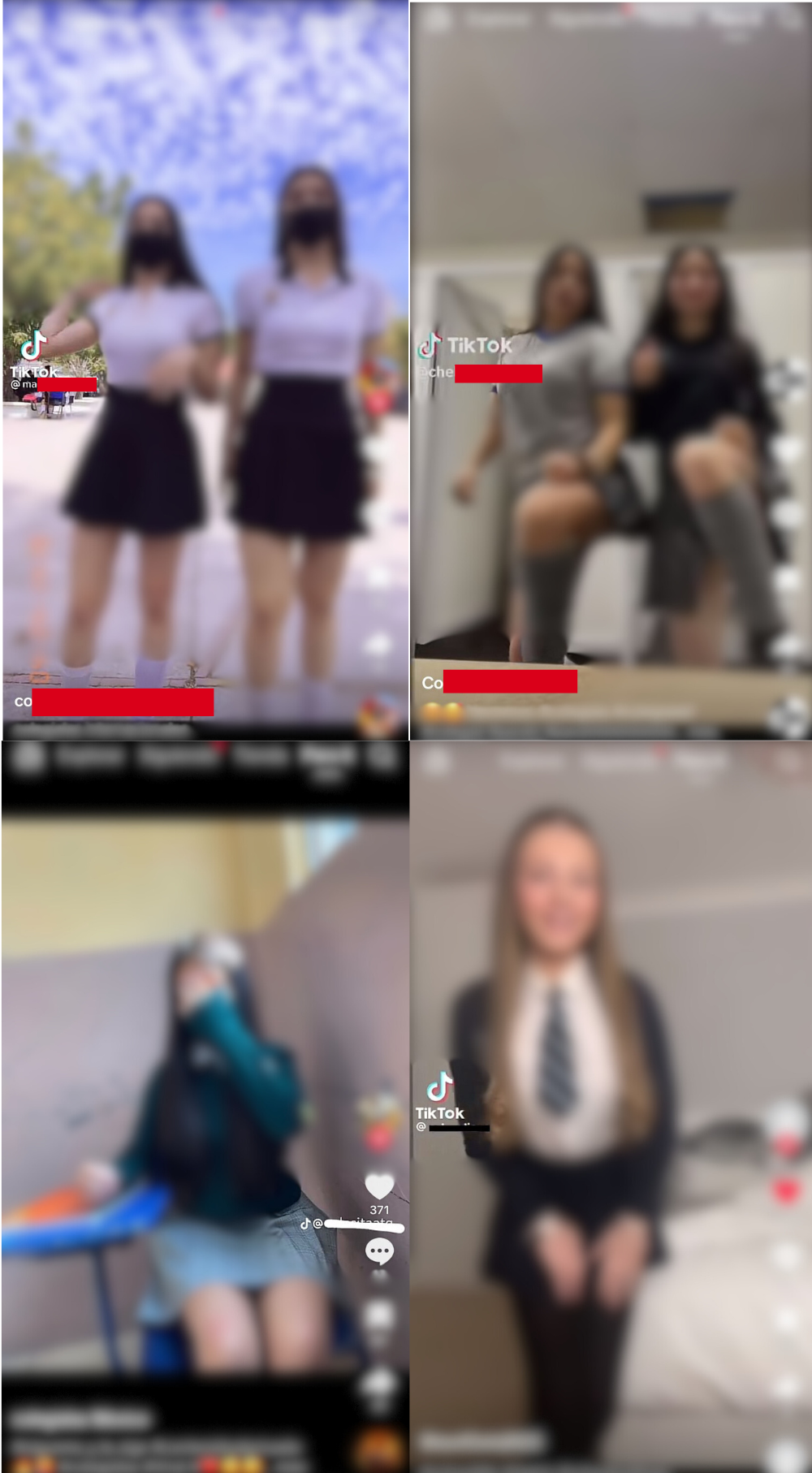
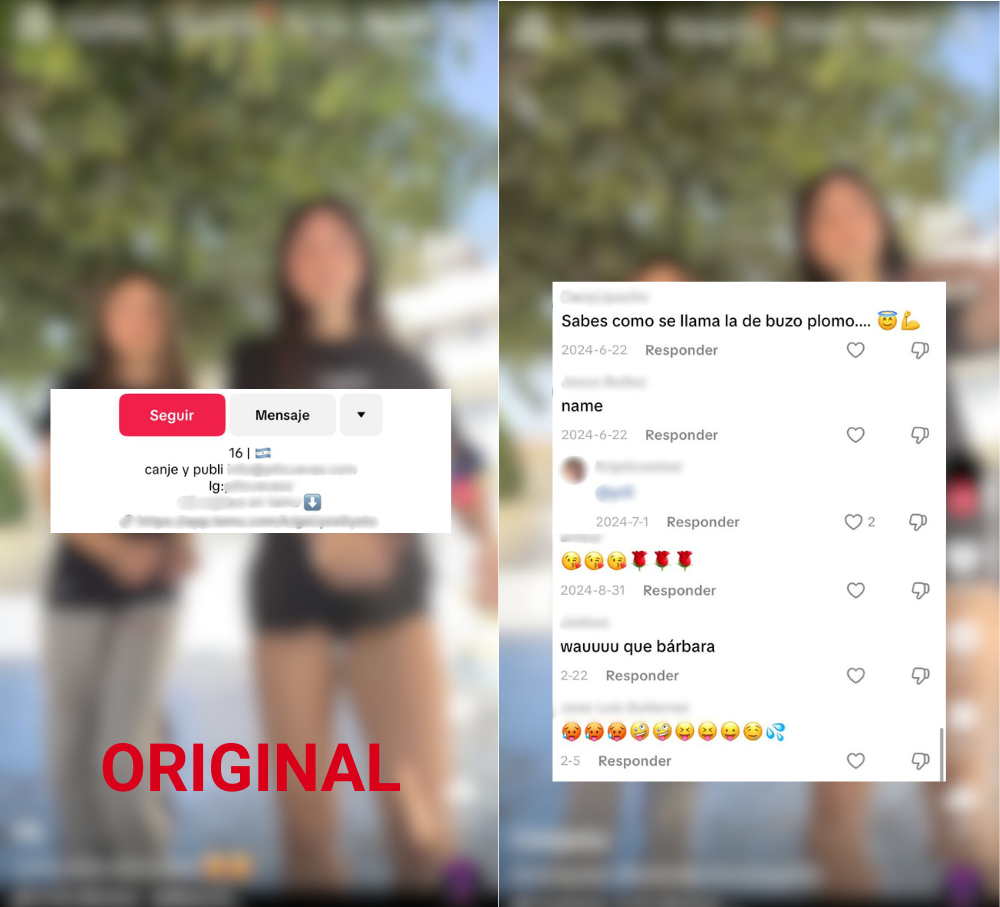
Not all videos have watermarks. This is the case with a video showing two teenagers dancing (which has been viewed 193,000 times), full of comments from users asking for their names. One replies by quoting the profile of the girl who originally posted it, who, according to her biography, is 16 years old.
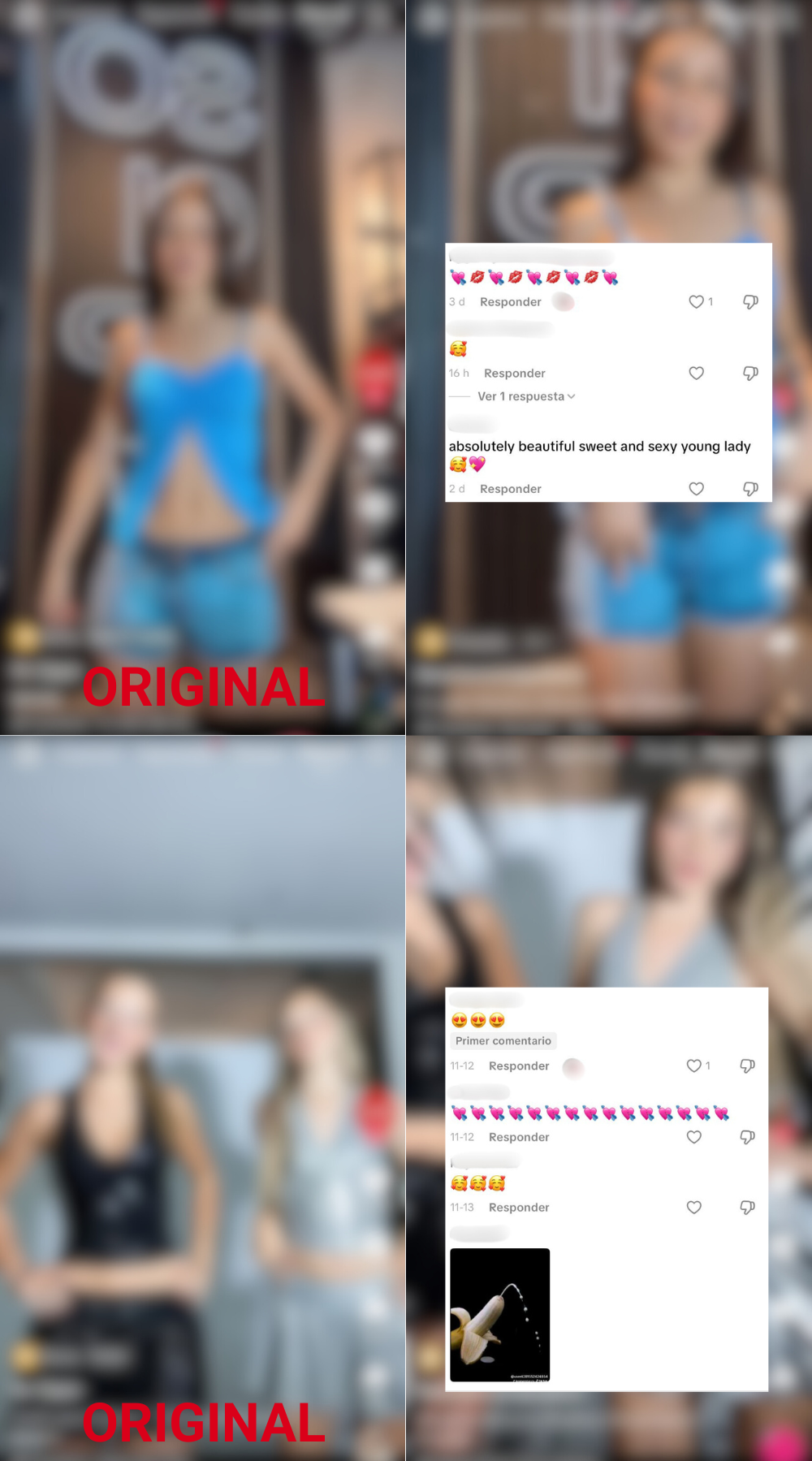
Another account analyzed, with 1,851 followers, compiles videos originally posted by an Argentine clothing store featuring girls who appear to be minors modeling. There are no comments on the store's posts, but there are comments on the profile that reposts them: they are full of messages from users (many with profile photos of adult men) who call them “sexy,” leave them heart emojis, and images with sexual insinuations.
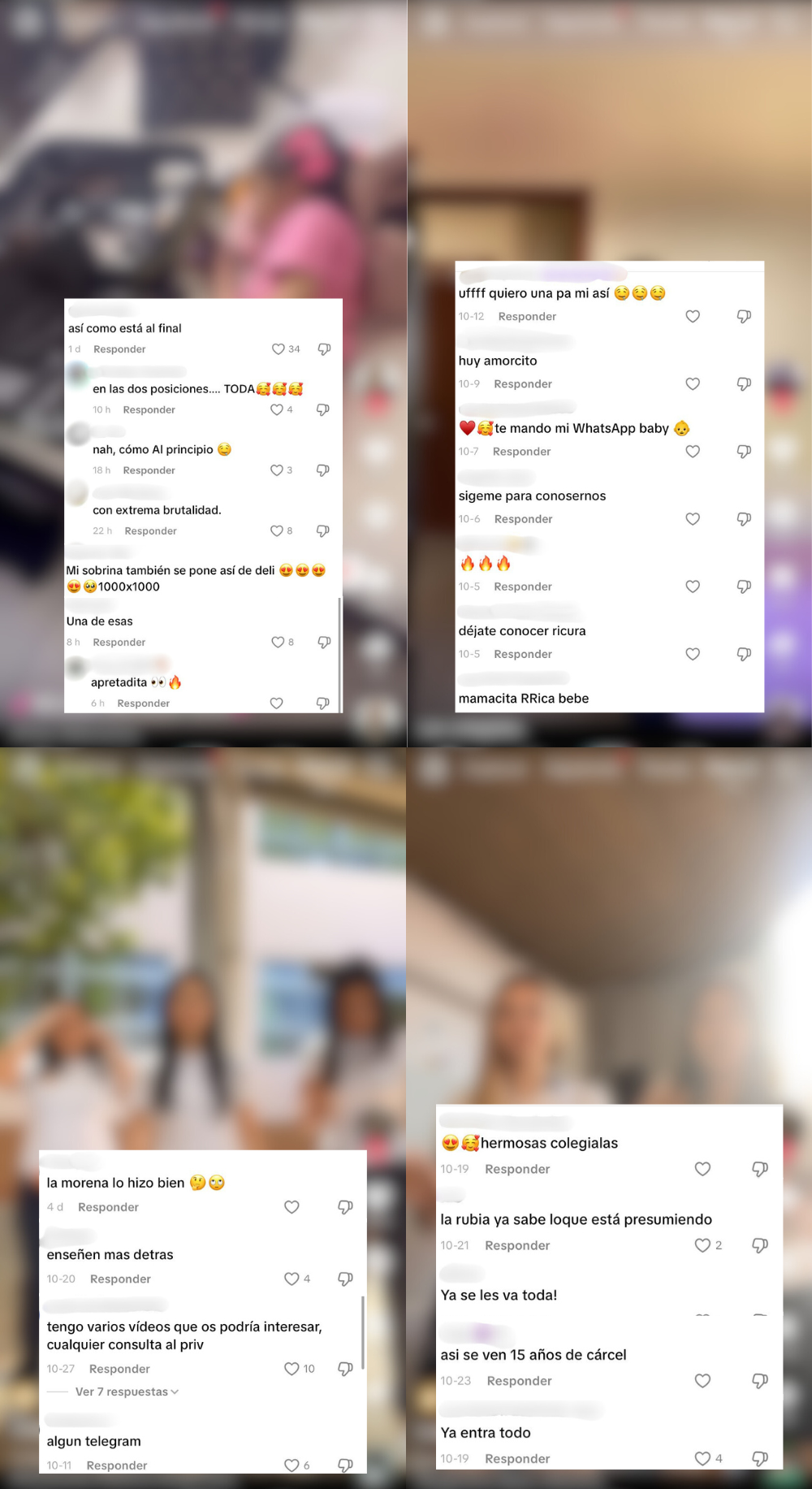
It is common to find these comments on videos posted by these profiles. For example, a video of a young girl lying down looking at her cell phone with 23,000 views has comments such as “my niece is also that cute,” “with extreme brutality,” and “tight.” The same thing happens in posts showing girls in school uniforms, where there are comments from users with profile pictures of adult men saying things like “beautiful schoolgirls,” “show us more from behind,” and “let us know how cute you are.”
It may not stop at comments, because child pornography is available to any of these users in just five minutes: among the comments, Telegram accounts that sell and exchange real child pornography are promoted.
Monetized accounts without moderation, even though TikTok says it does not allow “sexualizing or fetishizing minors”
Some of these profiles seek to make money by sexualizing these minors: 7 of the 20 accounts analyzed allow users to subscribe for an average of four euros to get exclusive content (and TikTok takes up to 50% of the profits).
This goes against TikTok's Community Guidelines, which do not allow “sexually explicit language involving or directed at minors” and “showing minors engaging in intimate kissing, sexually suggestive acts, or sexualized framing.” In its section on “sexual and physical abuse of minors,” it lists “sexualizing or fetishizing a minor” as “not allowed.” In addition, its rules warn: “You should only post content that you have created or have the right to share.”

Maldita.es has written to TikTok to ask whether they consider these accounts and their posts to be in breach of the platform's rules, but they have not been able to offer a clarification.
What is the platform's responsibility? According to the Digital Services Act (DSA), TikTok must assess whether its functions pose risks to minors. Regarding its obligations to remove content, Rahul Uttamchandani, a lawyer specializing in technology and privacy, points out that “platforms are responsible for this content to the extent that they are aware of its illegal nature.” In other words, they are not obliged to monitor all content that is published, but they must act when a user or entity reports an illegal post.
The accounts analyzed may be violating minors' image rights and data protection
In Spain, posts made on social media, whether on public or private accounts, cannot be used freely: they are protected by image rights (covered by this organic law) and are subject to intellectual property rights.
Marcos Judel, a lawyer specializing in data protection and digital law, explains to Maldita.es that the image of minors is specially protected and that what these accounts do “may constitute an illegitimate intrusion into the right to one's own image, especially if the purpose is to sexualize, ridicule, or exploit its content.” In addition, according to the expert, “we are dealing with the processing of minors' personal data (the image is personal data) without a legal basis, which is in direct conflict with the GDPR [General Data Protection Regulation] and Spanish data protection regulations.”
The sexualization of minors can affect their mental and physical health, damaging their perception of safety and self-esteem
In addition to the legal implications, this practice can have physical and psychological consequences for the minors involved. This is explained by Mamen Bueno, a health psychologist, psychotherapist, and maldita who has lent us her superpowers. She points out that victims may see their sense of security compromised and feel “exposed, observed, or monitored without control.” This is exacerbated by the fact that many of the users who sexualize them ask for more information about them, such as their real names or TikTok accounts, which exposes them to being contacted by these people and potentially becoming victims of grooming or harassment.
In addition, Bueno points out that all of this poses a “risk of retraumatization” for those with a history of invasion, harassment, and abuse. She also notes that girls' online behavior may be affected, causing them to “withdraw from social media, fear sharing content, or, at the other extreme, adapt to norms of hypersexualization as a mechanism of control or belonging,” the expert explains.
Bueno adds that minors' self-esteem and body image can be affected. These consequences have been documented by various studies: for example, a report by the American Psychological Association (APA) concluded that the sexualization of girls is linked to mental health problems such as eating disorders, low self-esteem, and depression.
If this happens to a minor in your care, you can report it through civil channels and through the AEPD. As TikTok users, we can report videos on the platform
What can we do if we come across these videos? If the minor is in our care, Judel explains that we can report it through civil channels and seek compensation for any damages caused. This may vary depending on the extent of the dissemination, the damage to reputation, and the context: “If there is a pattern of systematic collection of videos of girls or adolescents for fetishistic purposes, civil liability skyrockets, and so does compensation,” he says.
The lawyer adds that, as this involves the processing of minors' personal data, this practice “may also be punished by the Spanish Data Protection Agency (AEPD) with administrative fines that may include orders for immediate cessation, removal of content, and prohibition of future processing.” This link explains how to report a violation related to our personal data to the AEPD.
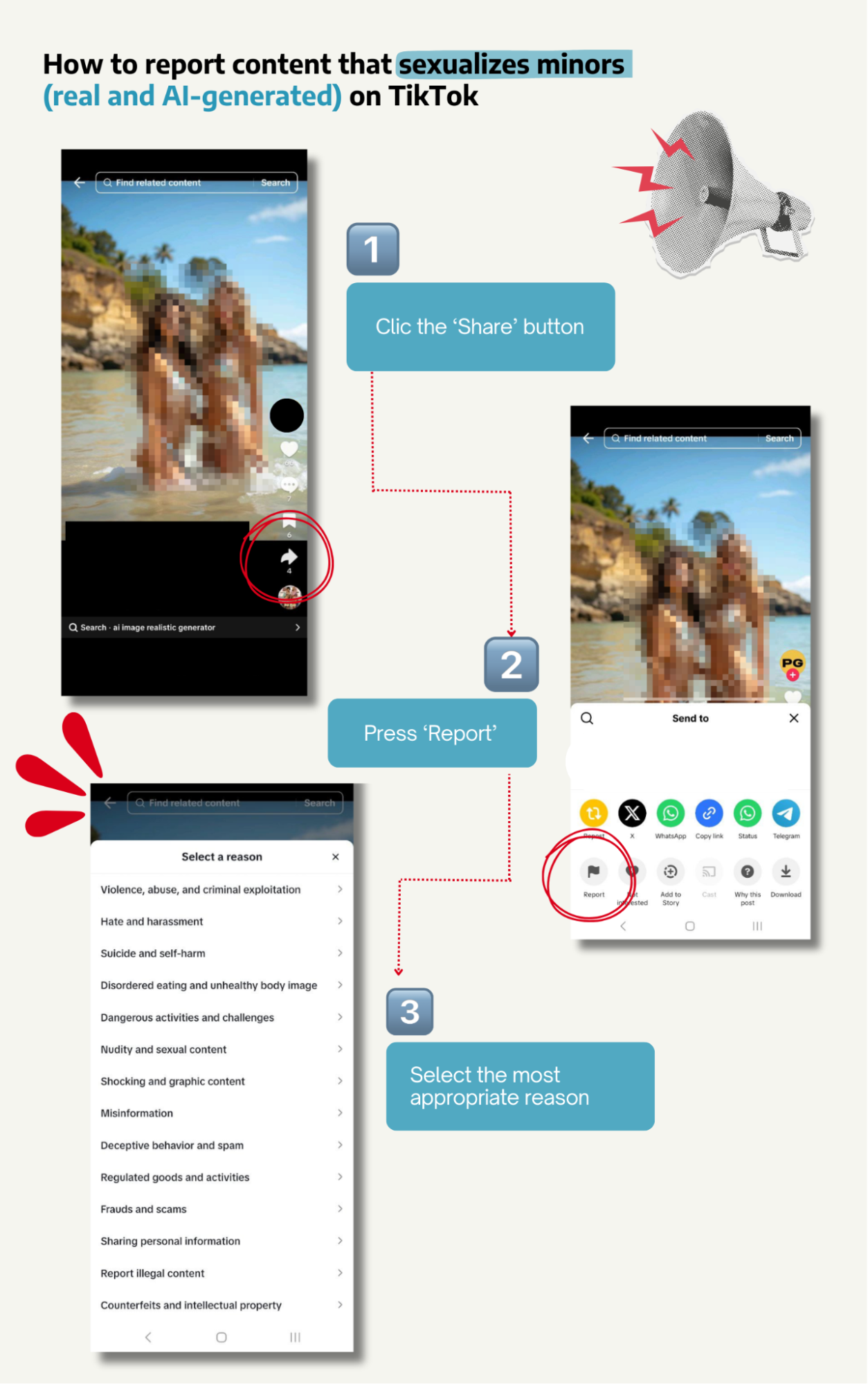
As TikTok users, whether or not the videos feature minors in our care, if we come across them, we can report this type of content so that there is a record that the online platform has been notified that this content is circulating. To do so, on TikTok, we must click on the ‘Share’ button, press ‘Report,’ and select the corresponding reason.
The maldita Mamen Bueno, health psychologist and psychotherapist, has contributed her superpowers to this article.
Mamen Bueno is part of Superpoderosas, a project by Maldita.es that seeks to increase the presence of women scientists and experts in public discourse through collaboration in the fight against misinformation.