
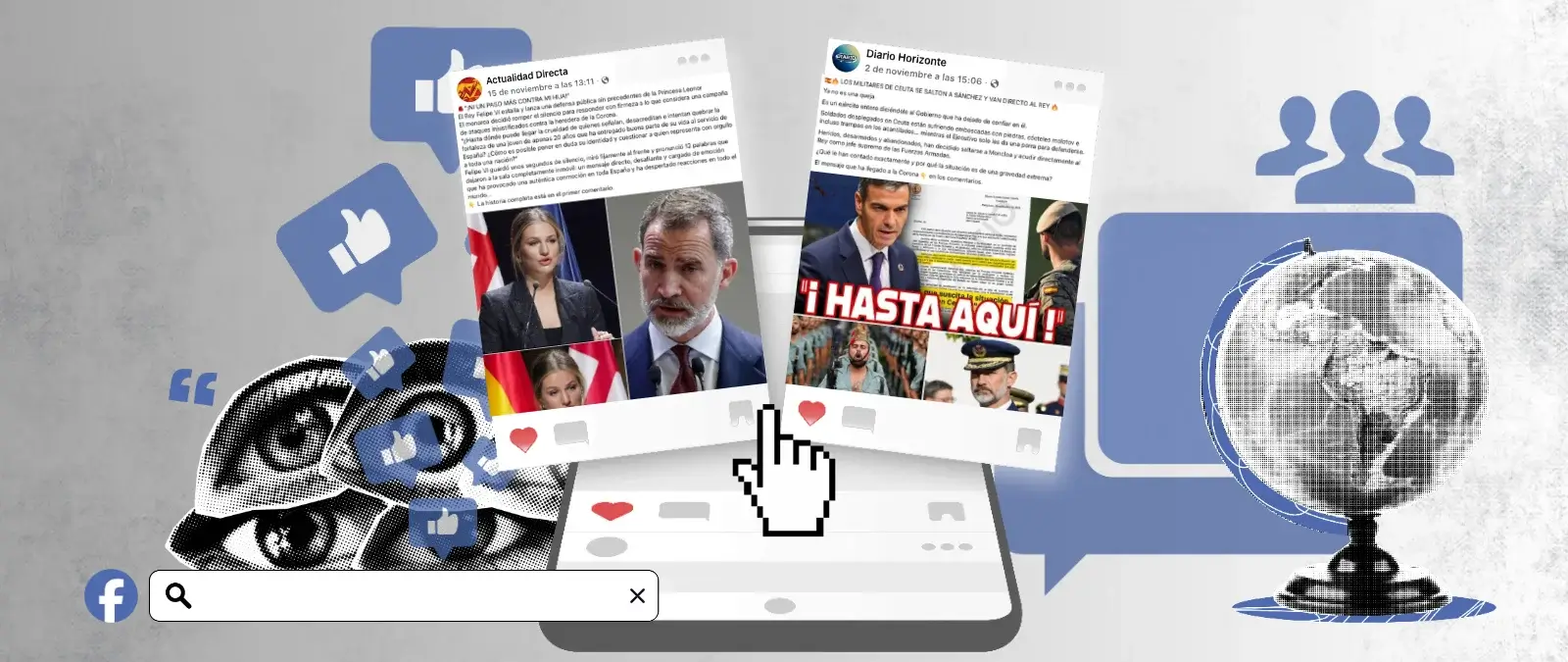
Deepfakes and disinformation about Spanish politicians, Felipe VI or the Pope
“King Felipe VI erupts and launches an unprecedented public defense of Princess Leonor” ; “Pedro Sánchez discreetly visited a small animal shelter in Madrid on the verge of closing”; “Abascal expels within 24 hours the foreigner who defended child marriage”; “King Felipe VI is discreetly preparing a plan to abdicate for health reasons”. All these stories, which have no evidence of having occurred and which also lack a reliable source, are the initial hook to get Facebook users to click on the link posted as a comment on this post or in the page's bio and access the website where they generate advertising revenue. Other content they publish is real, although in these cases they also use clickbait techniques.
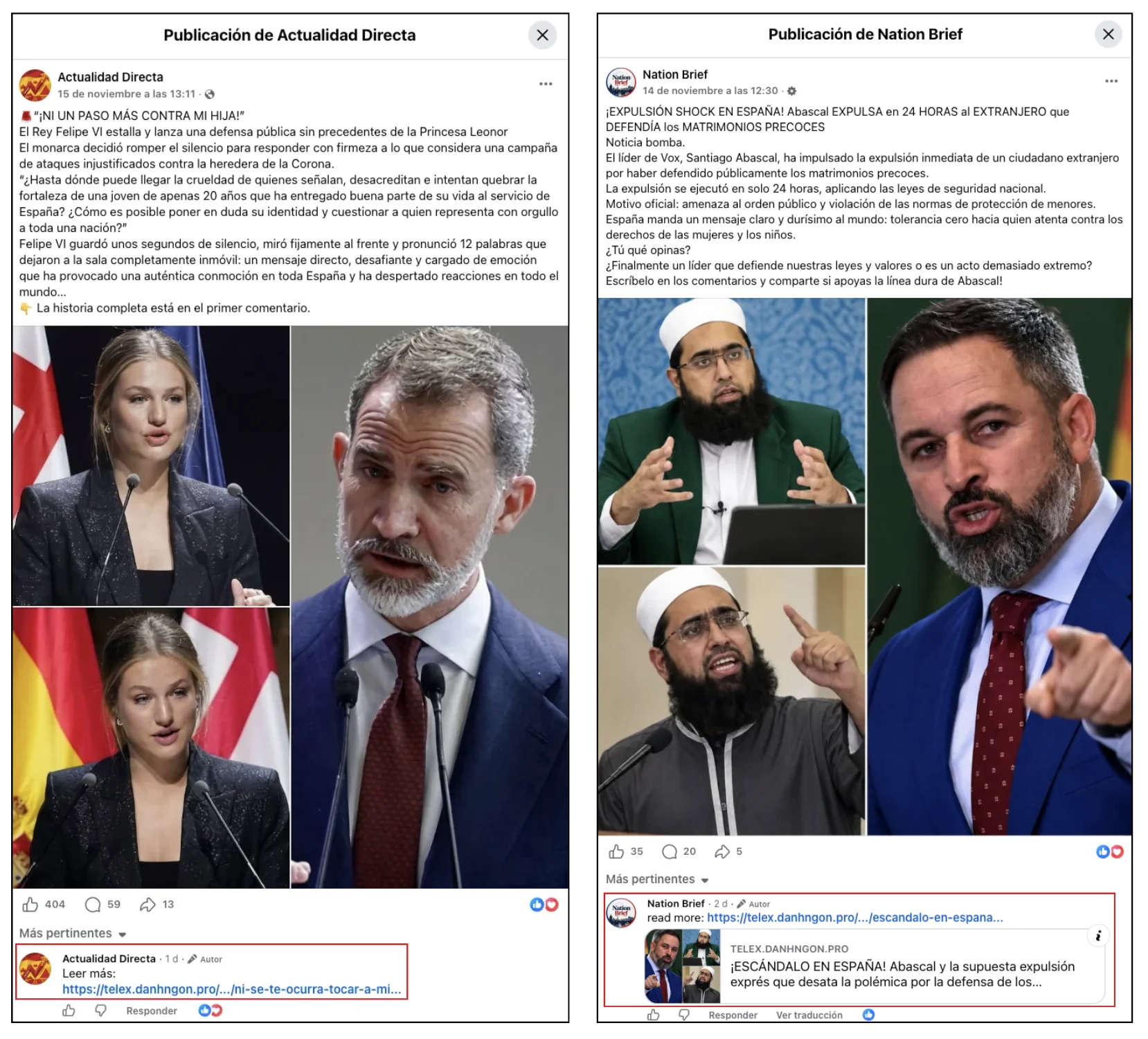
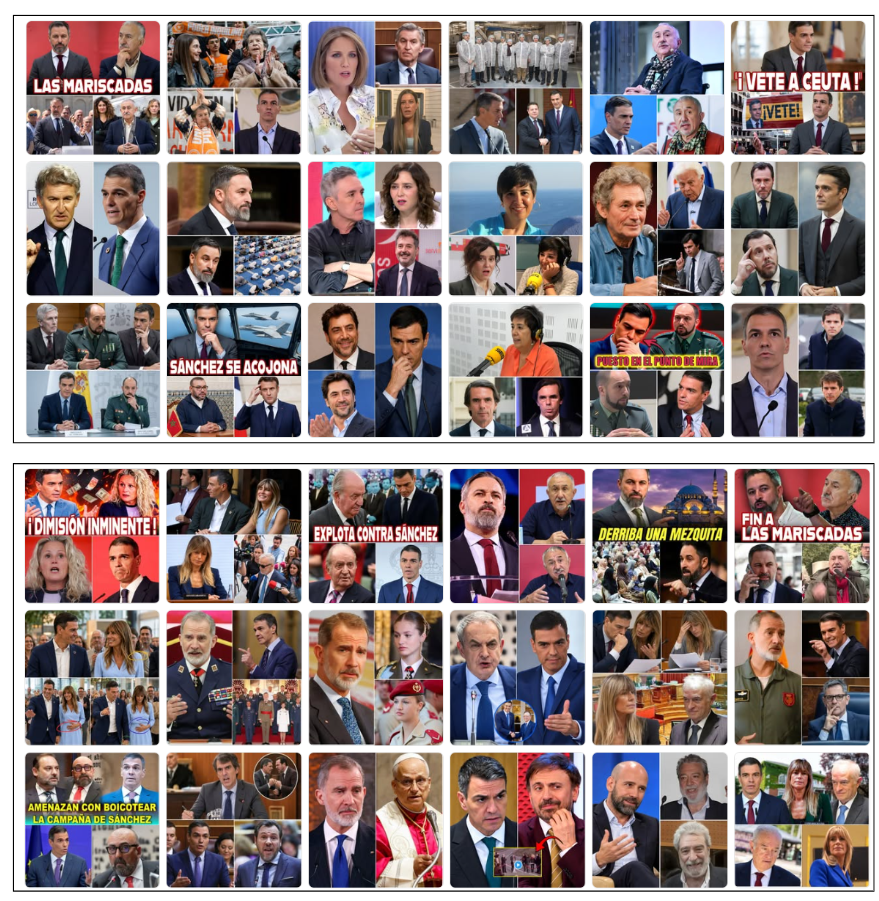
To lend credibility to these texts, they use either AI-generated or manipulated images, or real photos of the people they mention, taken in different environments and contexts. With this, along with sensationalist and alarmist language that creates suspense, these pages try to attract thousands of followers and get views on their posts, which then lead them to the website through which they generate advertising revenue. The use of AI is one of the main characteristics of these pages. This allows them to create content more quickly and at a low cost, adapting to current events, such as the Spanish elections on November 29th.
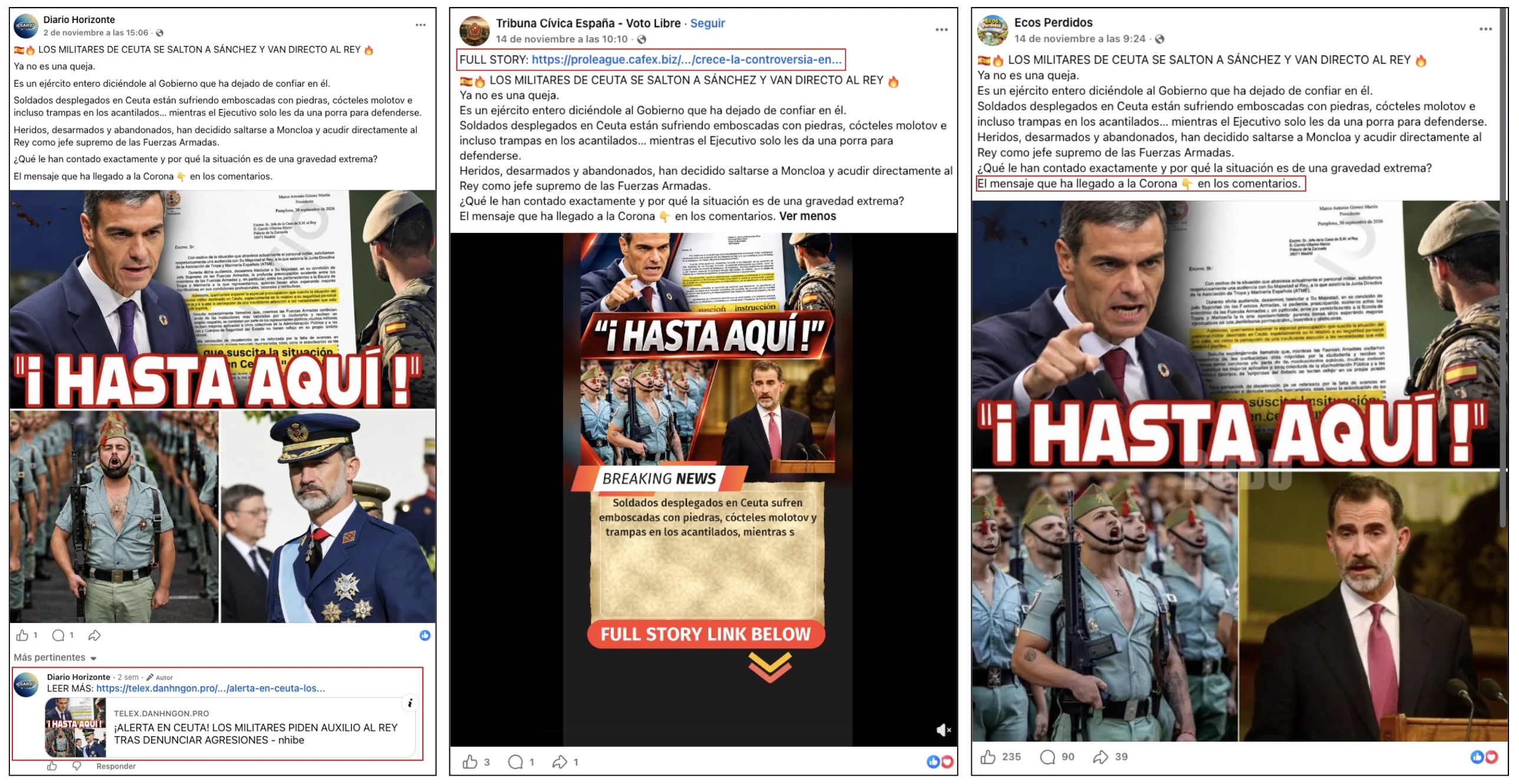
In this context, we have observed that the same content regarding candidates for Prime Minister in the upcoming elections is repeated on several of the analysed websites. For example, the statement that “the military in Ceuta bypass Sánchez and go directly to the King” has been published on at least seven different websites on different days.
The choice of content is varied: some of these pages are dedicated to politics, while others focus on figures like bullfighters, or on dramatic stories, almost like a soap opera. Javier Sanz, a criminologist specialising in cybercrime and cyber behavior analysis, and a damned soul who has lent us his superpowers, says it's a matter of trial and error: "Emotional stories help gain followers quickly, and politics is what provokes the most outrage and comments, so it's logical that they're now turning to the campaign", he explains.
There are others that have done the complete opposite: “Cazador de Noticias”, which previously published content about clashes between politicians, now publishes soap opera-style stories created with AI. This is yet another example of them pursuing an economic rather than a political objective.
The business: redirecting users to websites where they make money from advertising
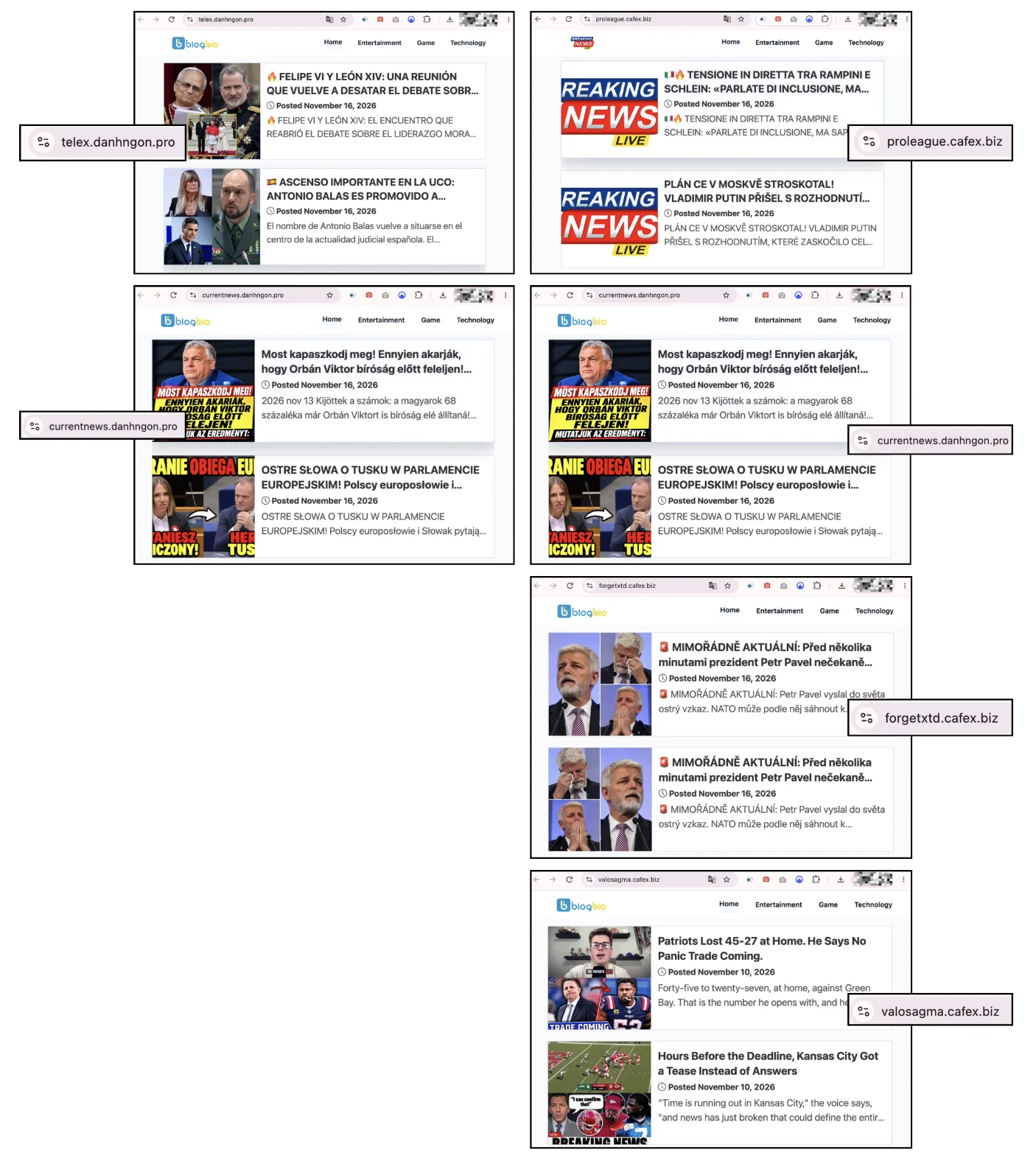
Most of these accounts (26 out of 30) have a link, either in their biographies or in one of their posts, to websites external to the platform . telex.danhngon[.]pro is the most frequently linked: it appears on 16 of the 26 pages. It publishes content about politics, especially in Europe, in different languages such as Italian , French , and Czech. It has embedded advertising and three sections (entertainment, gaming, and technology) that do not contain linked content. proleague.cafex[.]biz is a website with a very similar appearance to the previous one and appears on two of the analysed pages .
Four other websites that are also mentioned on the analysed Facebook pages share a domain with the two already mentioned. They are currentnews.danhngon[.]pro, forgetxtd.cafex[.]biz, valosagma.cafex[.]biz, and trendsphere.cafex[.]biz. Javier Sanz explains that the infrastructure they use is provided by Metaconex (a digital advertising company with a registered company in Hong Kong and offices also in Vietnam).
Metaconex owns Blogbio, a website management platform with open registration and plans ranging from $0 to $149 per month, designed for mass publishing across multiple websites. This tool allows hosting for client blogs, such as cafex[.]biz. Finally, Metaconex also offers an ad network, Adsconex . This doesn't mean Metaconex is directly involved with the content farm, but rather that it owns the infrastructure they use.
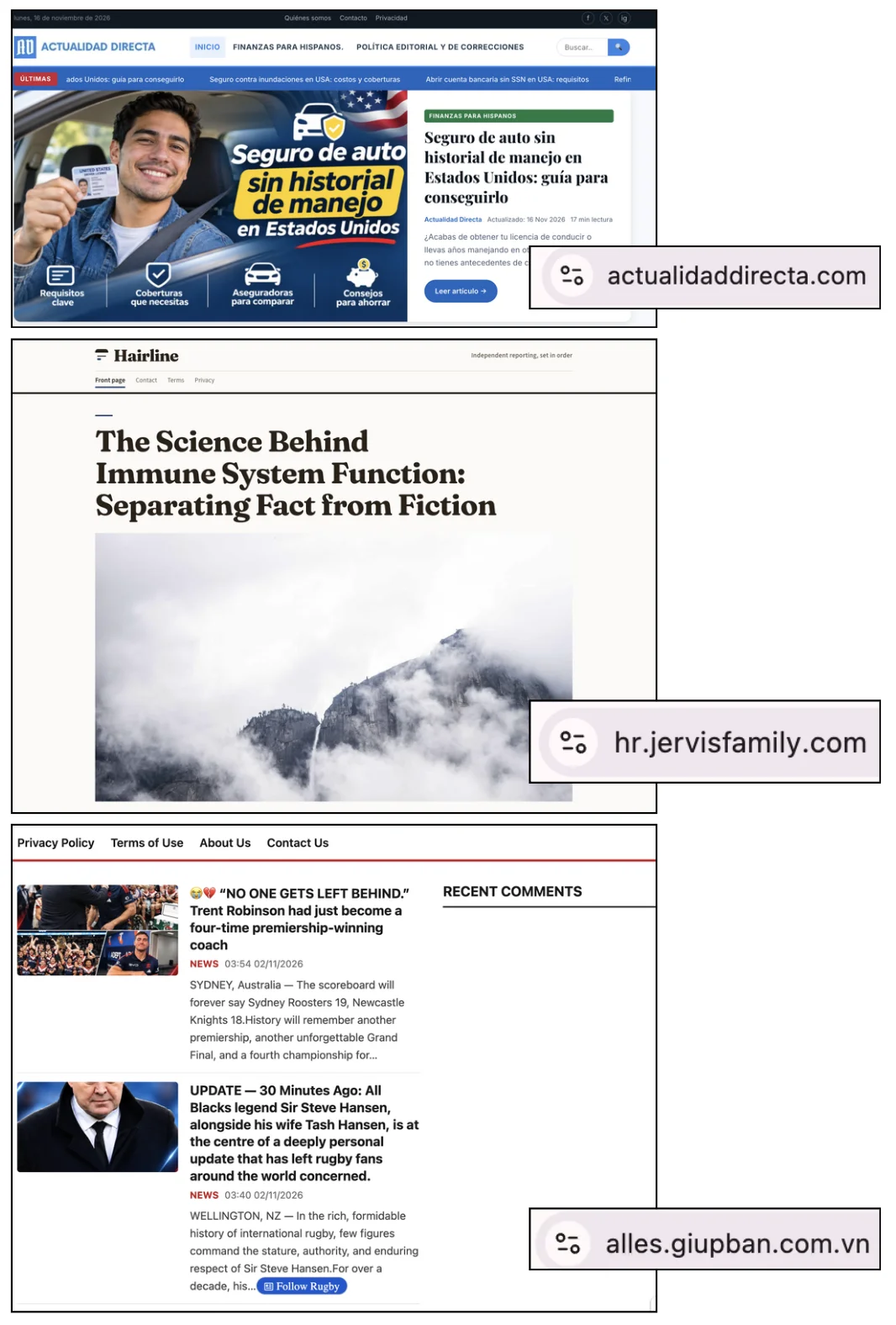
There are five other websites mentioned on the Facebook pages with different domains, although at the time of publication of this analysis, only three are working: actualidaddirecta[.]com, hr.jervisfamily[.]com and alles.giupban[.] com.vn. The first is defined as a portal that publishes “Practical information on finance, insurance, technology and current events for the Hispanic community in the U.S. and Latin America”, created on May 31, 2024.
The second website claims to publish “reports on science, technology, economics, and people’s lifestyles” and was created on September 7, 2020. Criminologist Javier Sanz located an archived version of the contact page for the domain jervisfamily[.]com, which identified Metaconex as a business name and included its Hong Kong business registration numbers, as well as phone numbers and email addresses that the expert also links to the company. The last website, for which no information is available regarding its creation, claims to publish “breaking news” and “hidden gems you won’t find anywhere else”.
These websites generate revenue. Sanz explains that “ they have multiple income streams : clicks, impressions, registrations on external platforms, etc”. According to the expert, “the owners of these websites earn money simply from visits, so what matters is not the validity of the content they display, but the amount of traffic they can drive to those pages”. That's why, he says, “they take advantage of social media” (like Facebook , in this case) which “offers them the greatest reach to generate visits, either through misinformation (seeking to provoke outrage, anger, or curiosity so that people access the page to learn more) or through clickbait”.
How Do They Make Money from Every Visit? The Case of jervisfamily[.]com
1. A user visits a post on jervisfamily[.]com
At that moment, an advertising auction is automatically triggered for each ad placement on the page.
2. Companies compete to display their ads
Among the platforms bidding in these auctions is Next Millennium, which receives bids from its clients (advertisers). For example:
- A car brand bids €3 per 1,000 impressions (CPM, or cost per thousand impressions).
- A cosmetics brand bids €1.60 CPM.
- And a betting company bids €4 CPM.
In this example, the betting company offers the highest amount, so its ad is the one displayed in the advertising space on jervisfamily[.]com.
4. jervisfamily[.]com receives most of the revenue
The betting company pays €4 to Next Millennium, which keeps a commission (typically around 10% to 20%). The remaining amount is transferred to jervisfamily[.]com.
As Javier Sanz explains, this process is repeated for every ad placement and every new visit. Therefore, if jervisfamily[.]com prioritizes the highest bids, it can maximize the revenue generated by each ad impression.
90% of the pages analysed were created between April and October 2026
Almost all of the pages analyzed (28 out of 30) were created during 2026, with June being the month with the highest number of new accounts, totaling 11. Some even share the same creation date: Global Horizons and Voz Actual (both now deleted) appeared on the platform on June 3, 2026; exactly 19 days later (on June 22), Los Secretos del Tiempo and Solstice Harbor emerged; and later, on October 2 of the same year, Clave Hispana, Tribuna Cívica España - Voto Libre , and Voz del Votante España were created .
The newest page is Actualidad Directa (October 21, 2026), which claims to publish “news and analysis of the main political and social events, with a clear and direct perspective.” This page and four others were created after Pedro Sánchez announced the general election on October 5, to be held on November 29. Despite being active for less than a year, the pages created this year have already amassed more than 473,000 followers .
How is it possible that a page like Almas Nobles, created on October 19, 2026, gained 28,000 followers in less than a month? Javier Sanz attributes it to the fact that “between October 24 and 29, it published seven videos that went viral”. The trick to hooking the audience, he says, is suspense: the videos cut off at the most interesting part, and you have to go to the website to see the supposed second part.
Five pages were created after Pedro Sánchez called for elections in Spain on October 5, 2026, to be held on November 29
The three remaining pages, Freak Signa , E - News , and Cazador de Noticias, have been on the platform longer. They were created on September 22, 2023, March 25, 2025, and July 23 of the same year, respectively.
Addresses in Spanish cities and emails with their name that don't work: a recurring pattern
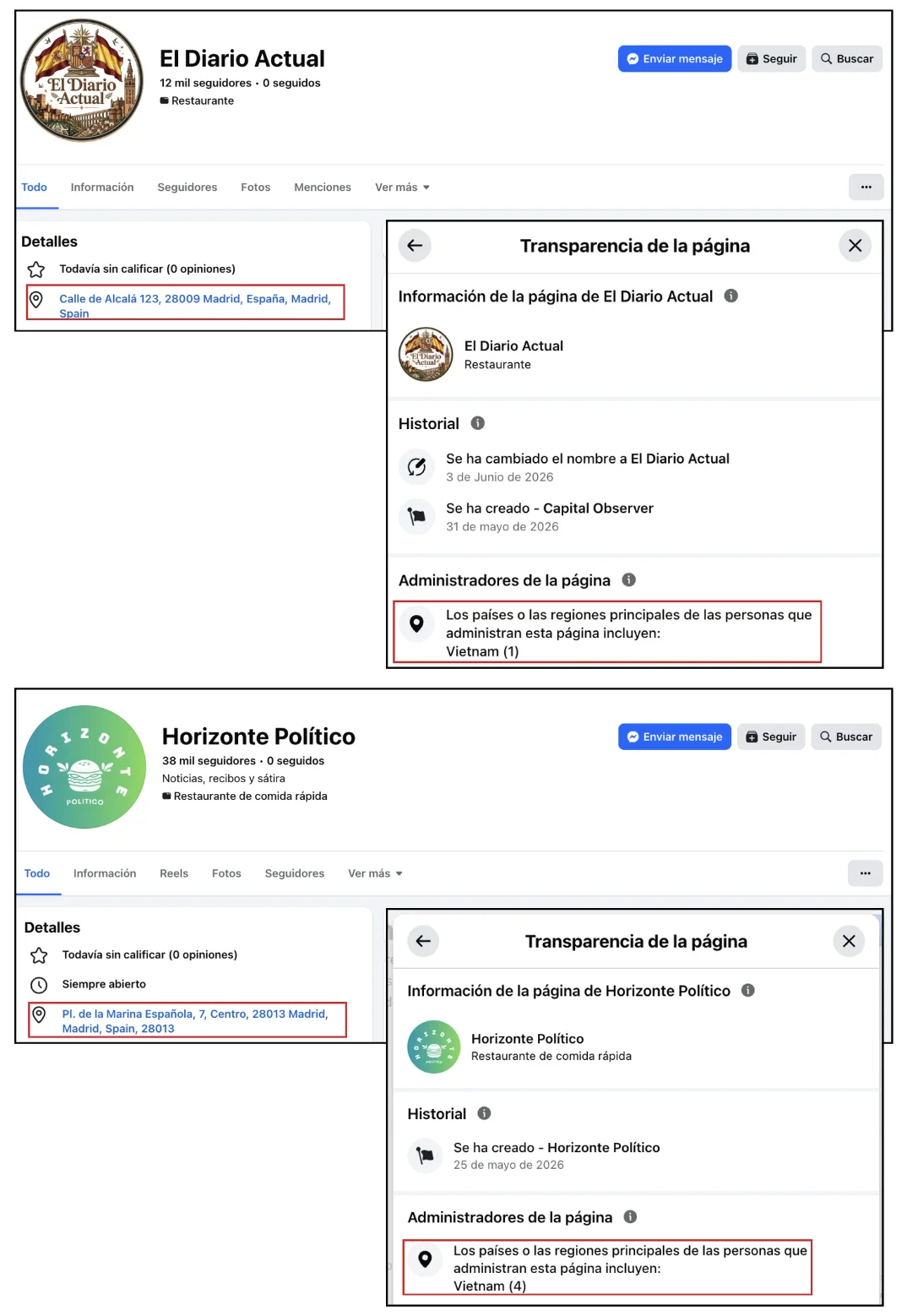
Twenty-three of the 24 pages with location information are located in Vietnam. None appear to be publishing content from Spain: the remaining locations collected from the analyzed pages are Sri Lanka and the United States. However, 13 pages include an address in a Spanish city in their profile . Of these, ten correspond to different locations in Madrid, one in Barcelona, one in Seville, and the last one simply states "Spain." This information is provided by the profile users themselves, while in the page's transparency section, Facebook indicates where the account is managed from, based on the page's "information and activity," "including the location" indicated, "and device and connection information," as explained on the platform's website.
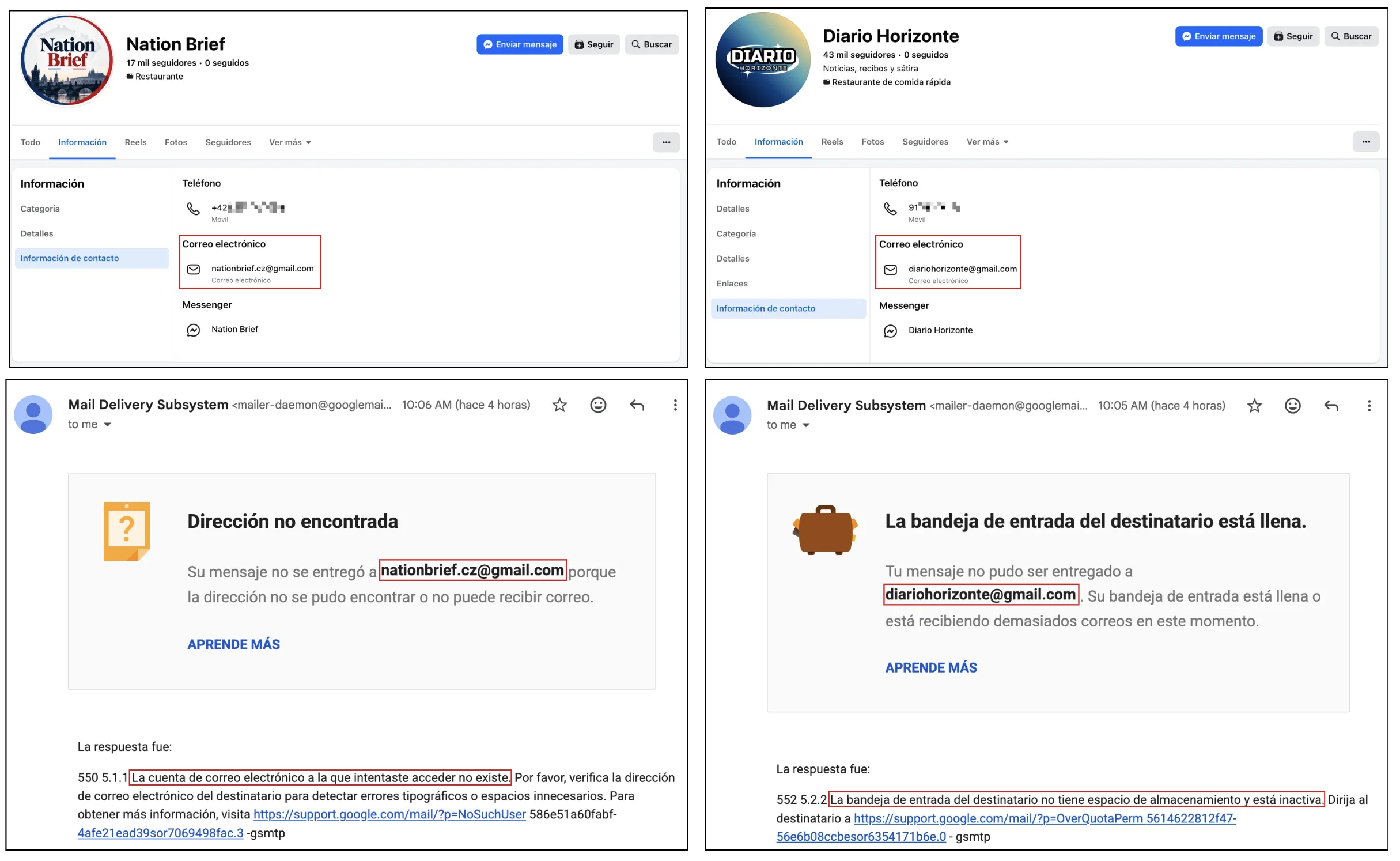
Another distinguishing feature of these pages is the contact information they provide to users. More than half of the pages analyzed (16 out of 30) have an email address visible in their bio. Most follow the same structure: page name followed by @gmail.com. We at Maldita.es tried writing to several of these email addresses, and none of them worked. In every case tested, the Gmail application returned a warning that the address we were trying to write to either didn't exist or had a "full mailbox”.
17 of the 30 pages have published ads on the platform to attract followers
More than half of the pages (56.6%) have inactive ads in the Facebook ad library . In total, 17 out of 30 pages published at least 97 ads on the platform to promote their pages between October 1, 2025, and June 30, 2026, according to the data collected. Several of the ads published by different pages share the same simple structure: an image accompanied by a phrase that encourages the viewer to interact with the ad.
“If you love Spain, click here,” “If you love the Spanish National Team in the World Cup, click here!” or “If you love Bad Bunny, click here,” are some of the messages that appear. Some of these ads, which redirect to external websites, accumulate thousands of likes .
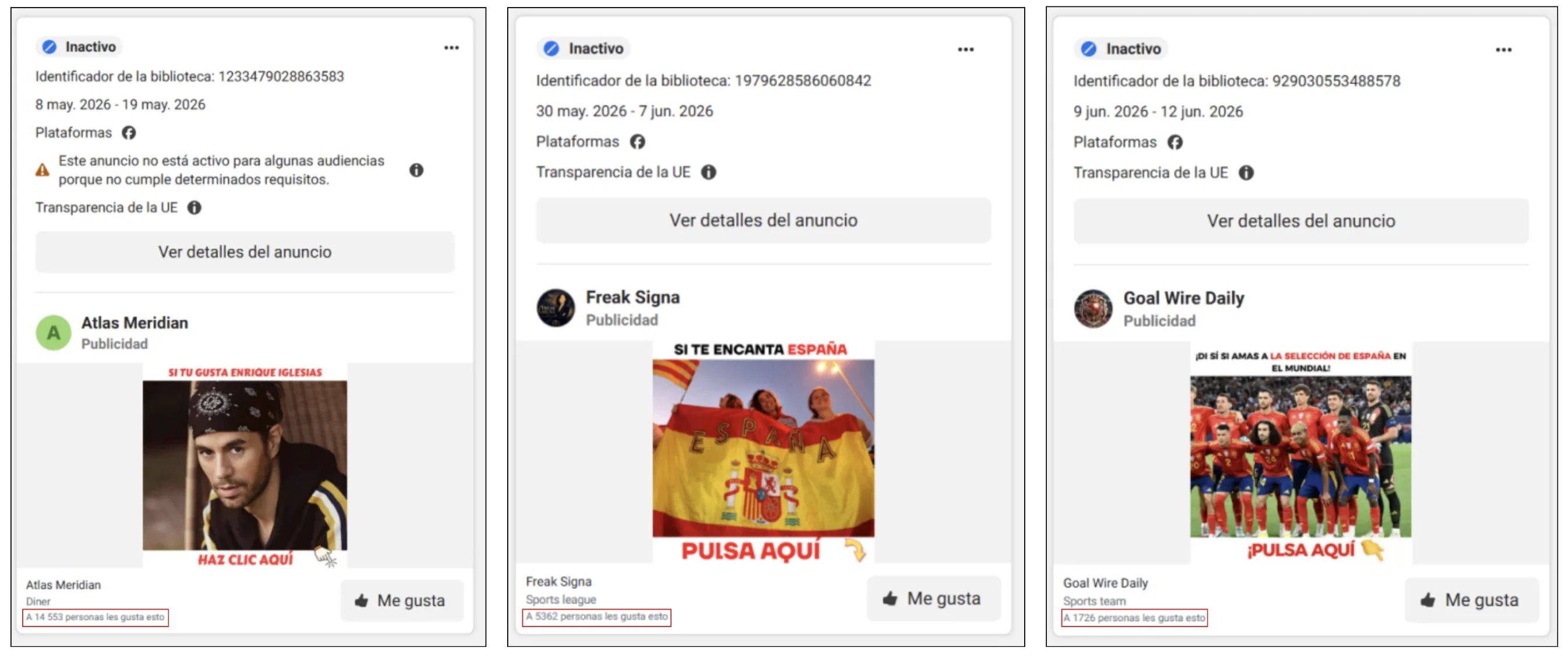
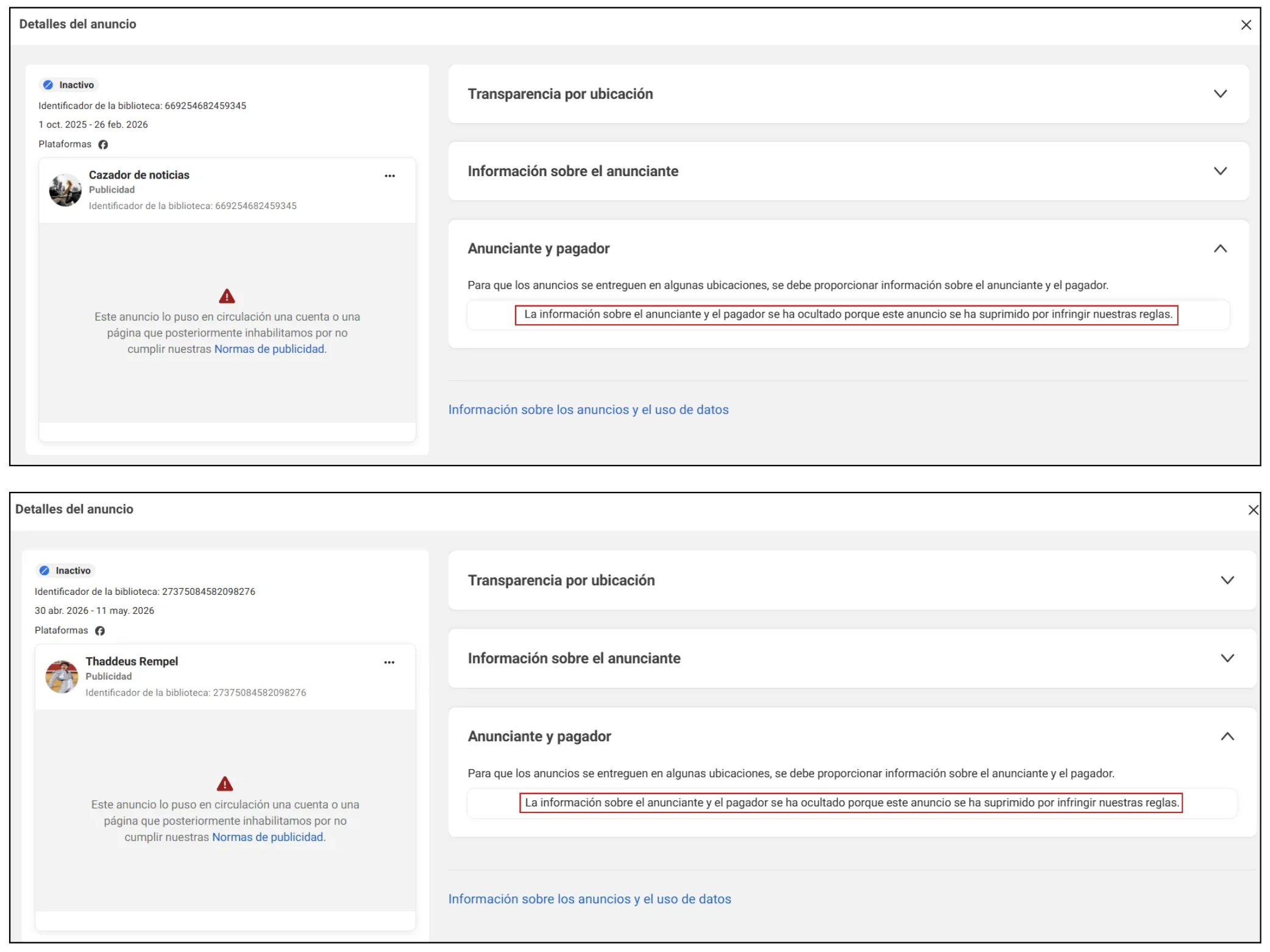
Among the payers of these ads are TRAN VAN KHANG (on 5 of the 17 pages), VO THANH DUNG (4), ALPHAMEDIA (1), and DewMeta (1) . We were unable to access this information for the remaining six pages because the ad content collected in the Facebook ad library was blocked for violating the platform's policies. In these cases, the following message appears: “Advertiser and payer information has been hidden because this ad was removed for violating our rules”.
Another characteristic that some of these pages share is that they are registered on Facebook as “restaurant ”, “fast food restaurant”, “ renovations” or “sports team”, even though they are not related to those activities.
The phenomenon of website farms in Vietnam is a reality that affects the United Kingdom, Hungary, and Canada
In Hungary, the Policy Research and Consulting Institute, Political Capital, published in May 2026 an analysis of 25 Facebook pages belonging to a content farm: of the eleven that showed the location, ten indicated Vietnam , according to the platform's Transparency section.
Csaba Molnár, Head of Research at Political Capital, explained to Maldita.es that in recent months they have detected around 400 Facebook pages, including those analyzed by Maldita.es , that primarily disseminate political content in several European countries in their respective national languages. “The main markets are Hungary, Poland, Italy, France, Spain, Slovakia, Germany, and the Netherlands”, Molnár explained, although they have also detected “pages about sports and celebrities targeting English-speaking audiences in the United States, Canada, Australia, and New Zealand,” he added. Molnár also agreed that the motivation appears to be commercial: the operators choose divisive political topics because they drive traffic to ad-heavy websites.
This content, much of it disinformation, can “distort users’ perceptions of their own country’s politics”, Molnár adds. This coordinated activity, according to the expert, “is a problem in itself, as it violates Meta’s own rules : pages managed from Vietnam are impersonating local media outlets or citizen voices.”
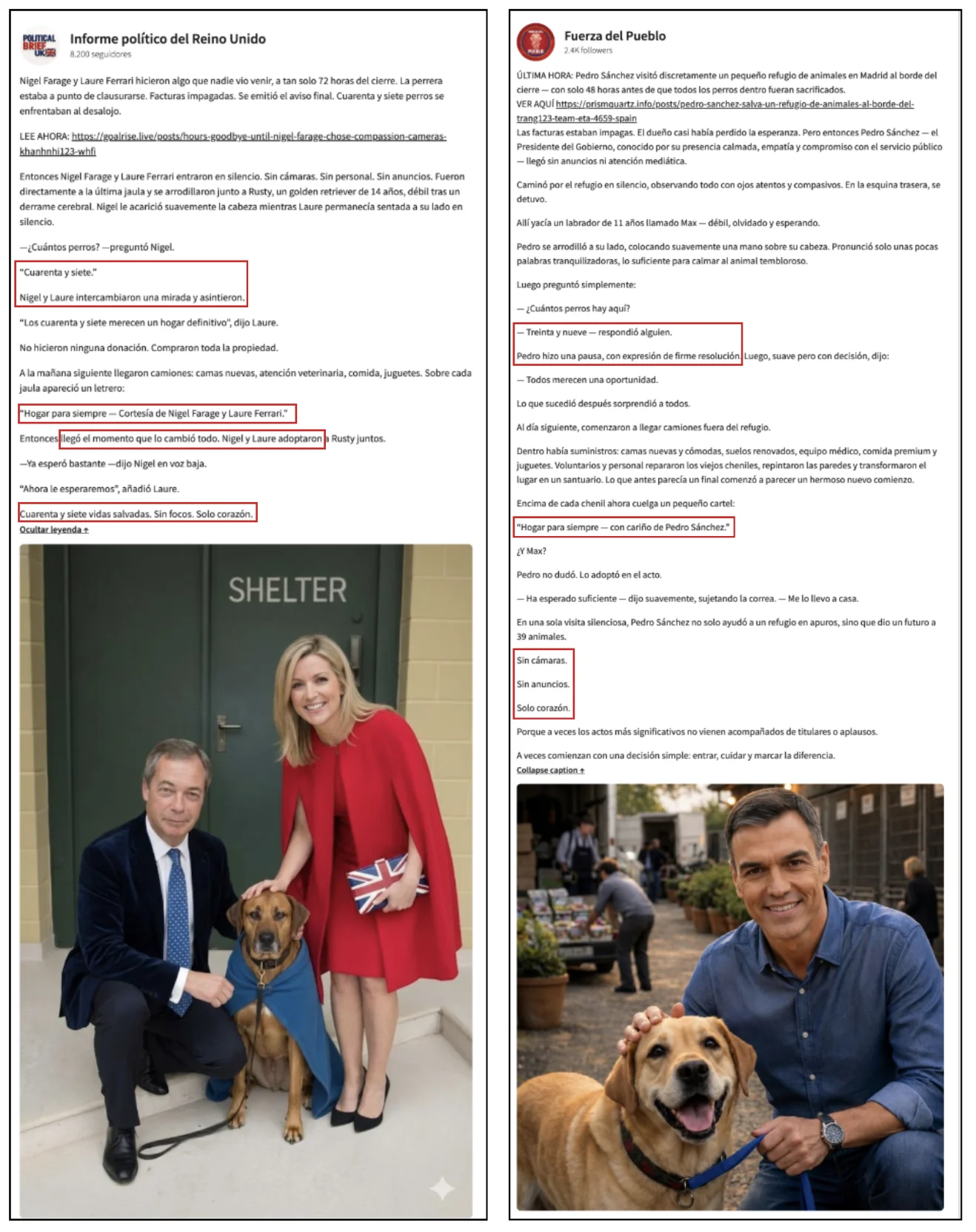
This isn't the first time these websites have published political content during election periods. In the UK, the BBC reported that such content was circulating in the months leading up to the parliamentary elections in Wales and Scotland. Some of this content, as reported by Full Fact, depicted Nigel Farage, leader of Reform UK, and his partner, Laure Ferrari, rescuing 47 dogs from an animal shelter "on the verge of closing". Similar content with comparable text appeared in Spain featuring Pedro Sánchez , another indication that they might be using templates to fabricate these stories. According to the Centre for Media, Technology and Democracy in Canada, the use of fabricated stories involving politicians of opposing ideologies reinforces the websites' economic interests, rather than political ones.
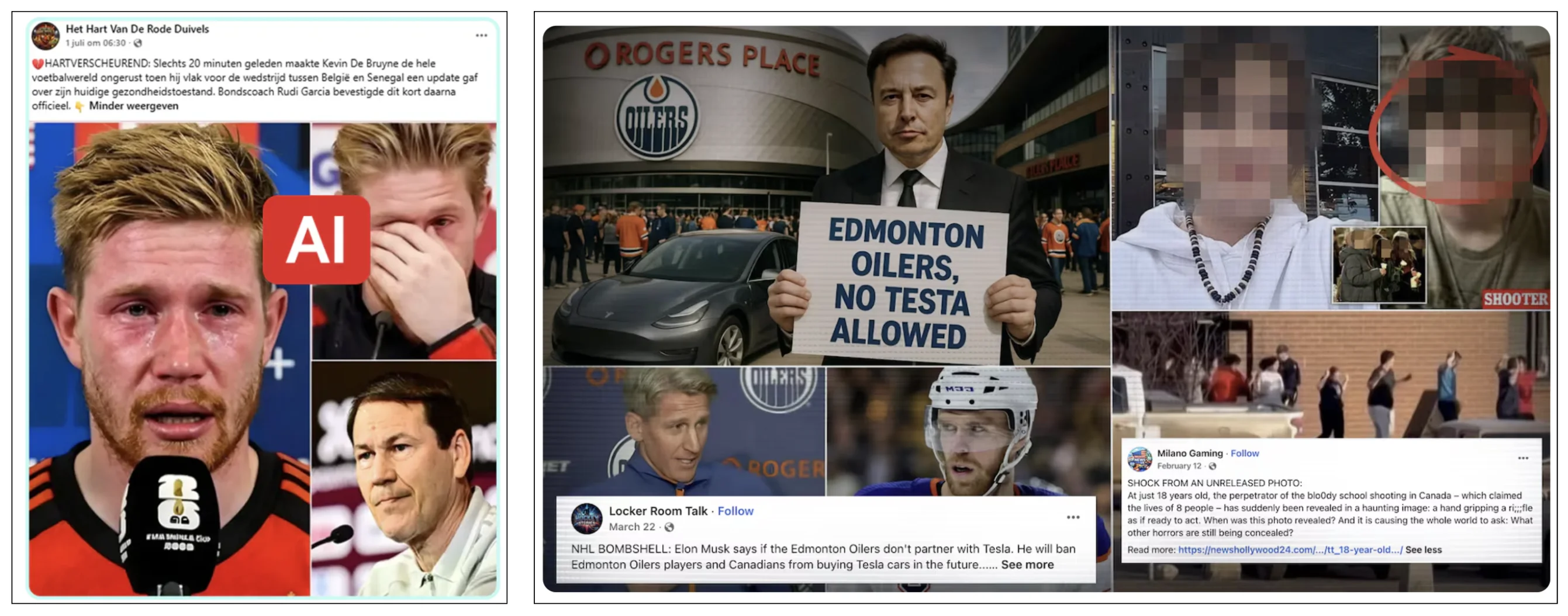
Other countries where these websites have been detected include Slovakia , Belgium, Australia, Canada, and the United States, as reported by the Center for Media, Technology and Democracy. An investigation by Canada's public broadcaster, CBC, traced one of these networks and led them "to a company in Vietnam that claims to have more than 100 employees, thus revealing the workings of the global disinformation economy."
This article was made possible thanks to the collaboration of Javier Sanz, a criminologist specializing in cybercrime and behavior analysis in cyberspace.
Thanks to your superpowers, knowledge, and experience, we can fight lies more effectively. The Maldita.es community is essential to stopping disinformation. Help us in this battle: send us the hoaxes you receive via our WhatsApp service , lend us your superpowers , share our fact-checks, and become an Ambassador .