
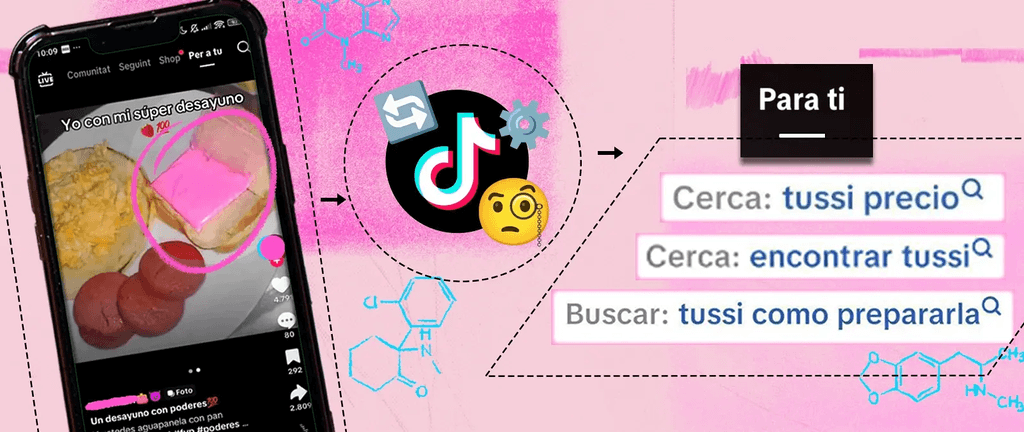


“Tusi Colombia” and “Tusi Santa Cruz Bolivia”: TikTok suggested specific searches by city and product
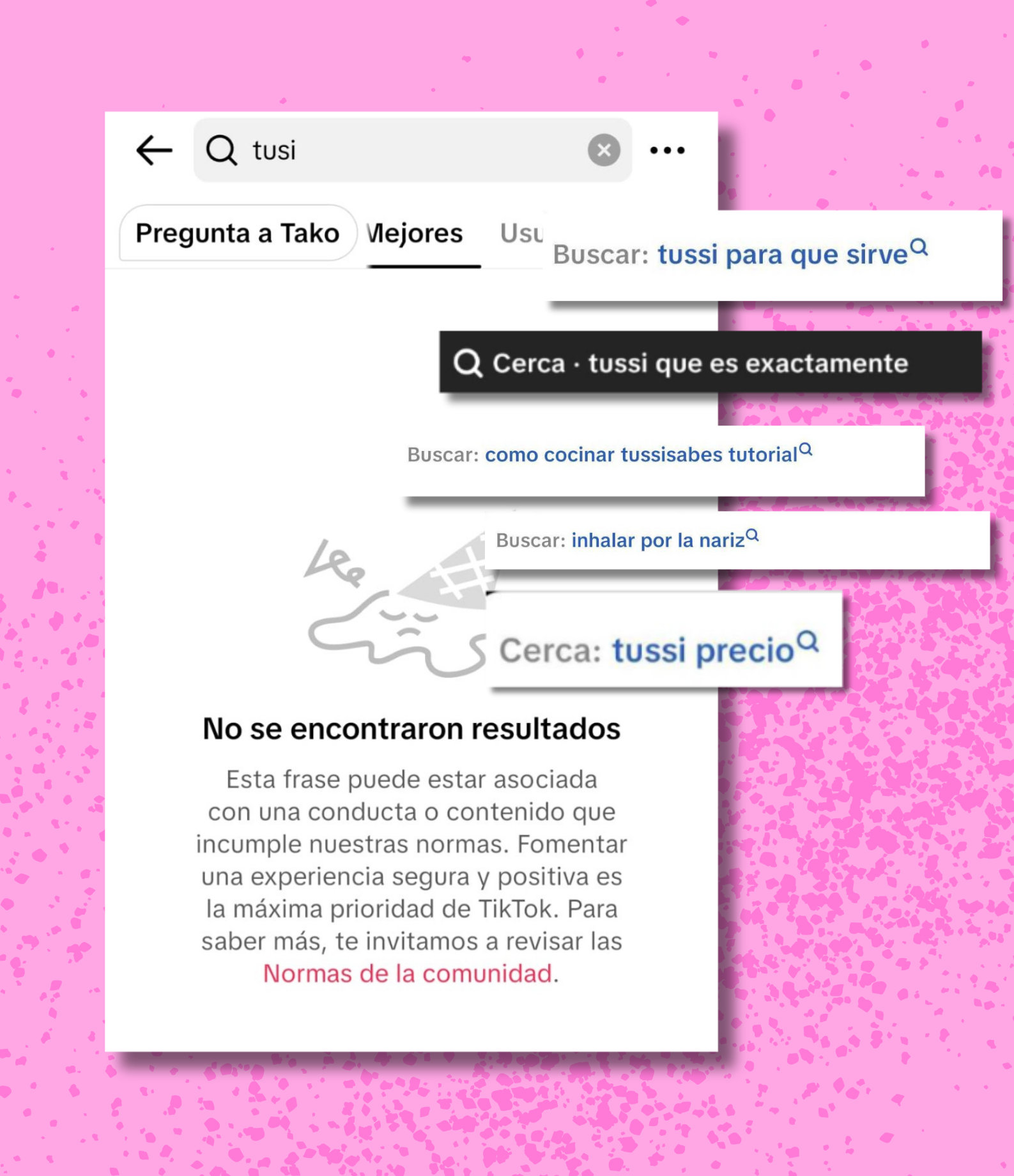
If we search TikTok for terms such as “tusi”, “ketamine” or “supplies”, the platform blocks access to the results, warning that “this phrase may be associated with behaviour or content that violates our guidelines”. Yet the platform contradicts itself. After we watched several videos about how the drug is prepared, TikTok itself began suggesting searches related to this illicit market, including “tussi price” (sic), “inhale through the nose” (sic) and “tusi effects experience” (sic).
On its website, TikTok explains that it bases its recommendations on three factors: user’s interactions with content; information contained in the post itself; and the personal data that users provide to the app through their profiles.
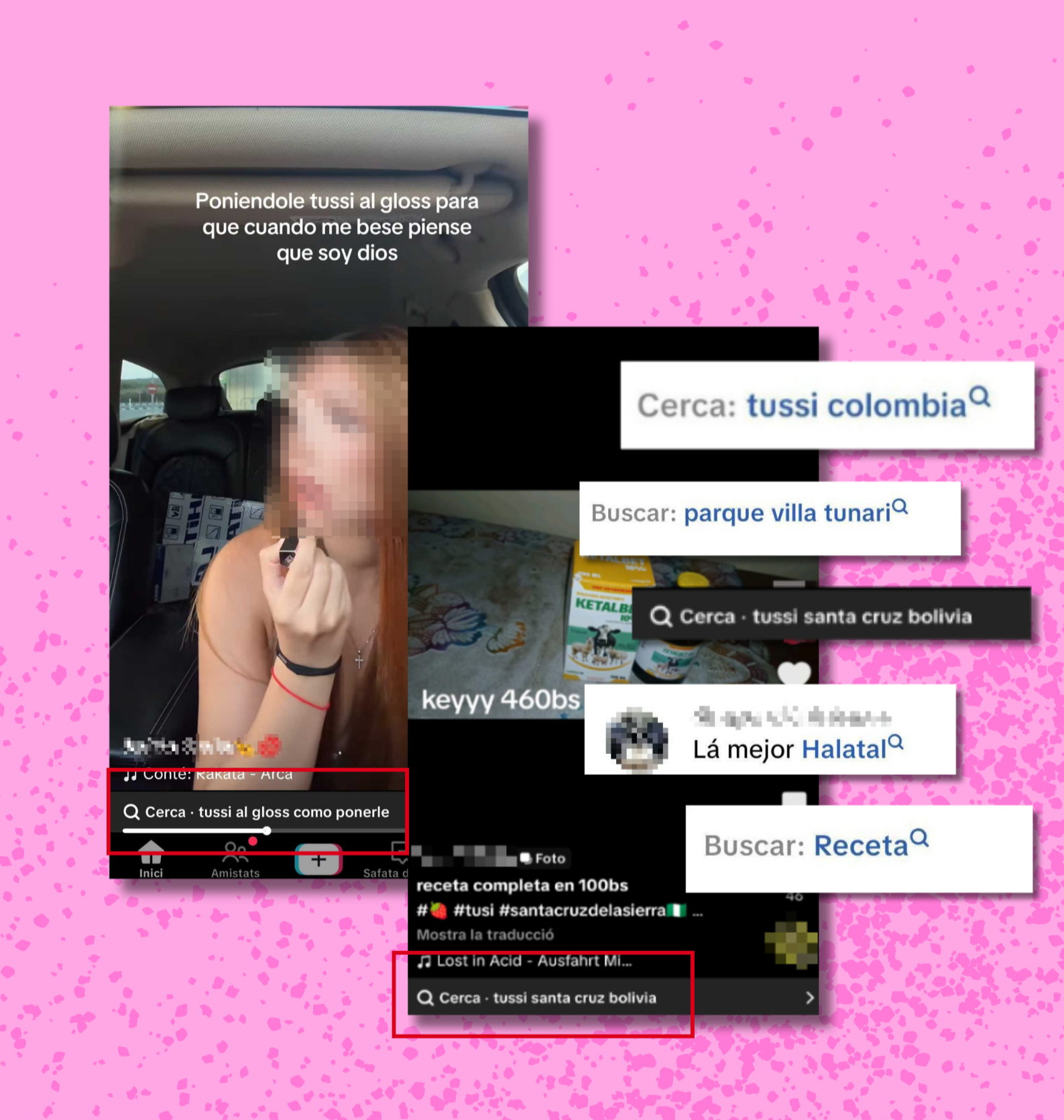
Javier Sanz, a criminologist specialising in cybercrime and behavioural analysis in cyberspace, points out that once someone interested in tusi comes across content promoting its sale, “the algorithm will show them not only this criminal” [referring to the drug dealer], but many others like them”. This is how more videos about tusi began appearing on our ‘For You’ feed, while the suggested searches became increasingly specific. They began to segment results by country, with suggestions such as “tussi colombia” (sic); making it easier for users to find the drug in specific cities; with suggestions such as “tussi santa cruz bolivia” (sic); and helping users find specific products, including the ketamine brand “Halatal”, an anaesthetic used in animals that forms part of the tusi formula.
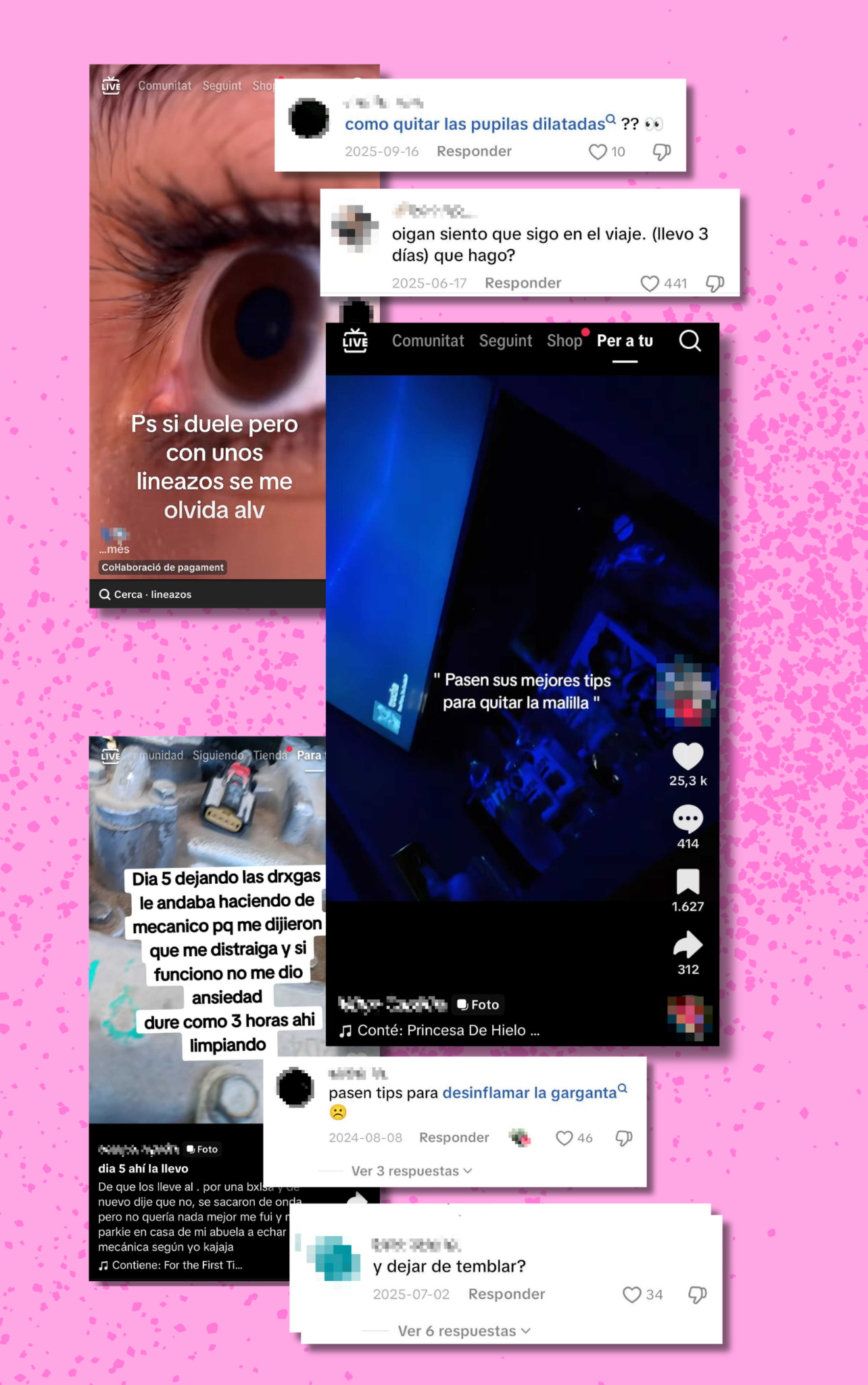
TikTok also suggested searches such as “dilated pupils” and “psychotic episode”, which brought up content from users — many of whom appeared to be teenagers — describing the effects of using these drugs every day. Others asked for advice on how to cope with the “malilla”, a term used to describe withdrawal symptoms.
“Magic”, “recipes” and “kitchens”: TikTok includes tusi-market keywords in its AI-generated content summaries
This black market on TikTok is organised around a set of keywords which, according to criminologist Javier Sanz, also influence the algorithm: “The criminal advertises the product using keywords, such as ‘recipes’ or ‘active’, which in turn prompts TikTok’s algorithm to show them videos and users connected to that world.” At Maldita.es, we have frequently come across words such as “kitchen”, “water”, “magic”, “supplies” and “shipping” in sellers’ profiles and videos.
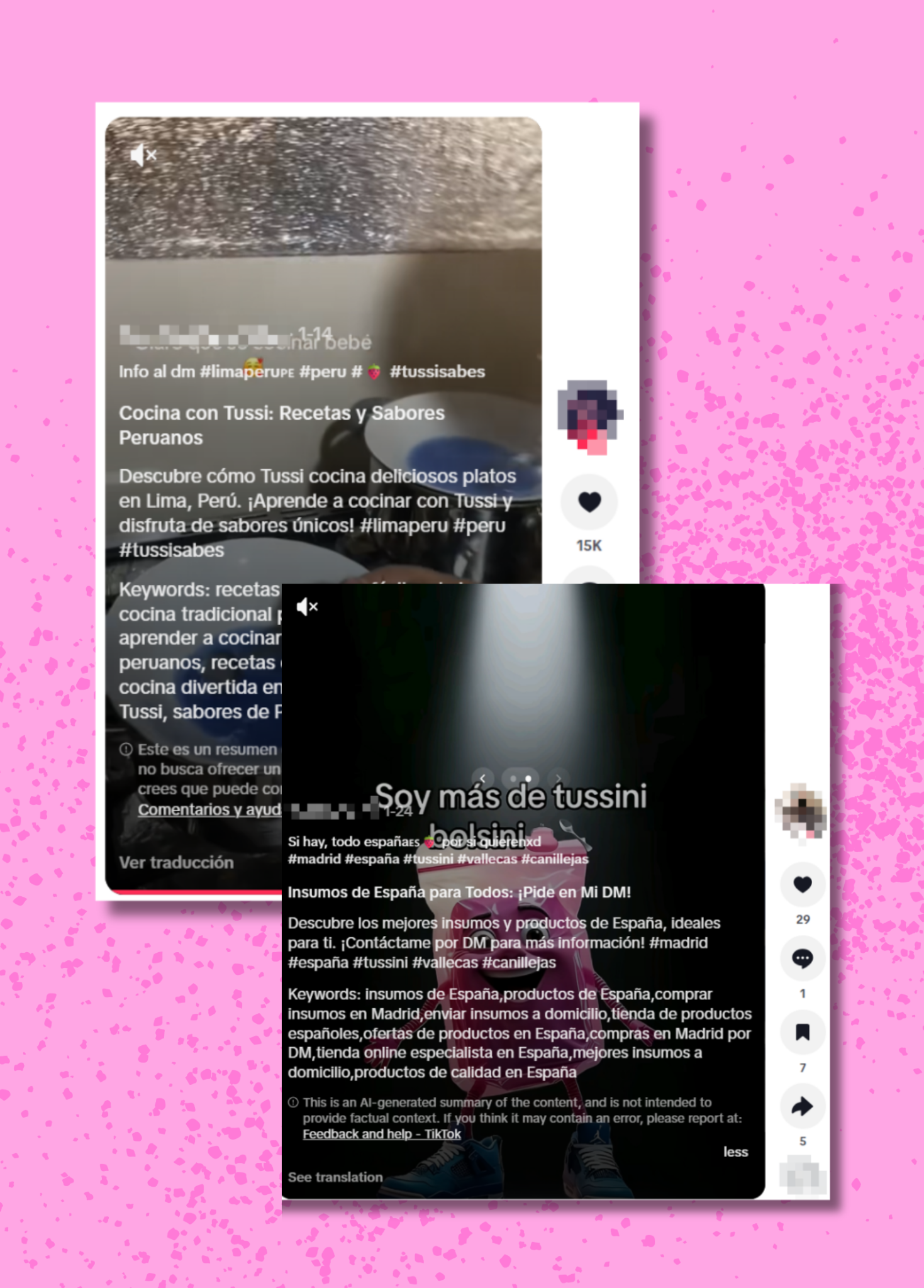
These same keywords also appear in the “content summaries” TikTok generates using artificial intelligence (AI) on videos that explicitly mention the sale of tusi. At Maldita.es, we found no information on the social network’s website explaining how these summaries are generated. However, over the course of our investigation, we observed that they included phrases such as “learn how to cook with tusi”, “enjoy unique flavours” and “supplies [substances used to make tusi] in Spain for everyone: DM me to order! (sic).
From other-drug content to videos about “escorts”: what TikTok’s ‘For You’ feed showed us
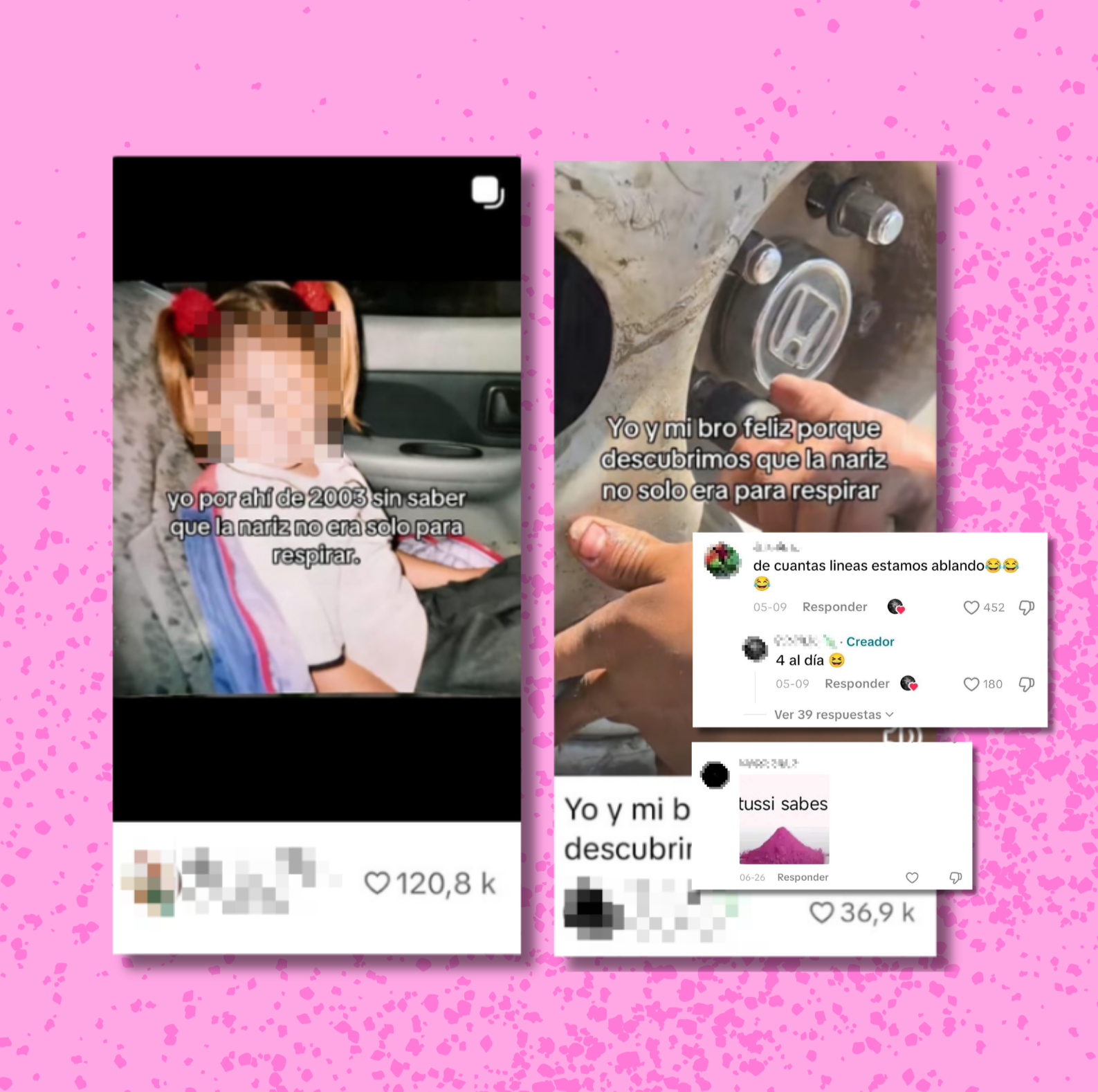
Tusi users have developed their own trends on the app — viral content replicated by users across the platform — and TikTok recommended them to us on our ‘For You’ feed. The algorithm repeatedly showed us videos captioned “me in 2015, not knowing my nose was good for anything other than breathing”, some with more than 100,000 views and comments about daily drug use.
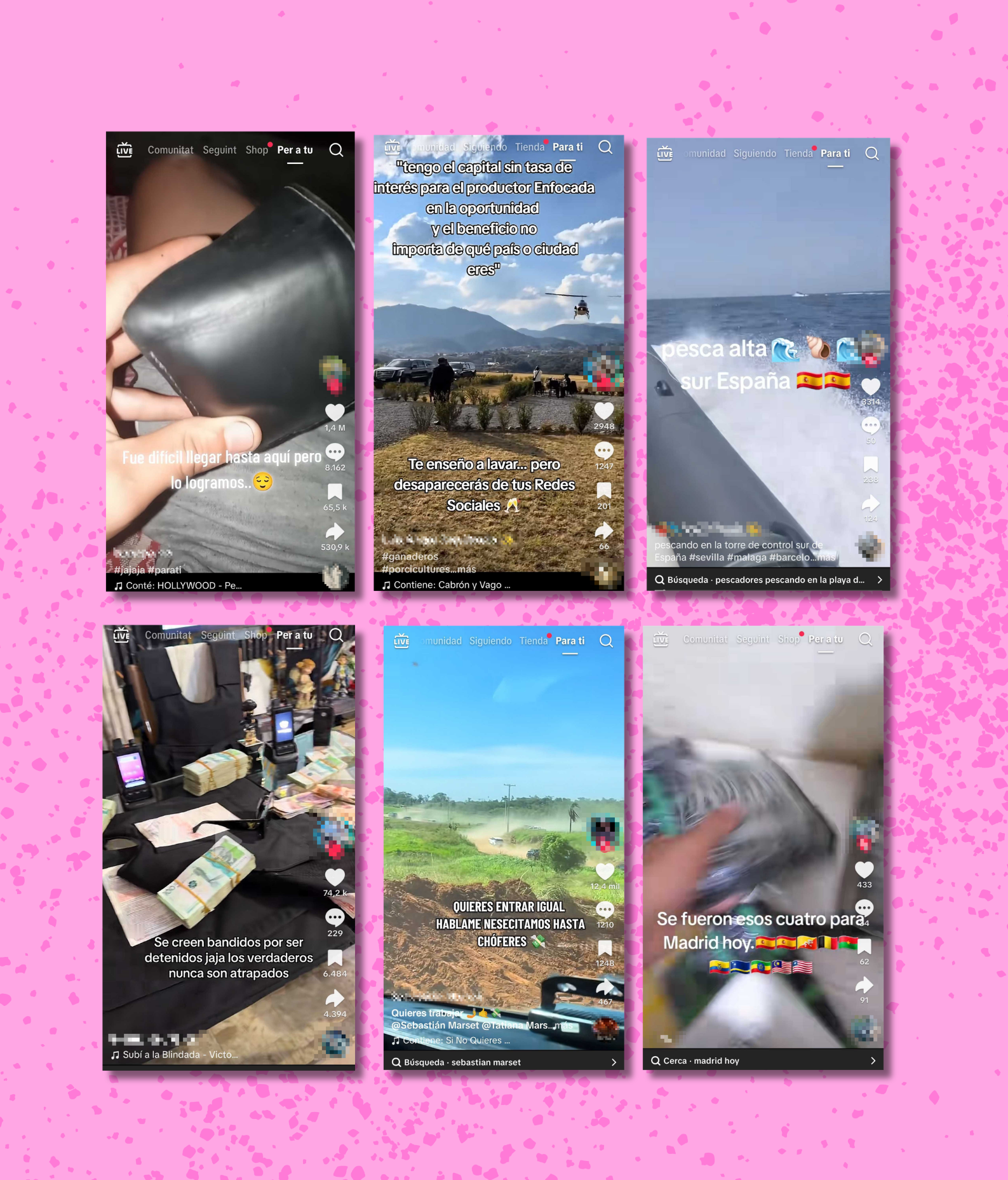
The algorithm soon began showing us videos of wallets stuffed with banknotes, accompanied by captions such as “it was hard to get here, but we made it”. TikTok also suggested posts showing wrapped packages, with messages such as “four were sent to Madrid today”, as well as boats described as being used for “deep-sea fishing in southern Spain”. Other posts showed helicopters and people loading wrapped packages into the boot of a car, while offering “capital” and recruiting people who wanted to “get in” — in other words, using TikTok to recruit others into selling the drug.
TikTok’s algorithm also began showing us videos about “escort recruitment” and adverts for supposed “hormo groups”, spaces where minors share intimate images. These posts move the conversation to Zangi, a messaging app which, as we have reported at Maldita.es, is used by paedophiles to obtain images of minors. According to Mercedes Cimas, the fact that the algorithm draws a connection between tusi and Zangi groups “is no coincidence”. She warns that the combination of this content and drug dependence could lead a teenager to see it as a way of “making money to fund their addiction”.

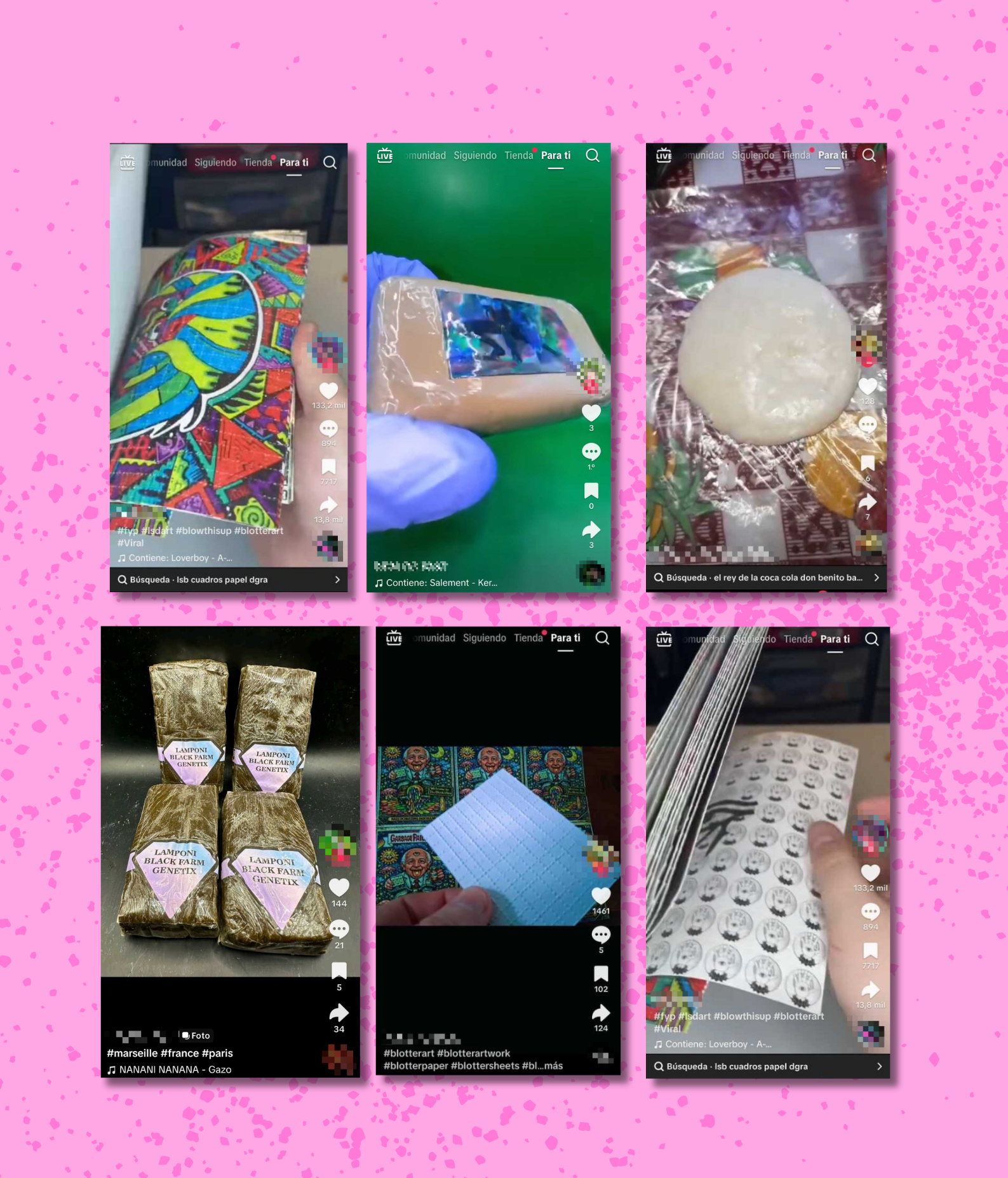
TikTok states on its website that content personalisation “also takes into account the interactions of other people who appear to have interests similar to yours”. We noticed that, after we had watched hundreds of videos about tusi use, the platform began showing us users claiming to sell other substances, including cocaine, hashish and LSD.
Videos promoting drug use and sales continue to circulate on TikTok despite being banned under the platform’s rules
TikTok’s policies explicitly prohibit content that provides “instructions on how to make or use regulated substances, such as drugs”, as well as content that shows people “displaying, providing or consuming” these substances. Criminologist Javier Sanz says drug dealing on TikTok is the result of “a motivated offender, a suitable target and the absence of a ‘capable guardian”.
Among the examples of content the platform classifies as “not allowed” are two types that TikTok’s own algorithm suggested to us: videos featuring drug-related paraphernalia and “the depiction of substance use or abuse”. The platform also prohibits “behaviour that promotes criminal activity” and instructions on how to carry out harmful acts.
Under the EU Digital Services Act (DSA), TikTok must assess whether its features — including its recommendation algorithms and content moderation systems — may pose risks that could negatively affect minors and their rights, or public health (Article 34). It is also required to take effective measures to mitigate those risks (Article 35).
This article was written with the help of Javier Sanz, a criminologist specialising in cybercrime; and Mercedes Cimas, a psychologist specialising in adolescents, who lent us their superpowers, both contributors of Maldita.es.
Mercedes Cimas is part of Superpoderosas, a project by Maldita.es that aims to increase the presence of female scientists and experts in public discourse through collaboration in the fight against disinformation.
Thanks to your superpowers, knowledge, and experience, we can fight harder and better against lies. The Maldita.es community is essential to stopping misinformation. Help us in this battle: send us any hoaxes you come across to our WhatsApp service, lend us your superpowers, spread our debunkings, and become an Ambassador.