
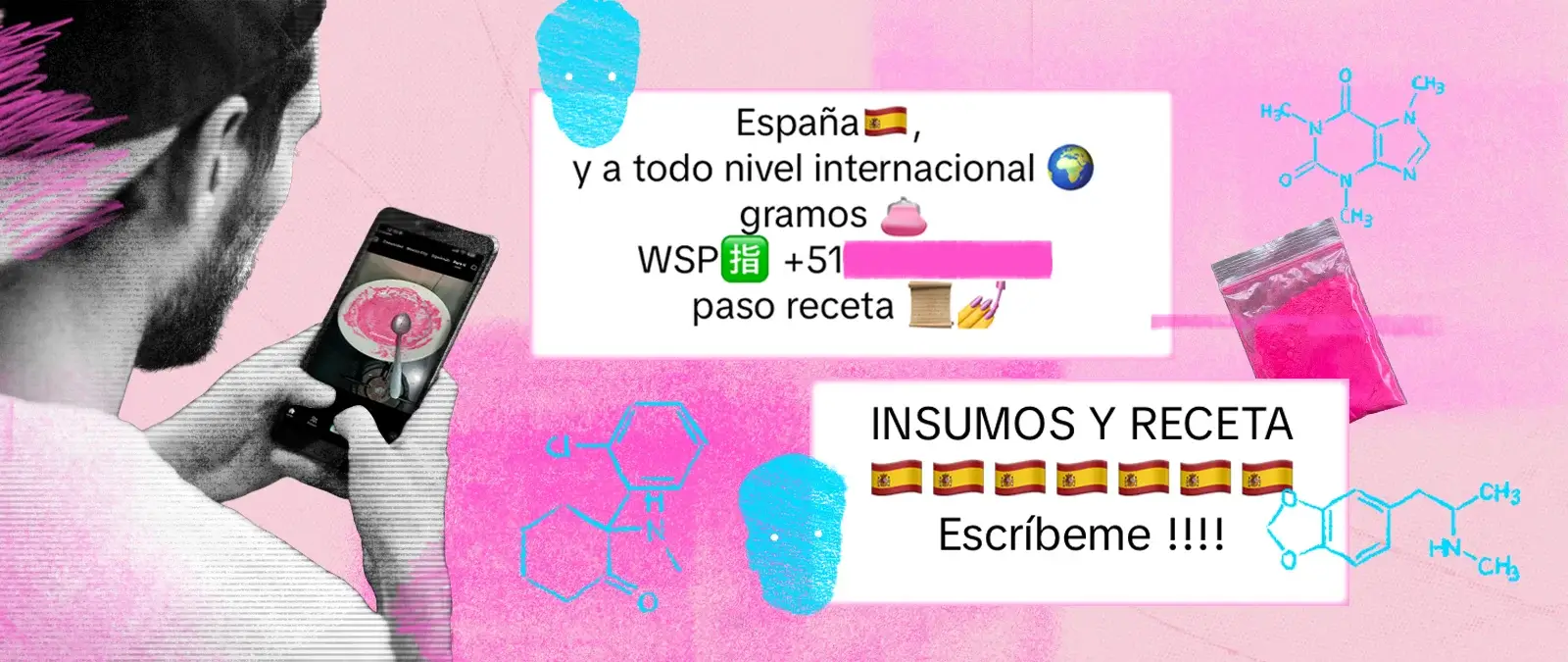

From these accounts, the majority (62,3%) sold some variety of drugs, whether it was ‘tusi’ itself or other substances used in its preparation. The rest offered recipes and other ingredients such as food coloring. Most of these profiles operate in three countries: Peru (45%), Colombia (32.7%) and Spain (6.3%). Additionally, we have found at least 395 videos that explicitly show ‘tusi’ or its preparation, with over 23.7 million views.
This is just a glimpse of the global ‘tusi’ market, which operates internationally. On TikTok, we found 138 videos claiming to deliver these products even outside their country of origin.
Tusi: preparations, ingredients and recipes – this is how this drug is marketed on TikTok
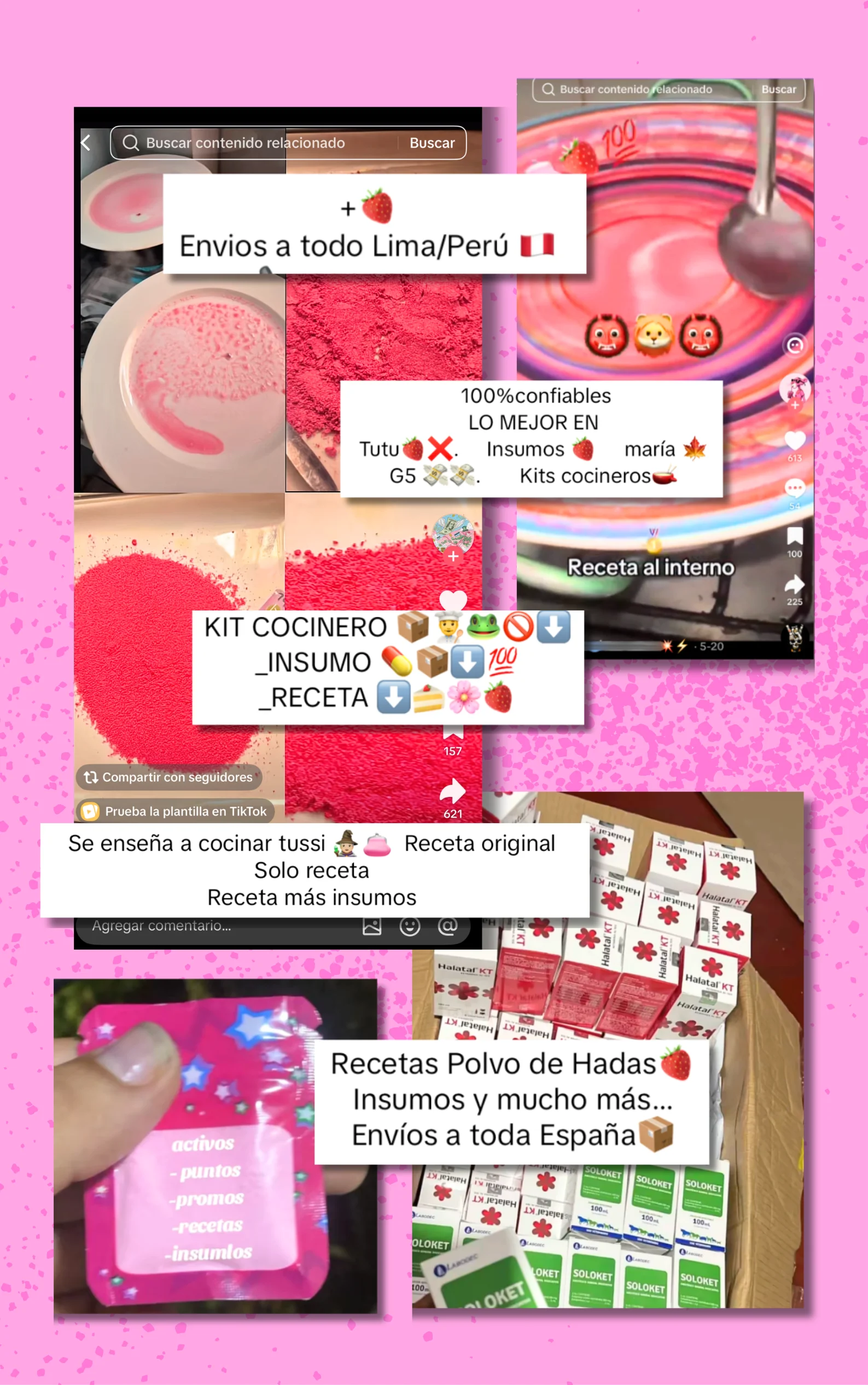
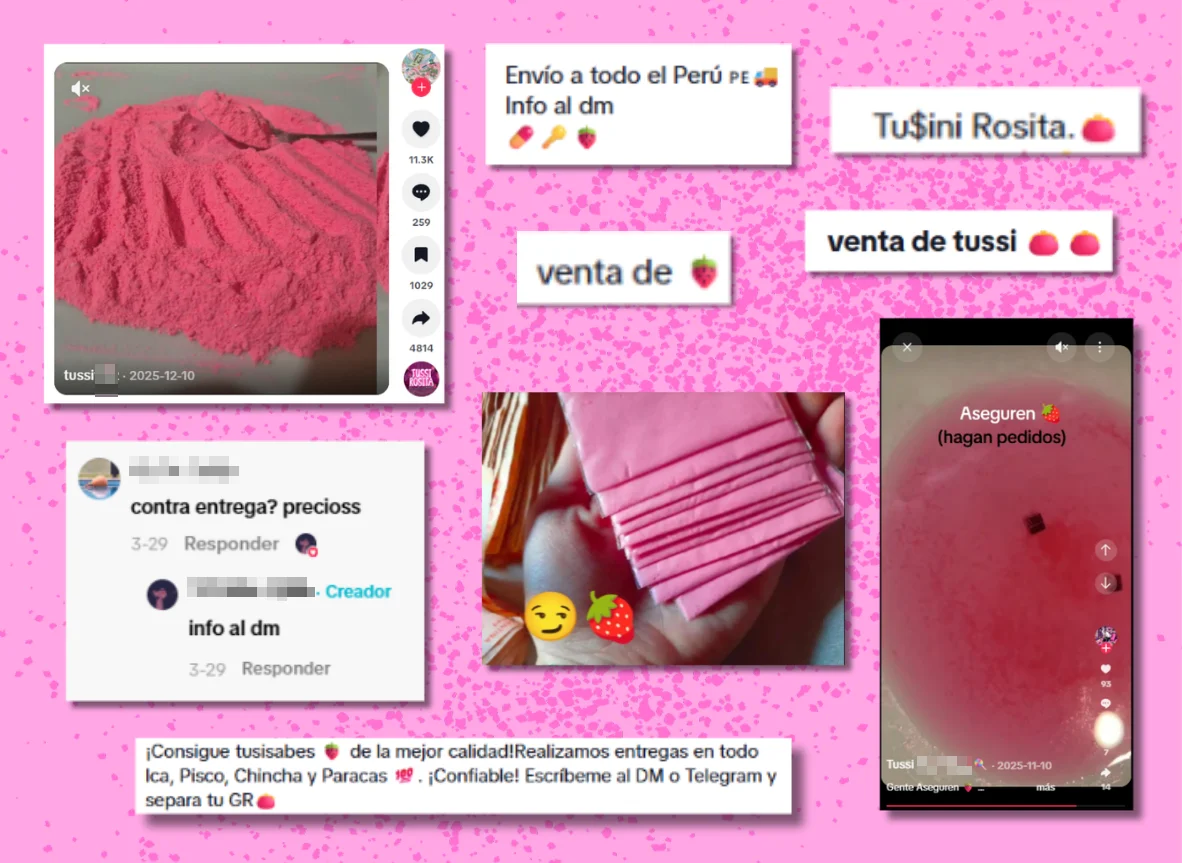
“Get the best-quality ‘tusisabes’ 🍓!” (sic), “I’ll show you how to make your own ‘tusisabes’ 🍓🍋🍇🫐” (sic) and “Step-by-step recipe + where to get the ingredients 👛” (sic). These are some of the messages that appear repeatedly in the descriptions and comments of the 504 profiles analysed by Maldita.es.
Of these, 314 accounts offer prepared tusi as well as other drugs needed to cook it, such as ketamine and MDMA. We’ve also found accounts claiming to sell other drugs like LSD, mescaline, magic mushrooms, methamphetamine or fentanyl, which are also used as ingredients in this concoction.
In their videos, they show both the drug itself and the process of making it, supposedly to demonstrate its quality. “Shipments of ingredients and ready-made magic 💯🧑🍳” (sic) and “Vitamin for the soul!! Cosmic quality” (sic) are some of the messages they post in their bios.
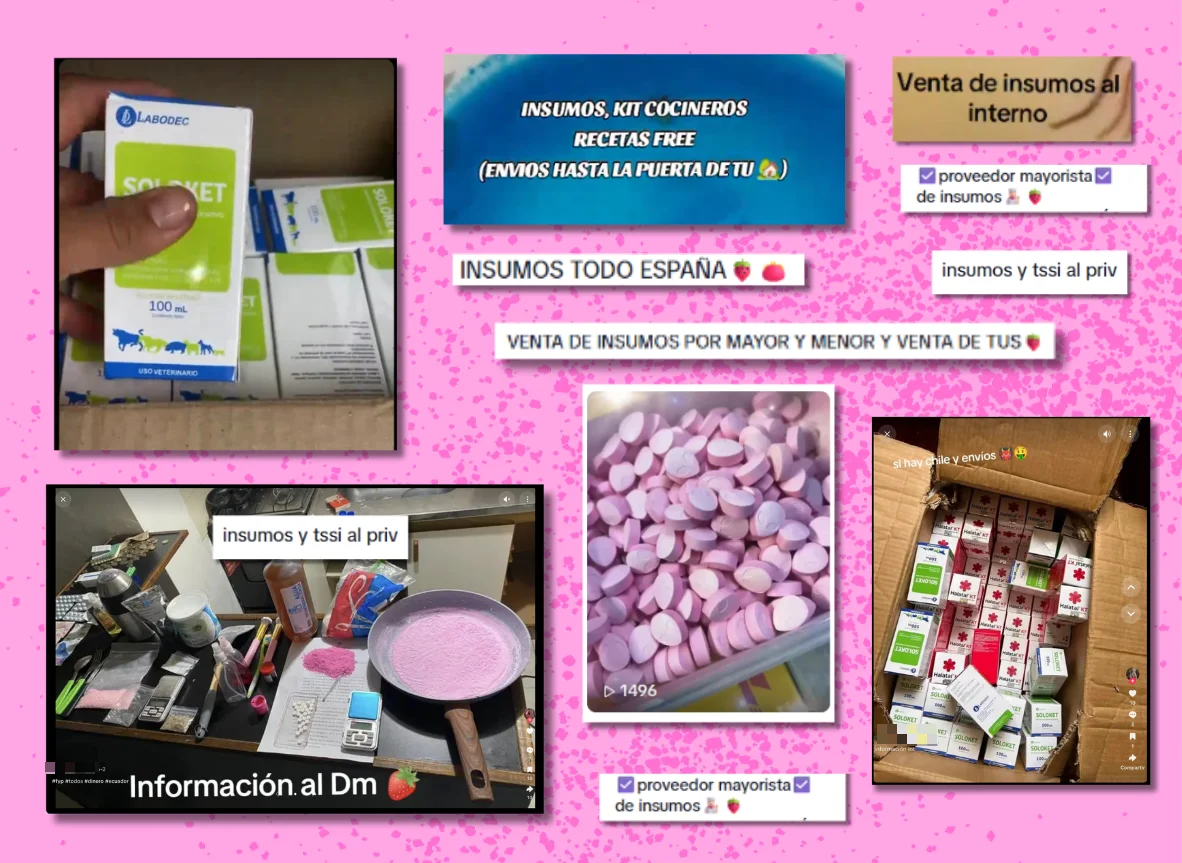
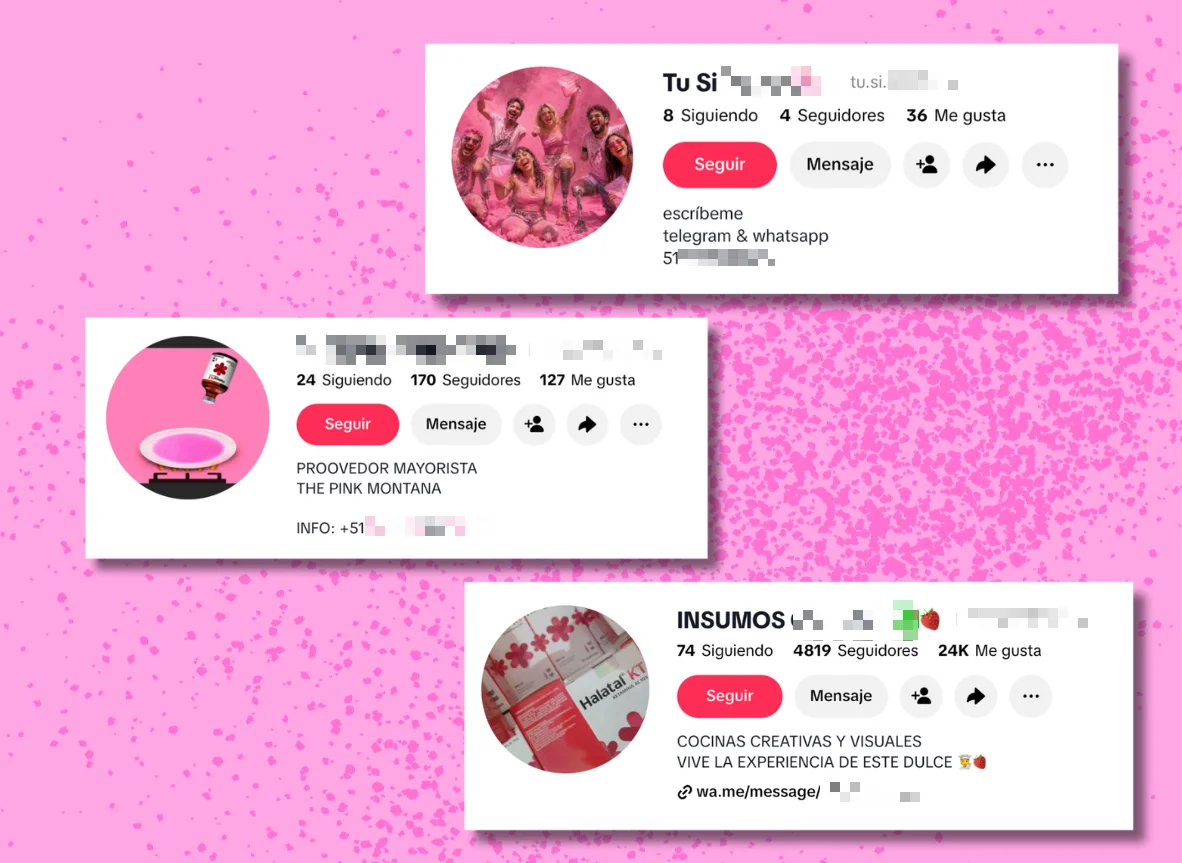
There are also profiles that claim to sell the ingredients (or “insumos”, as they often call them) needed to make tusi. We found 140 accounts of this kind. In most cases, they do not specify exactly what they mean by “insumos”, so at Maldita.es we have classified them as a separate category from those accounts that explicitly claimed to sell tusi and other drugs. When we contacted one of these profiles, they offered us ketamine, while others sell flavourings and colourings in different varieties. According to Claudio Vidal, the national director of Energy Control, a Spanish programme focused on reducing the risks associated with drug use, these flavourings are used to achieve the fluorescent colours and aromas with which tusi is presented.
In some cases, these profiles promote the production and subsequent sale of tusi as an opportunity to ‘start a business’ or set up one’s ‘own enterprise’, encouraging users to manufacture this drug.
The videos displaying these products encourage potential buyers to contact the seller. The conversation can then continue via private messages on TikTok or through other encrypted messaging apps, such as WhatsApp or Telegram: Maldita.es has spoken to several of them. “You contact or interact with the video or photo, a private conversation is requested, you move to a private, encrypted app where the minimum necessary details are exchanged, payment is made and delivery takes place,” explains Javier Sanz, a criminologist specialising in cybercrime and behavioural analysis in cyberspace.
A free recipe with your first purchase of ingredients: this is how they secure their supply
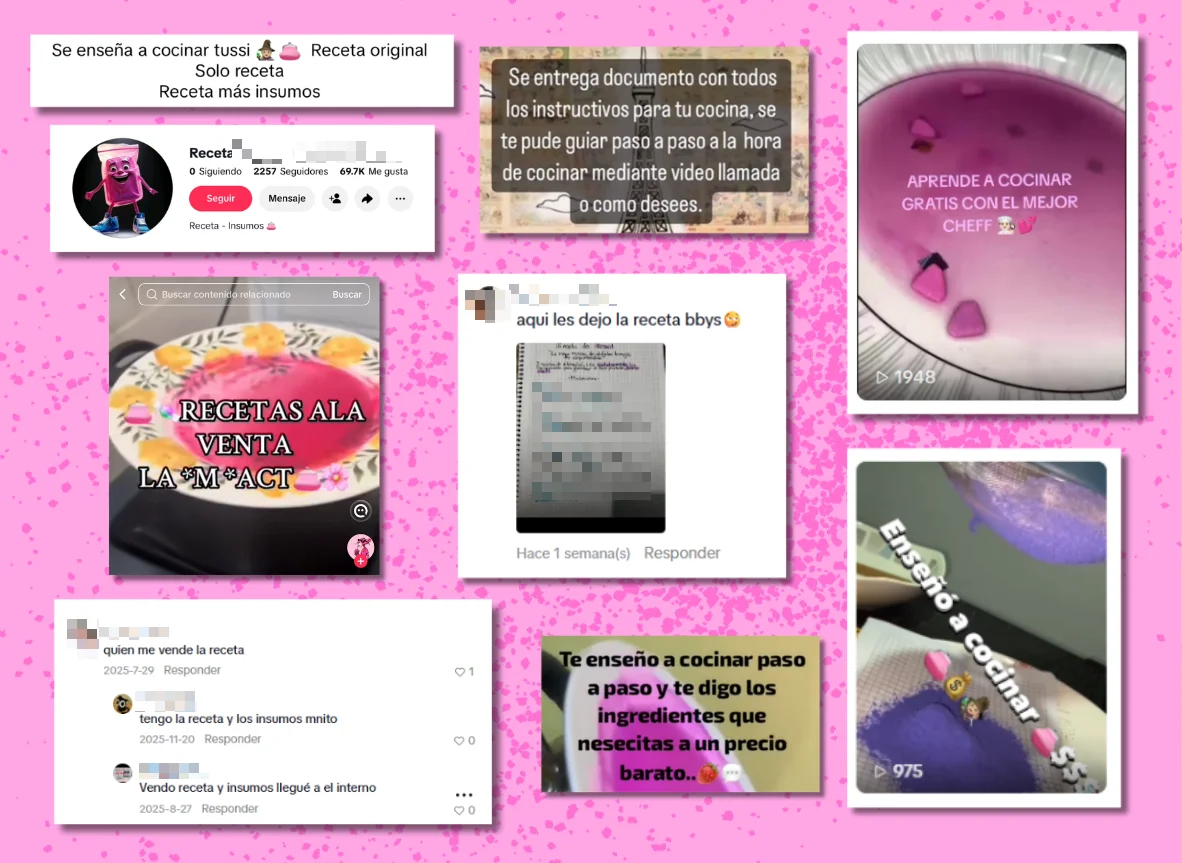
Recipes for making tusi are also part of this TikTok black market. These range from complete recipe packs including all the ingredients (97 posts) to accounts that only sell you the step-by-step instructions for making it (66), and there are even some profiles that share the instructions for free (59).
“Free recipe, if you want to learn to cook, I’ll teach you”, “learn with us”, “the best quality with us, get in touch, we’ll give you the recipe for free with your first purchase”, is how hundreds of videos promote their products. Sanz explains that by giving away the recipe, the seller demonstrates their expertise and builds trust among potential buyers, whilst channeling demand towards the ingredients they themselves sell. “The person giving away the recipe ends up monetising the supply,” he concludes.
Peru, Colombia and Spain: the countries with the highest number of this type of TikTok accounts
The origins of the name “tusi’ trace back to 2C-B, a psychedelic substance synthesised in the United States in the early 1970s. According to the Valencian Institute for the Treatment of Addictions (Ivatad), it reappeared in Colombia around 2015 under the name “tusi” or “pink cocaine”, but this time as a mixture of various drugs dyed with pink food colouring, which subsequently became popular in Spain and Europe under the Spanish-style name “tusibi”.
This expansion is evident in the 504 profiles analysed by Maldita.es. Of these, Peru has the highest concentration with 227 accounts (45%). It is followed by Colombia with 165 profiles (32.7%) and Spain with 32 accounts (6.3%).
“[In Spain] Tusi first appeared in the most popular tourist areas: the Costa del Sol, Ibiza, etc. But these days, you can find it anywhere, and what that tells us is that it has very quickly become part of the mainstream drug scene,” Claudio Vidal, fromEnergy Control, explains to Maldita.es. According to the organisation, this expansion may be linked to its ‘new and appealing format’, and ‘its high availability and the sensationalist coverage given to tusi (‘pink cocaine’ or ‘the drug of the elite’), which has helped to create a positive image amongst potential users’.
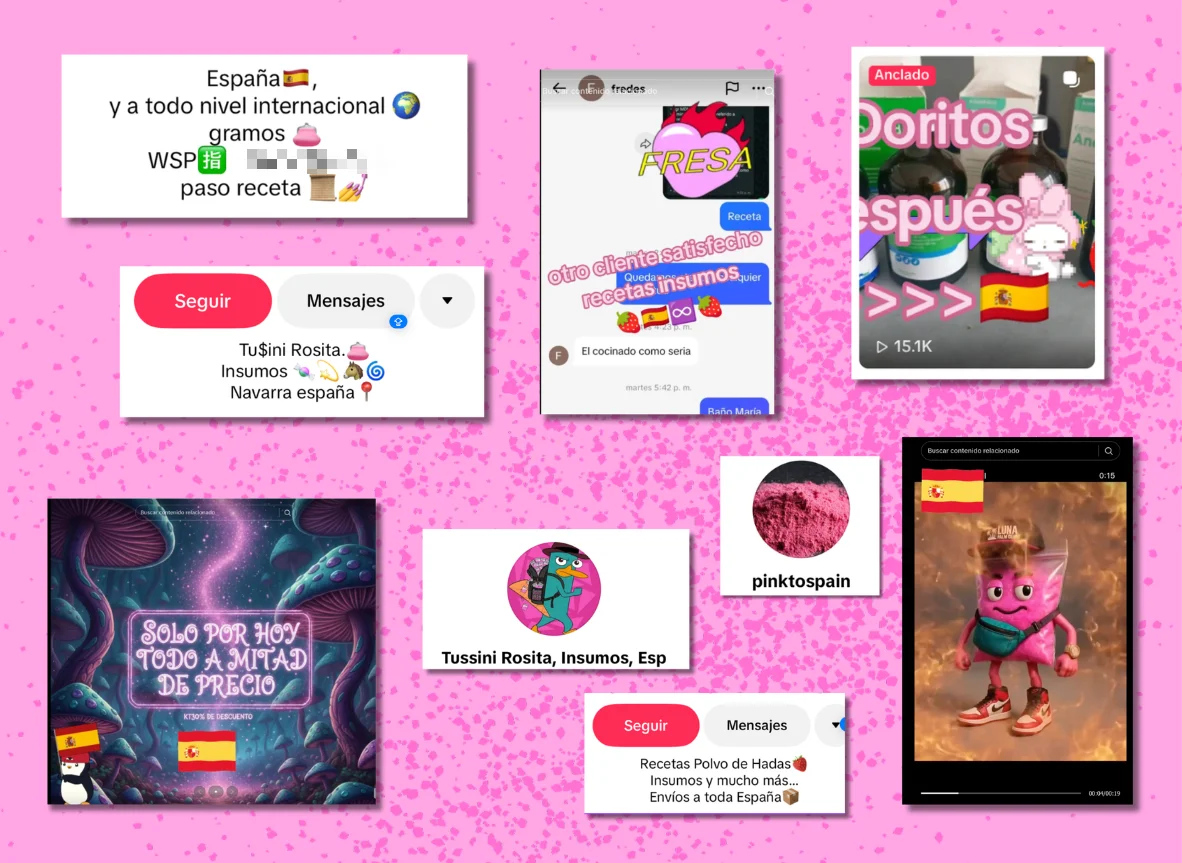
The profiles promoting substances necessary for making tusi (“ingredients”), ready-made tusi and other drugs in Spain often feature the Spanish flag in their videos and descriptions and, in many cases, specify the city or regions from which they deliver: Madrid, Barcelona, Navarra, etc. Depending on the location of the interested user, they offer the option of immediate delivery or the use of a courier service.
We have also found accounts in Bolivia (26), Mexico (15), Ecuador (12), Venezuela (9), Argentina (5), Chile (3) and Italy (2). France, the United States, Trinidad and Tobago, Guatemala, Belgium, Nigeria, Poland and Germany each have one profile amongst the more than 500 accounts analysed by Maldita.es. The distribution we found confirms the geographical expansion of tusi, which has been documented by the United Nations Office on Drugs and Crime (UNODC). In the report, the UNODC notes that several Latin American countries have reported the sale of ‘tuci’, ‘tucibi’ or ‘tusi’, and that, following the first reports in South America, cases have also begun to emerge in North America and Europe.
Accounts that follow one another, share and repost content
The comments on these accounts’ videos provide a space to offer tusi and attract potential customers. Upon reviewing hundreds of them, we found a recurring pattern: a user would ask whether tusi or ingredients could be delivered to a specific city or country and, in response, other profiles (different from the author of the post) would claim to have the product available and ask them to message them privately. This is the case with a user who comments on a video offering a recipe: “I need supplies for Madrid”, and another profile, unrelated to the author of the post, replies and asks them to message them.
During our investigation, this ecosystem gradually revealed itself. The profiles we initially identified were also sharing videos or posts from other profiles offering drugs, ingredients or recipes for making tusi. Furthermore, when reviewing their follower lists, we found other profiles linked to this type of content.
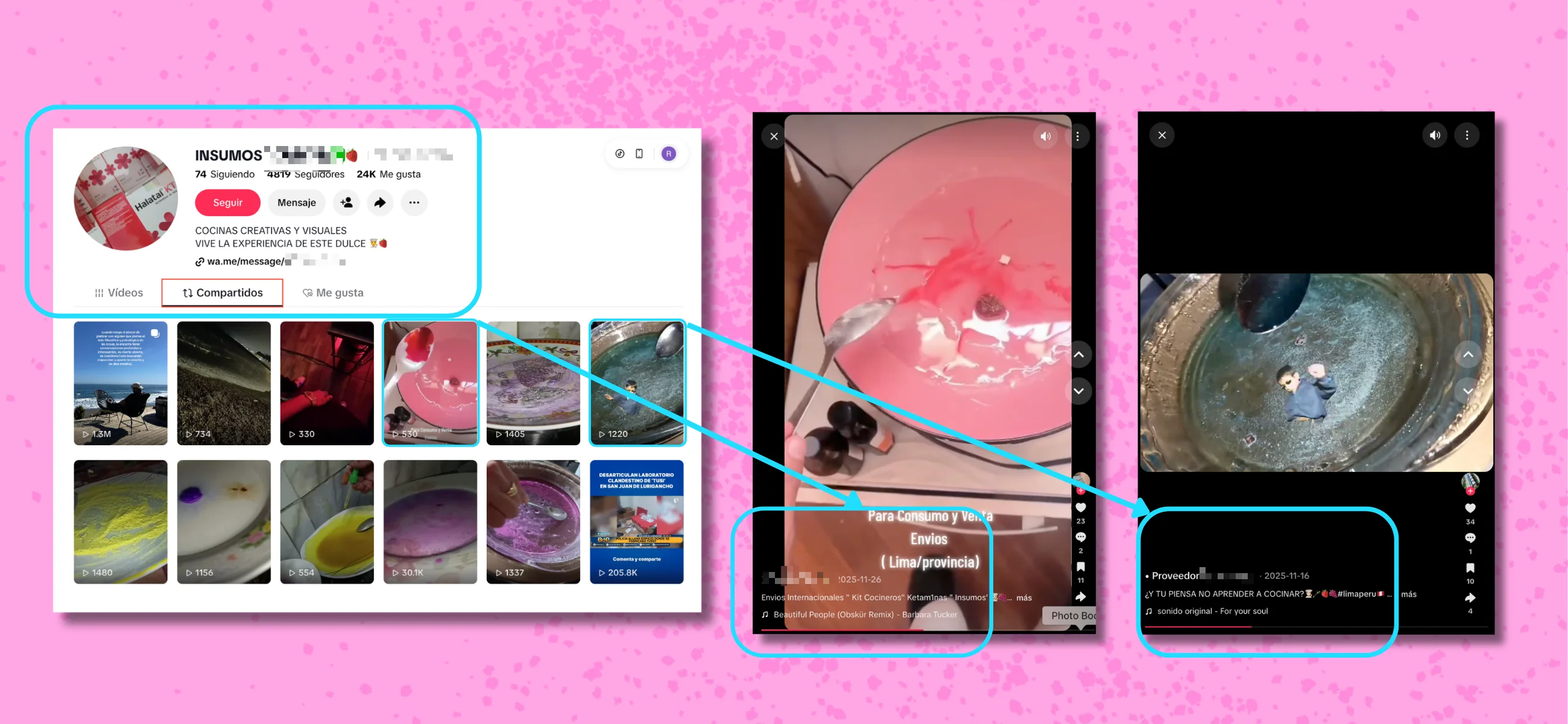
The use of the same hashtags across accounts also makes it easier to find other profiles and videos related to the sale of tusi. “#tusi”, “#tussy”, “#tuss”, “#tussisabes” and “#tusisabes” are some of the most frequently used in a sample of 395 videos we analysed. The hashtags are combined with emojis that appear repeatedly in the posts and act as codes to identify content related to this market on TikTok.
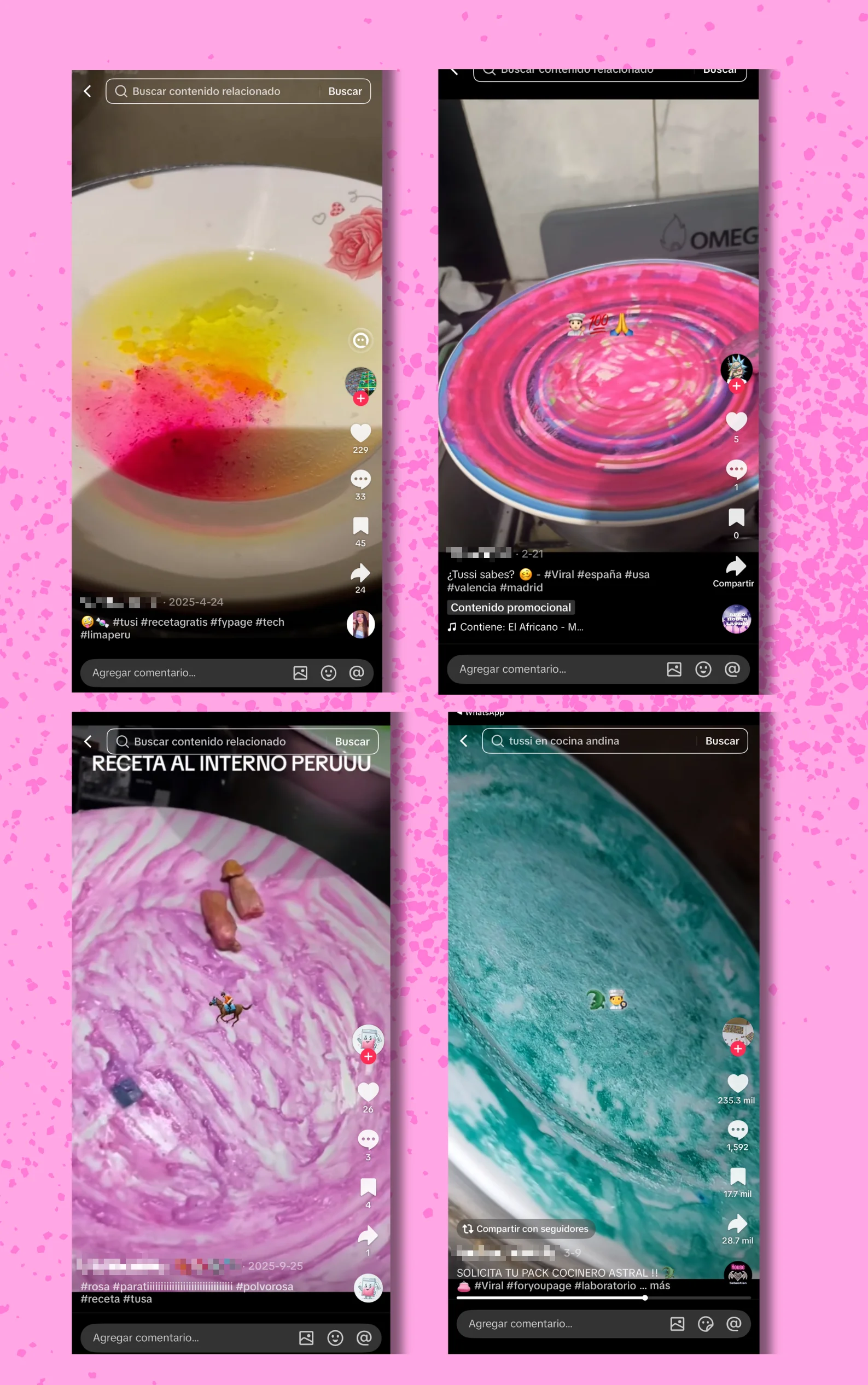
In this same sample of 395 TikTok videos offering tusi or other drugs, we analysed both the countries from which the accounts posting them operated and the destinations to which they claimed to make deliveries. From Peru, in 110 videos, sellers claim to make deliveries within the country itself; a further 15 promise to make international shipments. Twelve explicitly mention the possibility of shipping to Spain, and six to Panama, the United States and Colombia.
In the case of accounts based in Colombia, 90 posts claimed to offer deliveries within the country itself, whilst Spain was listed as the destination on 23 occasions, the United States on 17 and Mexico on 16. Furthermore, Spain is listed as the country of origin for these deliveries in 35 videos: in 29 of these, the accounts claim to make deliveries within Spain itself. From France, four posts promise international deliveries, and from Italy, three to Colombia.
The sale of tusi can carry a prison sentence of three to six years in Spain, but this depends on its composition
In Spain, the sale of tusi could constitute an offence against public health, according to Article 368 of the Criminal Code, as criminal lawyer, Irene Fernández, explains to Maldita.es. “To determine the sentence, one must know what the substance being sold actually contains [...] If it contains substances considered seriously harmful to health, Article 368 provides, in its basic form, for prison sentences of three to six years and a fine of between one and three times the value of the drug.”
It is precisely the uncertain composition of this drug that is one of the main health risks highlighted by the experts consulted by Maldita.es. Frequent consumption of tusi can cause severe dissociation, thrombosis or urinary problems. Energy Control explains on its website that, in Spain, the law classifies as drugs any toxic, narcotic or psychotropic substances included in the lists set out in international conventions. These include MDMA, LSD, mescaline, psilocybin and ketamine, all of which are commonly used in the preparation of tusi.
When it comes to the distribution of recipes, Fernández draws a distinction between publishing general information online and actively participating in the production of a drug. “It is not the same thing to share information as it is to charge someone for explaining how to make it, telling them which substances to buy, answering their questions during the process, or guiding them via video call whilst they are making it,” she explains. “The closer the behaviour comes to conscious collaboration in an actual production process, the greater the potential criminal liability.”
For its part, Energy Control points out that, whilst personal consumption is not a criminal offence, conduct aimed at promoting or facilitating the consumption of illegal drugs is.
TikTok says one thing, but the videos show another: the social media platform must remove illegal content if it is aware that it is circulating
TikTok’s Community Guidelines explicitly prohibit the trading, marketing or facilitating access to drugs and other controlled substances. They also prohibit providing instructions on how to make or use drugs, as well as displaying, promoting or consuming controlled substances for recreational purposes. However, at Maldita.es we have found at least 395 videos (with over 23.7 million views) that explicitly show how to prepare tusi and use the text in the images or the post's captions to explain what they are selling.
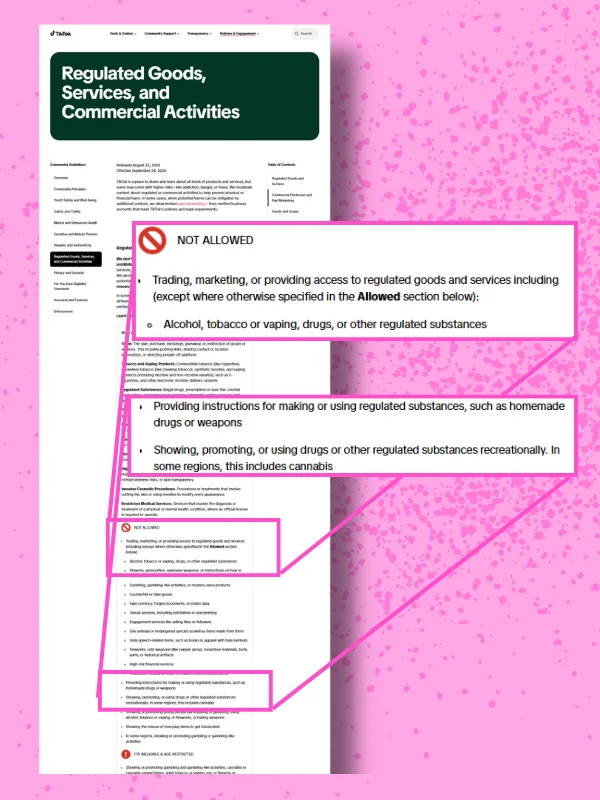
The European Union’s Digital Services Act (DSA) requires TikTok to remove illegal content promptly and effectively as soon as it becomes aware of it (Article 7). The legislation does not provide a specific definition of ‘illegal content’, but leaves it to the laws of each country to determine the boundaries of legality.
Metodología
The data used in this investigation was collected between 28 May and 8 July 2026. We began by registering 395 TikTok videos which claimed to sell tusi, drugs and ingredients for their preparation, or recipes for its making. For each one, we recorded information such as the publication date, the text included in the content, the hashtags and the number of views (along with the date of registration). We also categorised what each account was offering, which substances appeared in the video, where they delivered to, and whether the video displayed any contact details outside of TikTok.
Based on this content, we logged the 77 accounts that published these videos and reviewed their profiles to gather information on their activity, such as creation date, location, number of followers and accounts followed, total number of videos, and profile privacy settings. We also captured 394 users who left comments on these videos to identify new users offering tusi, other related substances, ingredients or recipes. We archived the profiles and content on websites such as Archive.li and Wayback Machine to document activity related to tusi. Based on the videos and comments identified, we compiled a database of 504 unique users who were offering tusi, the drugs used to produce it, other ingredients and recipes for making it. In cases where the same account appeared both amongst the profiles that had posted videos and amongst the users identified through comments, only a single record was included.
The content was identified using TikTok’s search engine and by reviewing profiles, comments, followers, accounts followed and reposted videos. To locate posts and accounts related to the subject of the research, we used terms and expressions employed by users to refer to tusi, substances linked to its preparation and its sale. These included various spellings of the substance’s name, such as “tusi”, “tussy”, “tussi”, “tuss”, “tussisabes”, “tussini” and “tutu”; terms used to refer to substances associated with its preparation, such as “2C-B”, “keta”, ‘queta’ and ‘kt’; and expressions used in the context of manufacture and sale, such as ‘insumos’ (ingredients), ‘receta’ (recipe), ‘cocinero’ (cook), ‘sacar una cocina’ (to cook a batch), ‘kit cocinero’ (cooking kit), ‘activo’ (active ingredient), ‘act’, ‘sí hay’ (it’s available), ‘envíos’ (shipments) and ‘contra entrega’ (cash-on-delivery) . We also took into account “caño” and “conecte” when they were used to refer to drug dealers and appeared in profiles related to the tusi phenomenon.
Based on the activity observed, we classified the 504 accounts into mutually exclusive categories according to what they offered:
Each account was classified exclusively according to the set of products or content it offered. For example, an account selling both supplies and prescriptions was classified as ‘Sells, Supplies, Recipes’ and was not counted again in the ‘Sells, Supplies’ or ‘Sells, Recipes’ categories. Similarly, an account selling drugs, supplies and recipes was included only in the ‘Sells, Drugs, Supplies, Recipes’ category.
Based on this classification, we also grouped accounts by type of activity. To do this, we added up all the accounts included in the categories containing each activity. Therefore, the 314 accounts selling some form of drug correspond to the sum of the categories ‘Sells, Drugs’ (222), ‘Sells, Drugs, Supplies’ (27), ‘Sells, Drugs, Recipes’ (17) and ‘Sells, Drugs, Supplies, Recipes’ (48). Similarly, we identified 140 accounts selling supplies and 163 selling recipes. The 59 accounts classified as “Gives Away, Recipes” were counted separately.
The location of the profiles mentioned in this article was determined by cross-checking the results from two tools: https://omar-thing.site/ and a bookmarklet designed by My OSINT Tools for Maldita.es. Where the results did not match, we noted the location that could be inferred from the published content, contact number and other user information. Where the My OSINT Tools bookmarklet yielded no results, we cross-checked the result from omar-thing.site against the information available on the profile.
During the investigation, we found accounts that featured tusi or referred to this substance in their content, but which did not provide clear evidence that they were selling tusi, ingredients or drugs for its preparation, or recipes for making it. These profiles were not included in the 504 accounts analysed. Consequently, the mere appearance or mention of tusi on a profile was not sufficient to count it as part of the investigation.
If you have any questions, you can contact us at [email protected]