
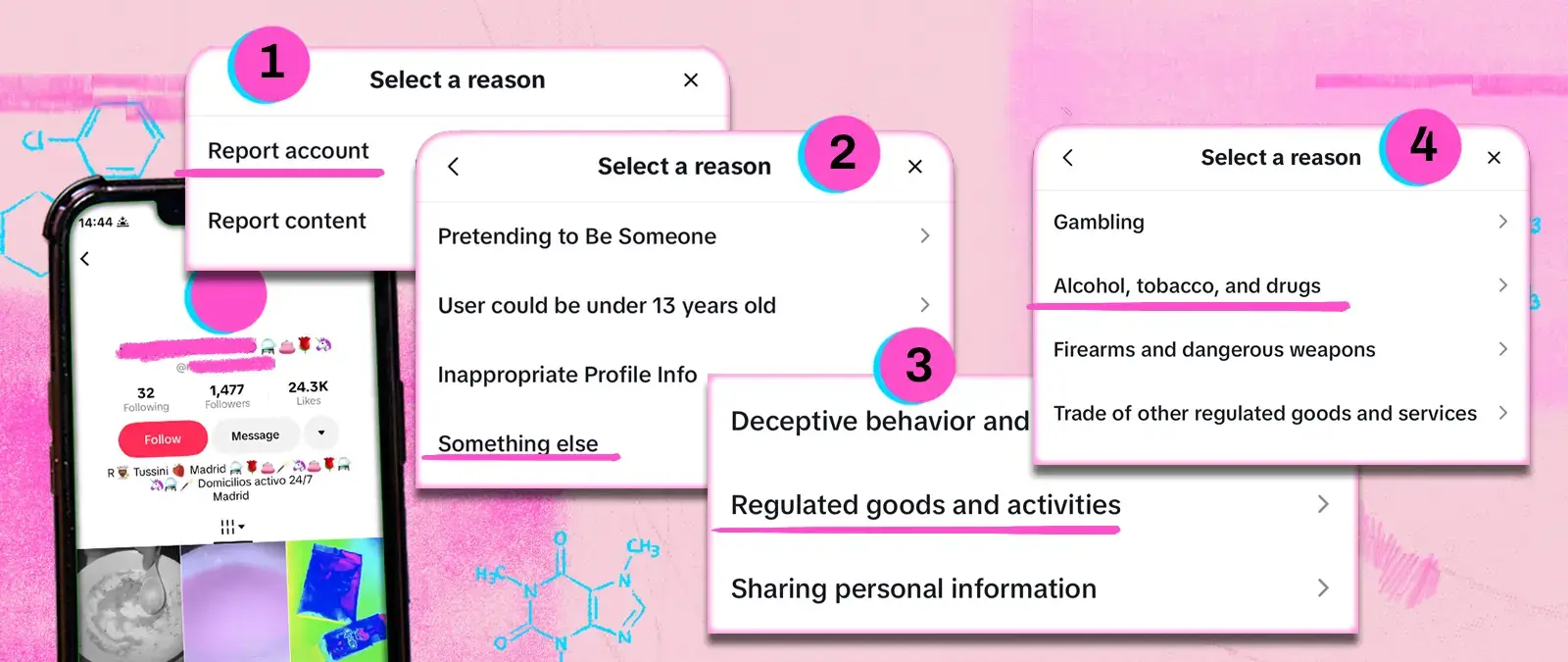

TikTok (at times) acts against videos, but not against profiles
This particular account has just 13 videos, but some have more than 2.5 million views, and all of them show “tusi” being cooked. The author makes no secret of their intentions: they sell “cook packs,” offer “nationwide shipping,” and identify themselves as a “wholesale supplier since 2020.” It is just one of the more than one hundred accounts we reported to TikTok for violating its drug-related rules, and it remains active today because the platform does not enforce those rules. The same pattern is repeated across all the profiles we reported.
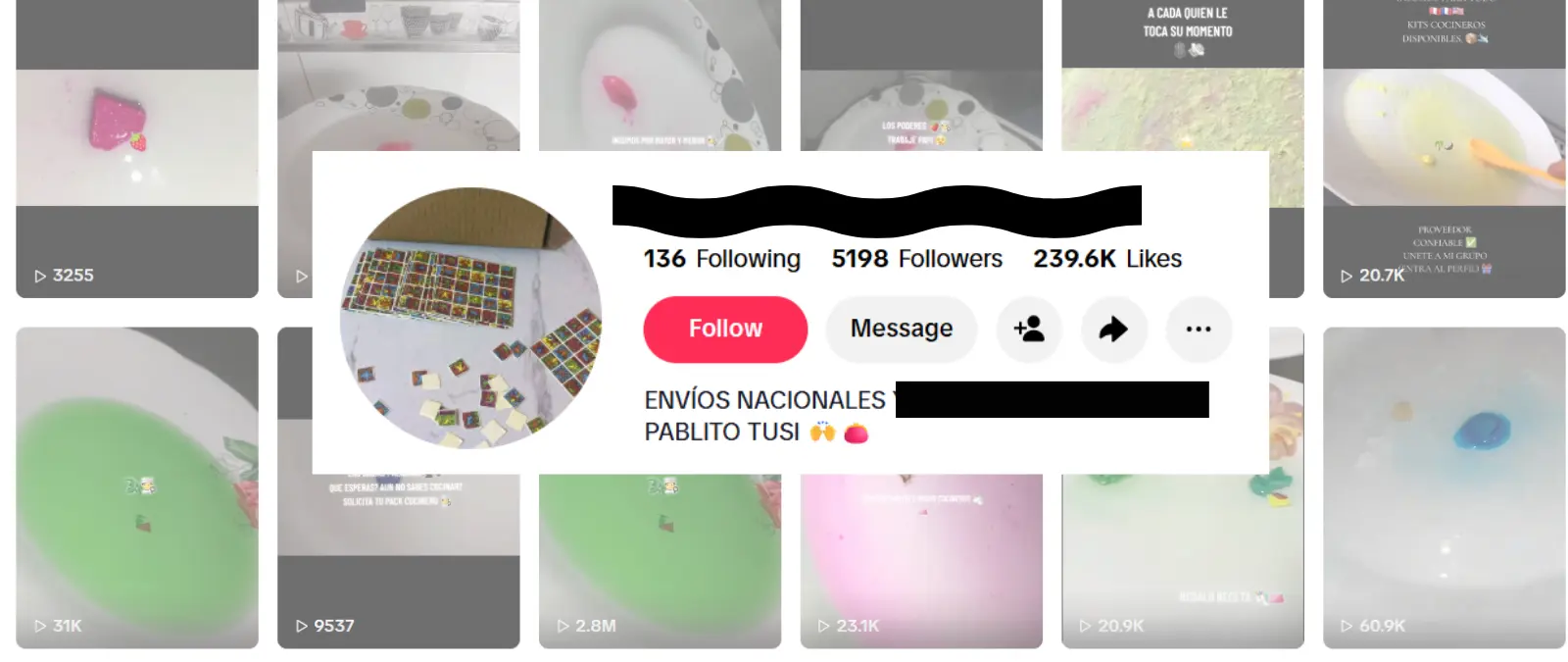
At times, TikTok has decided not to take action against these accounts even after acknowledging that they had posted illegal drug-related content. Of the content from the 100 accounts we reported to TikTok, we also reported 20 videos using the mechanisms provided under the EU Digital Services Act (DSA), specifically because they constituted illegal content in the EU: they explicitly offered drugs or their ingredients for sale in EU member states. In 75% of cases, TikTok agreed and blocked the specific videos. However, when we reported the same accounts for repeatedly posting this type of content in their videos, TikTok took no action.
Selling ‘tusi’ on TikTok is illegal, and the platform’s systems facilitate it: the DSA’s requirements
For obvious reasons, there is no official, exact formula for what constitutes “tusi,” but its basic ingredients include MDMA and ketamine, and sometimes LSD, mescaline, and psilocybin as well. All of these substances appear on the United Nations Office on Drugs and Crime’s list of internationally controlled drugs and psychotropic substances, and their trade is illegal in most countries. In Spain, the Criminal Code considers the “cultivation, manufacture, or trafficking” of these substances a crime against public health and also punishes those who “promote or facilitate” their illegal consumption.
The fact that we detected more than 500 accounts engaging in these activities is concerning in itself, but TikTok’s failure to take action against the more than 100 accounts we specifically reported points to a more serious issue. As a “very large online platform,” TikTok is required to take effective measures to mitigate certain systemic risks (Articles 34 and 35 of the DSA), specifically including “the dissemination of illegal content through its services” and any other risk that has an “actual or foreseeable negative effect (...) on the protection of public health and serious negative consequences for the physical and mental well-being of a person.”
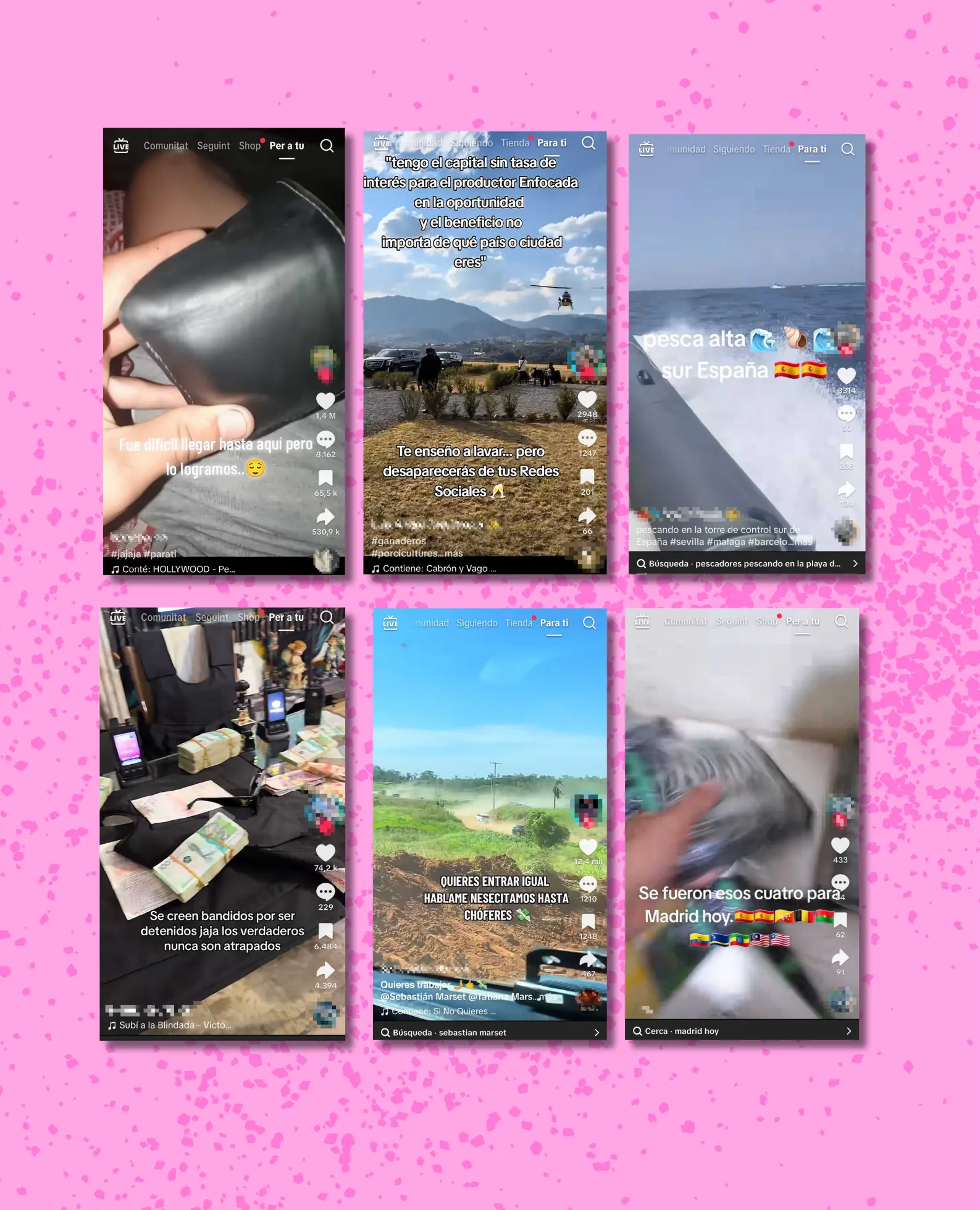
Not only does TikTok fail to effectively address these risks, but its own systems contribute to making the problem worse. As we detail here, during the investigation the platform offered us “suggested searches” such as “find tusi” and “how to cook tussisabes,” and suggested profiles selling other prohibited substances such as hashish, LSD, or cocaine. Its recommendation algorithm also filled our “For You” feed with more illegal drug-related content. The DSA clearly states that TikTok is responsible for assessing whether it is contributing to the aforementioned systemic risks through the design of its recommendation or content-moderation systems, and for adapting those systems to reduce the risk.
TikTok is also required to suspend, “for a reasonable period and after having issued a prior warning,” users who “frequently provide manifestly illegal content,” according to Article 23 of the same regulation. In this case, TikTok had already identified 15 videos posted by 15 of these accounts as illegal after we reported them. Checking the accounts when reported would have allowed the platform to establish that their authors were repeatedly posting this type of content and to take action against those profiles.
TikTok’s inaction also raises questions about its ability to diligently comply with Article 18 of the DSA, which requires it to communicate “without undue delay to the law enforcement or judicial authorities” of an EU member state any information that gives rise to a suspicion that “a criminal offence involving a threat to the life or safety of one or more persons is taking place or is likely to take place.”
TikTok also violates its own rules
TikTok’s Community Guidelines state that users may not “trade, promote, or facilitate access” to drugs on the platform. In addition, the reporting mechanism within the platform itself allows users to report not only videos but also accounts for prohibited conduct such as the “demonstration or encouragement of drug use” or the “provision of instructions on how to manufacture” drugs or promote their trade. However, as is the case on other platforms, it is never entirely clear how many violations an account must commit before facing consequences.
In its most recent DSA Compliance Report (January-June 2026), TikTok does not provide data on how many profiles have been suspended or removed under the “unsafe and prohibited products” category. It only provides an overall figure of 4.2 million accounts removed “proactively,” which includes all categories of violations.
Although companies have flexibility to design their own rules, that does not mean they can ignore them. Article 14 of the DSA requires TikTok to act “diligently, objectively and proportionately” when applying and enforcing restrictions arising from its terms and conditions of service, including its Community Guidelines on drugs.
Methodology
For this part of the investigation, we used TikTok’s reporting feature to report:
- As illegal content: 20 videos offering to sell this drug in an EU country, under the category “Production, sale, supply or distribution of illegal drugs or narcotics.” TikTok moderated 15 of these videos, one of them after we appealed its initial decision, in which it had not considered the content illegal.
- As violations of TikTok’s policies: 111 profiles that repeatedly posted content offering this drug, under the “Alcohol, Tobacco and Drugs” section of the “Regulated Goods and Activities” policy. TikTok determined that none of the profiles violated this policy and upheld that decision after we appealed.
If you have any questions, you can contact us at [email protected]