
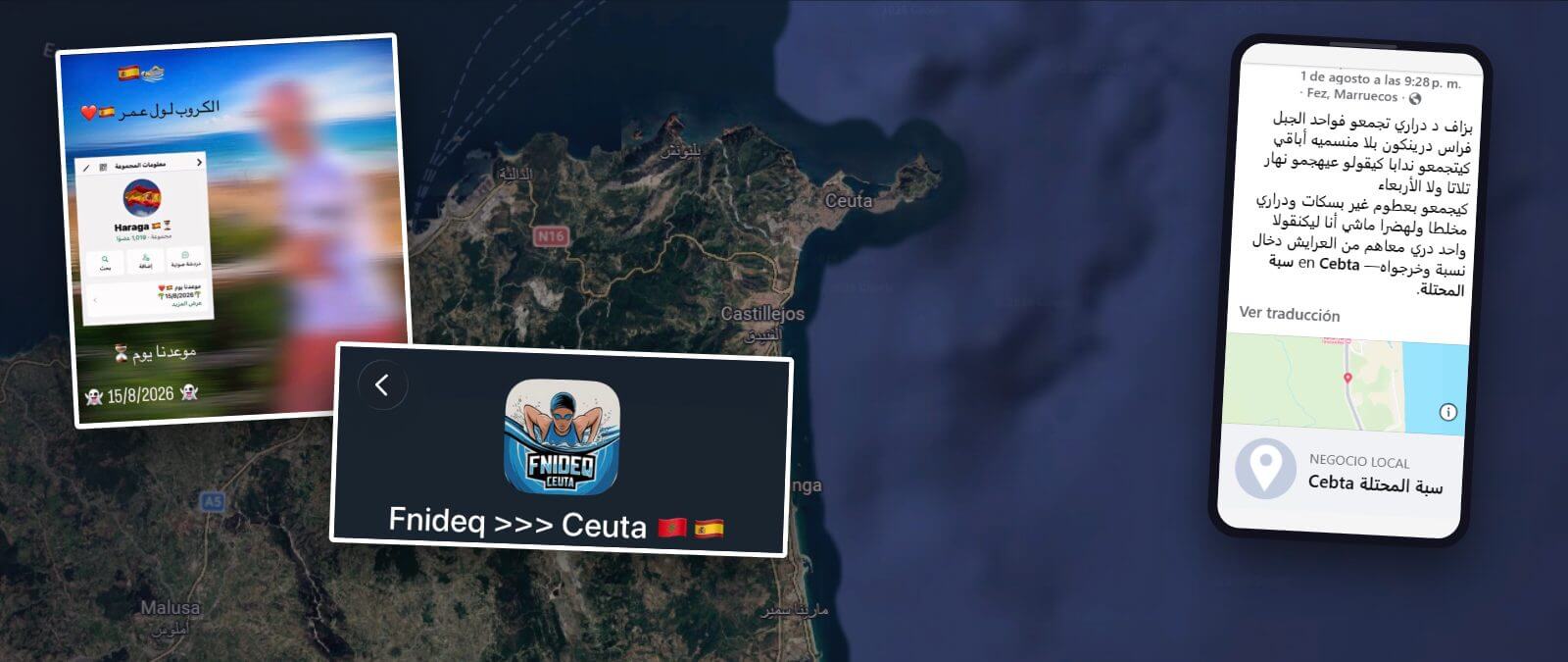
On Facebook they call for it, on Instagram they convene it, and on WhatsApp they organize: this is how the August 15 crossing is being coordinated
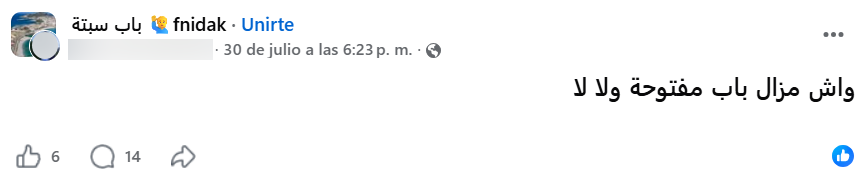
"Is the door still open or not?" This is the message from a Facebook user asking, before the entry into Ceuta on July 30, 2026, about the situation at the Morocco–Ceuta border. In this group, some users post anonymously and the conversation focuses mainly on coordinating "jumps" but there are also calls to action, testimonies from people who have already crossed reporting on the situation they found, transport and route tips... There are also some posts spreading disinformation, such as false claims of asylum from the European Commission, rumors that "those with a trade/profession will not be returned," that "the door is open," or supposed aid provided by Spain.
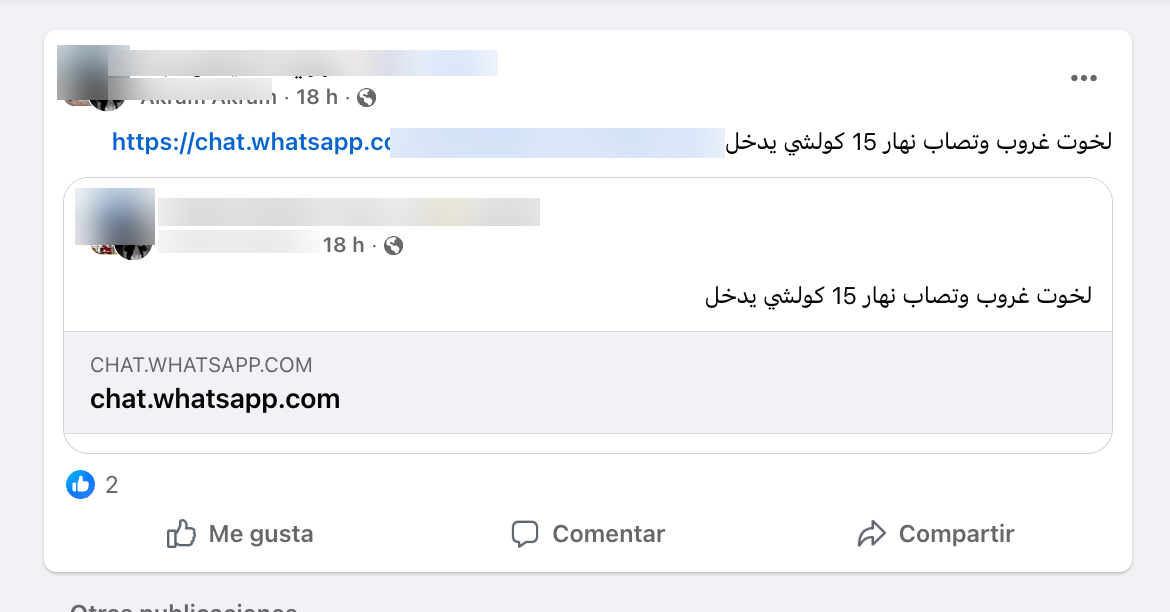
On WhatsApp, the tone of the conversation changes. If Facebook functions as a shop window that calls people to action and mobilizes them, WhatsApp functions more as an "operations center," where users share their phone numbers with all participants so they can be added to these groups, or send invitation links for others to join. Here the conversation focuses on the technical coordination and information for the August 15 crossing.
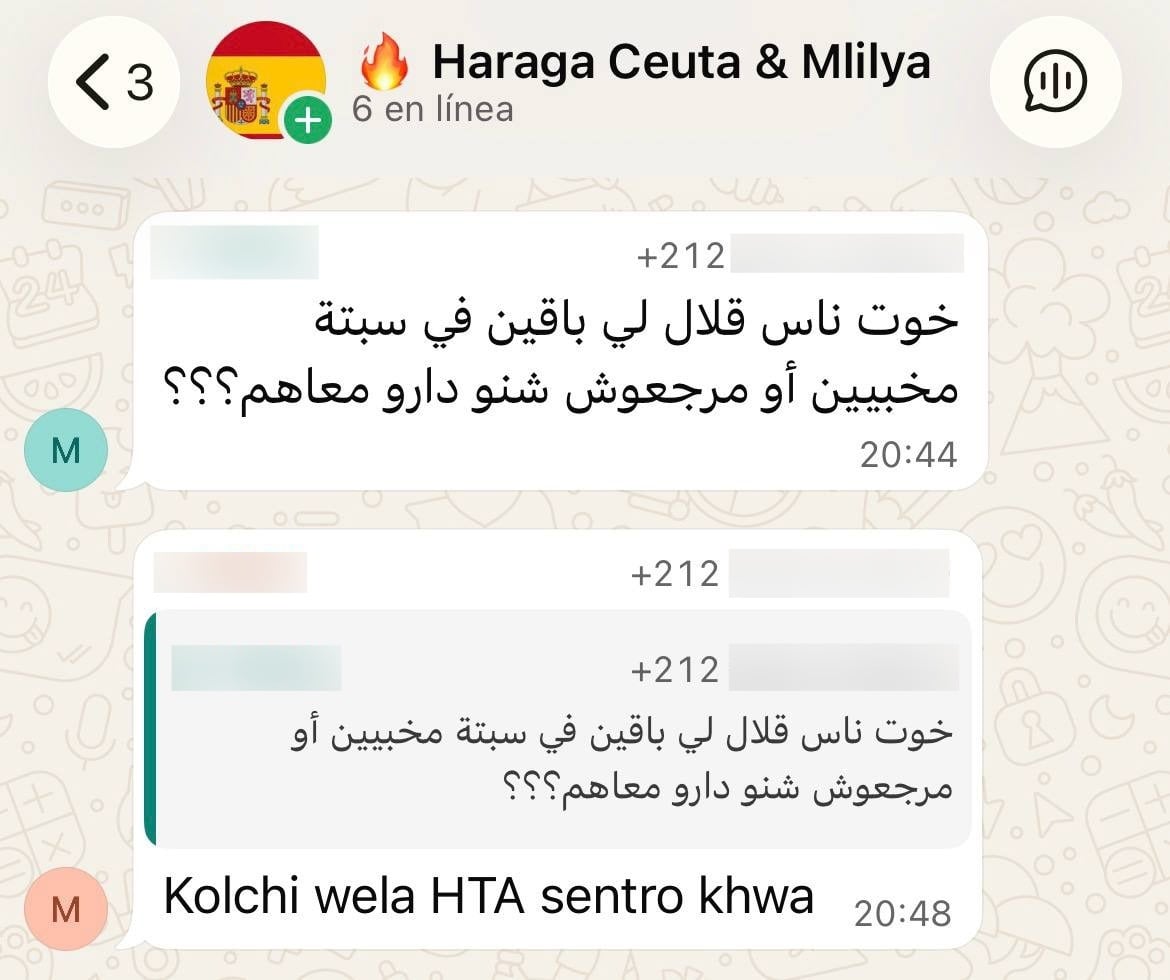
Alongside references to carrying out the crossing on August 15, there are some messages proposing to move it forward to "before the 15th, because that day there will be too many people." In addition to crossing logistics, other users ask for details about those already in Ceuta: whether they are in hiding, detained, or have been transferred to reception centers. There is even talk of people said to have spent several days in hiding. Some messages also show concern among these people about food and water, with emphasis placed on those planning to cross on August 15 bringing enough supplies.
After the July 30 entry, there are also messages encouraging people to move conversations to private chats out of fear of infiltration in the groups. In addition to logistics, there are messages of encouragement among group members, as well as messages of discouragement from those who have been waiting days to cross.
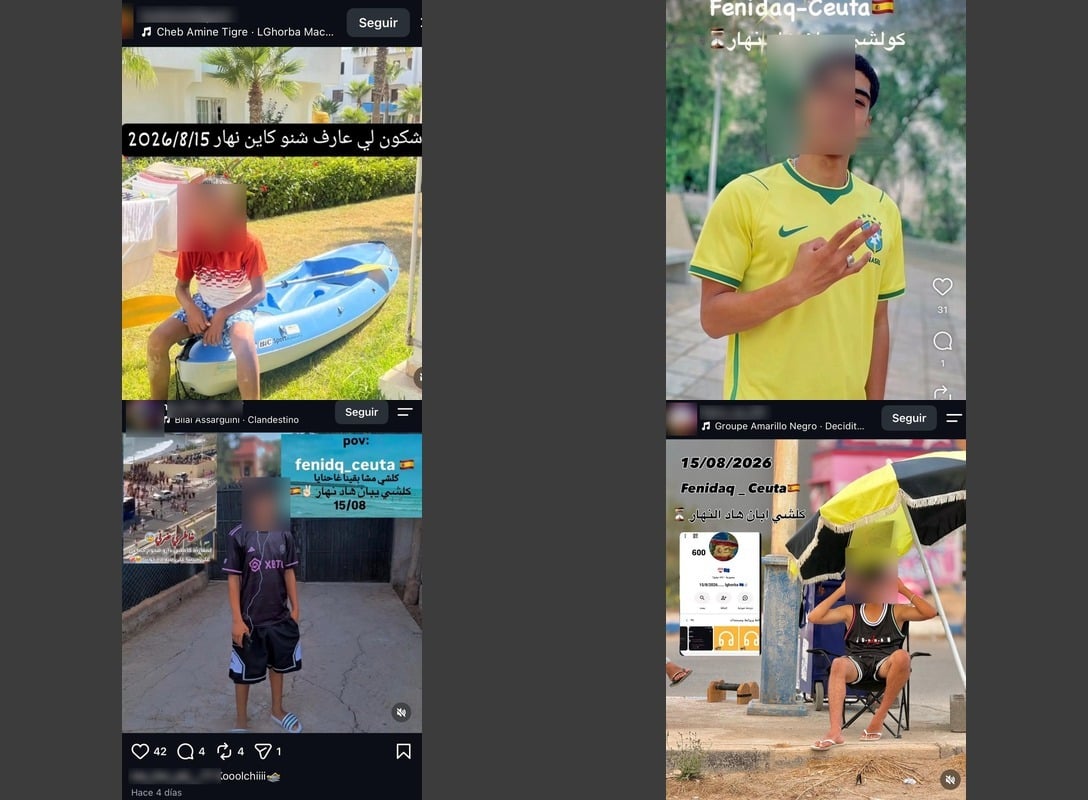
On Instagram, posts mix personal profiles with others devoted specifically to explaining how to cross the border, but with a personal tone: most share their photos with the date August 15, 2026 overlaid. They include tags such as "Fenideq," "Fnidaq," or "FENIDG CEUTA" to indicate the departure point, Castillejos (Morocco), and the phrase "everything will be revealed/appear that day" is repeated. Many of the profiles identified had never posted about migration before and posted on the subject for the first time between July 31 and August 3. Comments focus on offering encouragement and asking for care and caution; many users also share their phone numbers and ask to be added to the WhatsApp groups.
On the same platform, there are also other types of accounts with profile pictures of the Spanish or European Union flag that are dedicated to posting content related to migration to these places. Some include a disclaimer in their bio saying "incitement to migration is not permitted," while others have spread word of the August 15 mobilization.
"Brothers, at dusk and at dawn on the 15th everyone goes in": the messages in which users announce they will cross into Ceuta on August 15
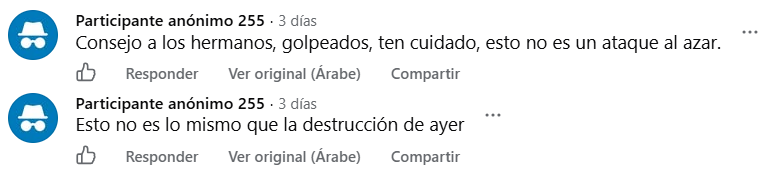
"Brothers, at dusk and at dawn on the 15th everyone goes in." This is the message a user wrote on August 3 in a Facebook group called "Alhucemas 🙋 puerta de Ceuta" [Alhucemas, gateway to Ceuta]. Already in the hours following the entry of thousands of people into Ceuta, other users were asking about it: "What will happen on 15/8/2026?" wrote an anonymous user on July 31, 2026 at 8:52 a.m. (Spanish time). "What's the plan for the 15th?" another writes, to which another group member responds asking for caution: "be careful, this isn't a random attack. This isn't the same as yesterday's breach."
But this is not the only message, nor the only platform: on Telegram we identified a group that redirects to another on WhatsApp with the message "Everyone come in here. Let's agree on a plan for a departure." In this group, created on February 13, 2025, logistical matters are discussed, such as the fact that this time it is more important to bring water and food to survive in Ceuta, or fear that there will be a greater police presence at the border. It is precisely because of that border reinforcement that other users suggest moving the entry forward.
"Whoever wants to, should do it before the 15th, about two days before… the 15th will be too crowded"
This is reflected by a user asking to move the conversation to private chats: "Brothers, there's a push before the 15th; the 15th will be too crowded. Whoever wants to go, send a private message." Following this, other group members send voice messages mentioning "cuts" between Morocco and Spain, in what could be references to border closures, warnings of an increased police presence, and warnings that they will not find help to cross.
It is at this point that another user asks, in an audio message, about the floating barrier the Spanish government has installed at the Tarajal breakwater: "Brothers, how big is the net down below where they put a barrier between Ceuta and Fnideq [Castillejos], for anyone who wants to dive under it?" But this question goes unanswered.
Hoy ha comenzado la instalación de las barreras de contención en el espigón del Tarajal (Ceuta), en un operativo conjunto de la Guardia Civil, la @Armada_esp y @salvamentogob Marítimo (Sasemar).
— Guardia Civil (@guardiacivil) August 1, 2026
✔️ El dispositivo consta de una barrera neumática de 500 metros, reforzada con una… pic.twitter.com/gRlBK2kk7D
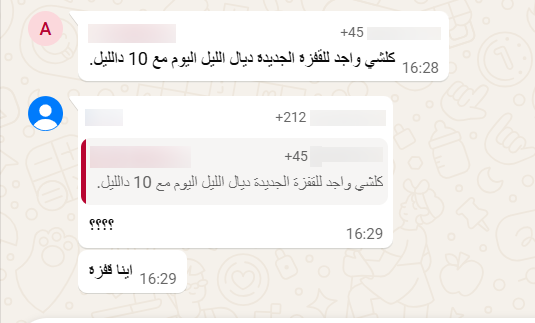
At 4:28 p.m. on August 3, a person with a Danish phone prefix writes in Darija (the Arabic dialect spoken in Morocco): "Everything is ready for tonight's new night jump at 10:00 p.m." (referring to August 3, 2026). Immediately afterward, another person — this one with a Moroccan number — asks: "Where will the jump be?" A few minutes later, the message had been deleted.
Videos explaining how to cross into Ceuta at points far from the Tarajal
On WhatsApp, advice and recommendations are also offered on how to cross into Ceuta without going through the Tarajal border crossing. On August 2, a user shared a video showing a route on Google Maps leading to the Embalse del Infierno [Infierno Reservoir], south of Ceuta. This video is accompanied by the text: "they went out that way." The route begins on road P-4701, in the town of Beliones (Belyounech), which borders Ceuta but at the point opposite the Tarajal breakwater. The crossing into Ceuta would take place in a wooded area running alongside the N-632 to reach the Torre de Anyera and subsequently bypass the García Aldave barracks, a Legion base in the autonomous city. The video ends in a wooded area, which matches other comments in these groups about hiding from police at these points.
The logistics to cross: paid services and reminders to bring food and water
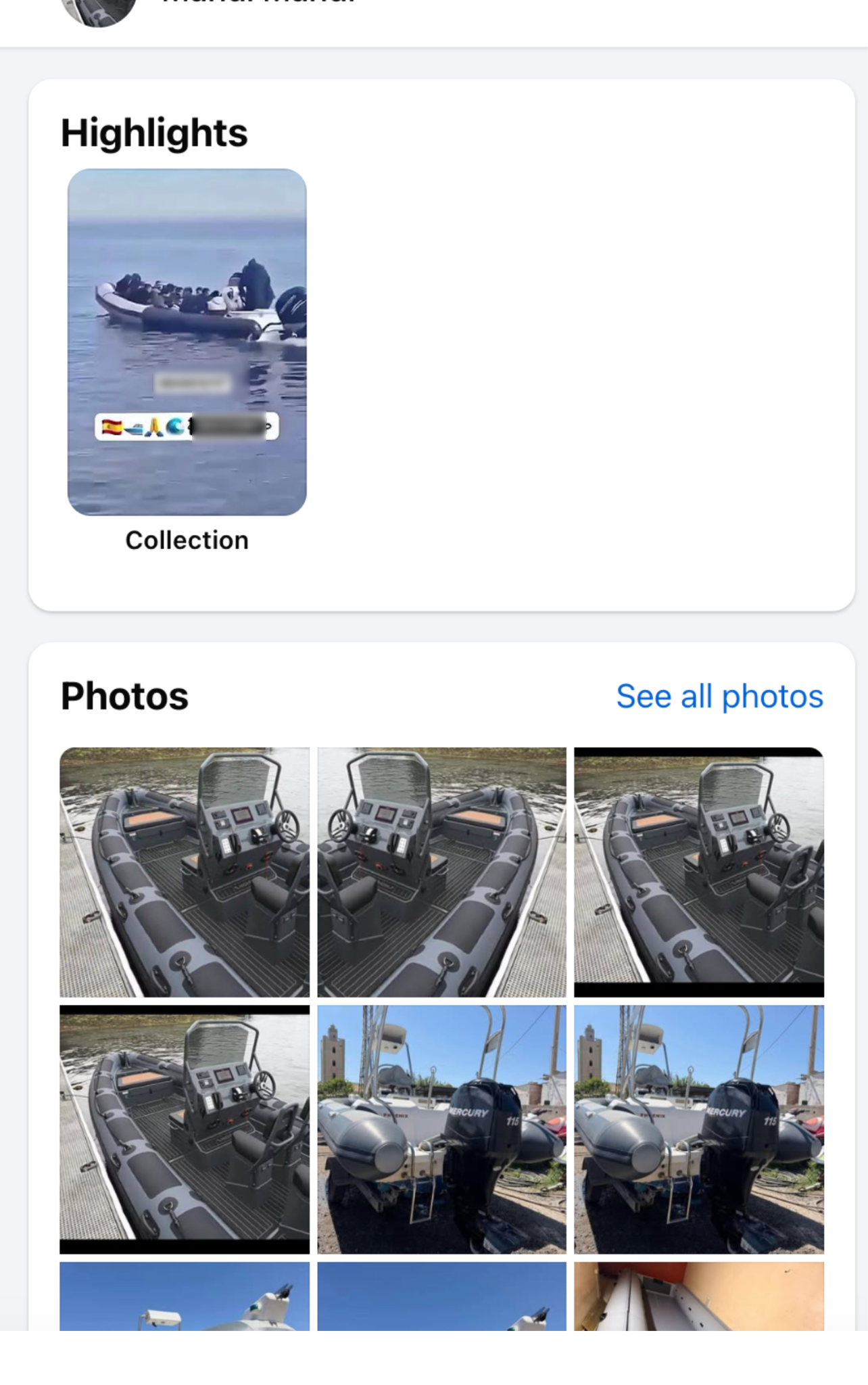
The strategies used to attract those who wish to cross into Spain vary, and in many cases try to go unnoticed, without published text, making them harder to trace or be detected by the social network itself. On Facebook, various groups and profiles promote emigration to Ceuta and other parts of Europe using photos of boat engines or of dinghies and other types of vessels. One such page, created in July 2025, frequently posts images of an engine, inflatable kayaks, or the distance separating the sea border between Morocco and the fence at Tarajal beach in Ceuta, as a lure to those wanting to emigrate to the autonomous city.
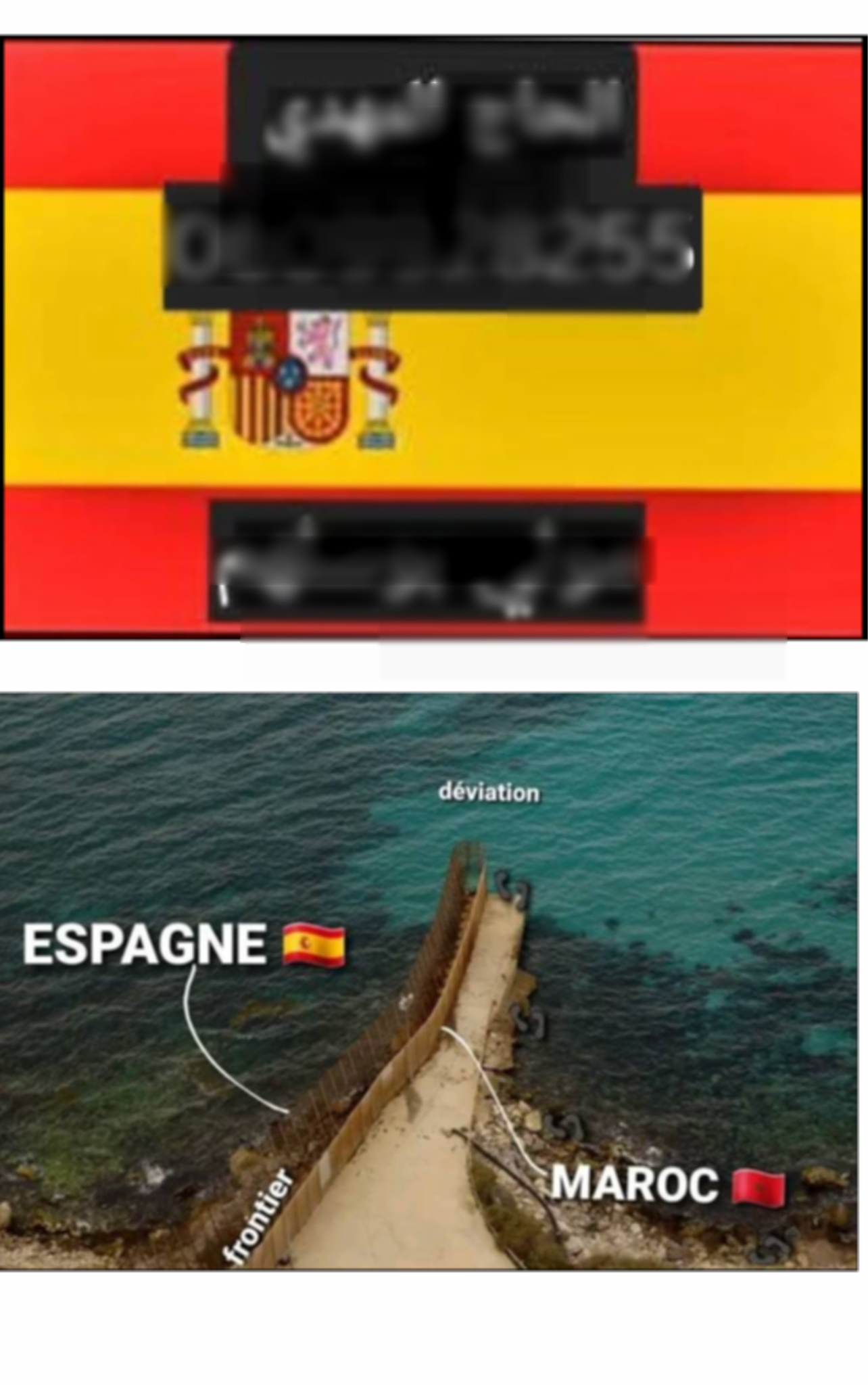
Another individual's profile, who joined Facebook in February of this year, has since June 3 been posting photos of all kinds of maritime transport: inflatable boats, jet skis, or dinghies. At other times the profile posts an image of the Spanish flag with a phone number, indicating they are located in northern Morocco. The same person also promotes their phone number in other groups on the same social network where photos are shared of the arrival of thousands of people in Ceuta at the end of July. These groups also promote "Haraga," which means "those who burn" and describes both irregular migrants and a viral social-media phenomenon that encourages young people to cross irregularly into Spain. In some posts we can see hashtags like #fastmoney. Some of these groups operate in multi-platform format — that is, the same profiles with the same posts can be found across various platforms such as Instagram, Facebook and Threads.
In WhatsApp groups, users planning to come on August 15 are advised to bring supplies and water. "Water is everything and it's mandatory," says one user. In the audio messages there are also warnings that hunger and thirst are the greatest risks for those trying to stay hidden before the jump.
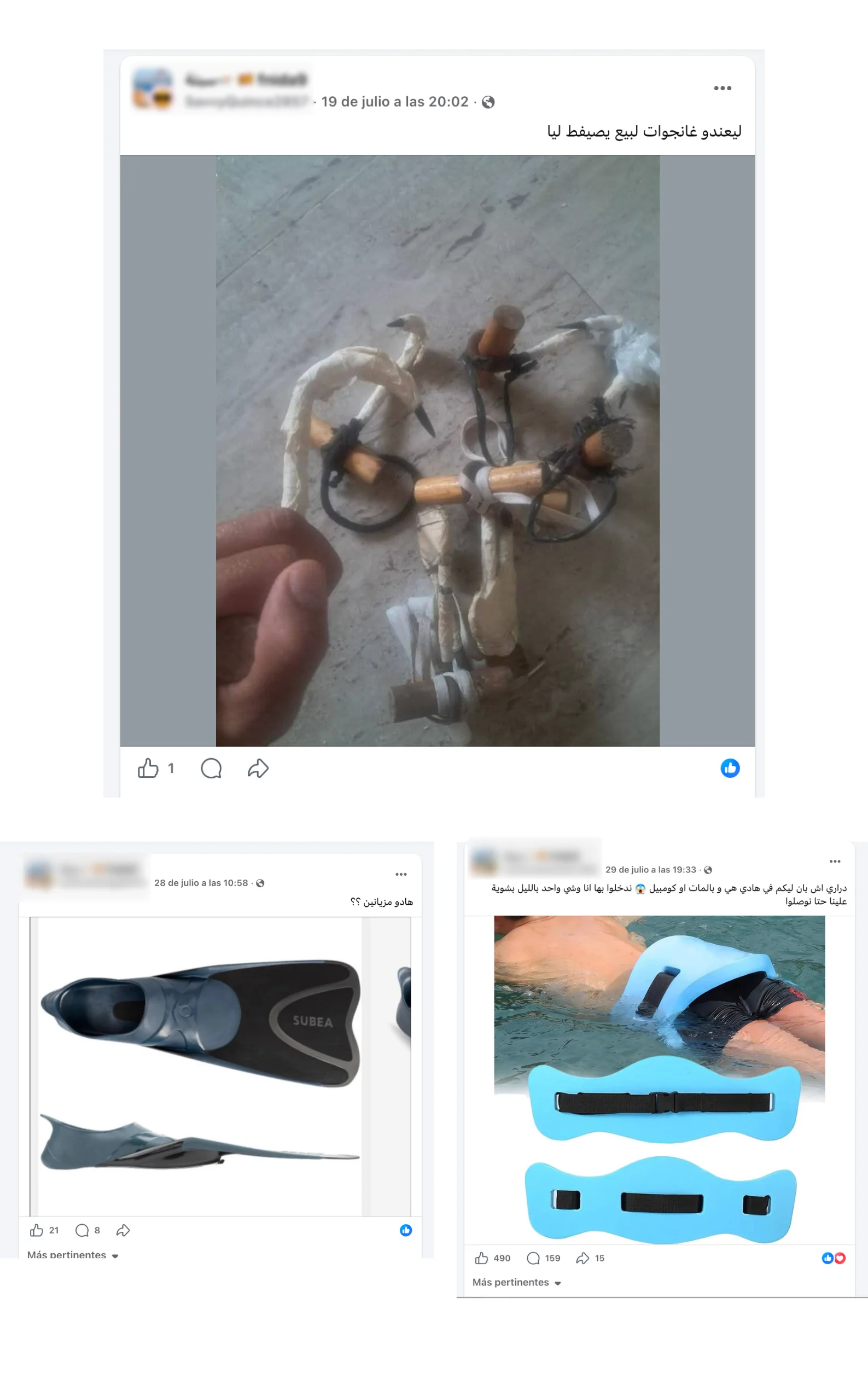
In a Facebook group, someone posted a photo of handmade fishhooks with the caption: “Anyone who has fishhooks to sell, message me.” Another user, this time on Instagram, also posted a video of himself with a backpack and some fishhooks in hand, giving tips for the “harraga” (a term used in some Latin American countries to refer to a specific type of fishing gear), such as carrying tools in a bag instead of a backpack, or that those traveling in groups should travel separately to avoid detection.
There are also those asking if diving fins or a foam swim belt are any good: “Guys, what do you think of this? Along with some fins or a wetsuit… We could enter/cross with this, me and another person, at night, little by little, until we get there,” another user inquired.
Some want to leave, others are worried about those who crossed and from whom they have no news
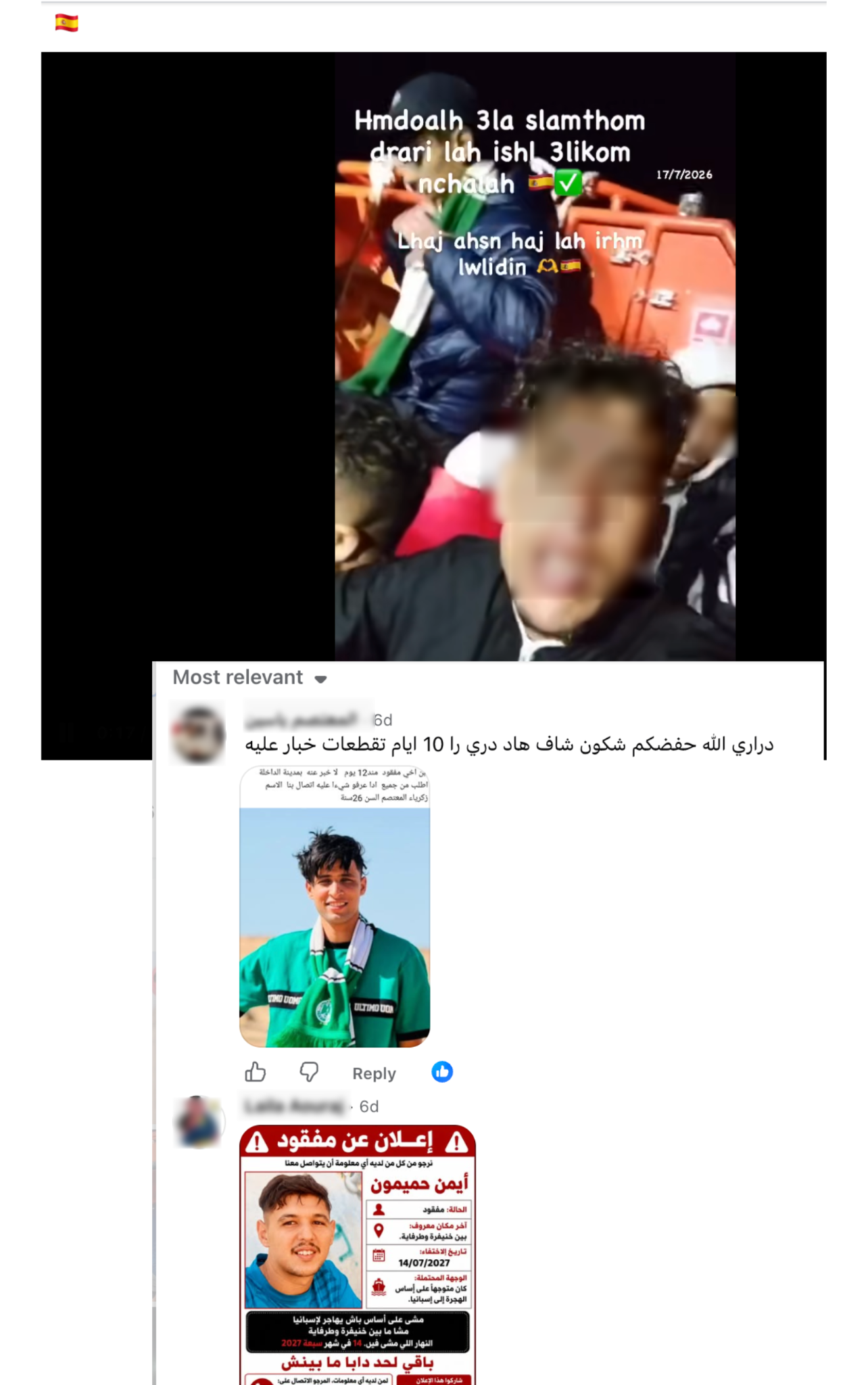
"Guys, may God protect you. Has anyone seen this boy? It's been 10 days since anyone has heard from him," comments Yassine, the uncle of Zakaria, a 26-year-old last seen in the city of Villa Cisneros, in Western Sahara, in one of these Facebook groups. "He left with a group of around 40 young people, including girls too," his uncle explains to Maldita.es, adding that "they left to emigrate on July 14 and there has been no news of them since."
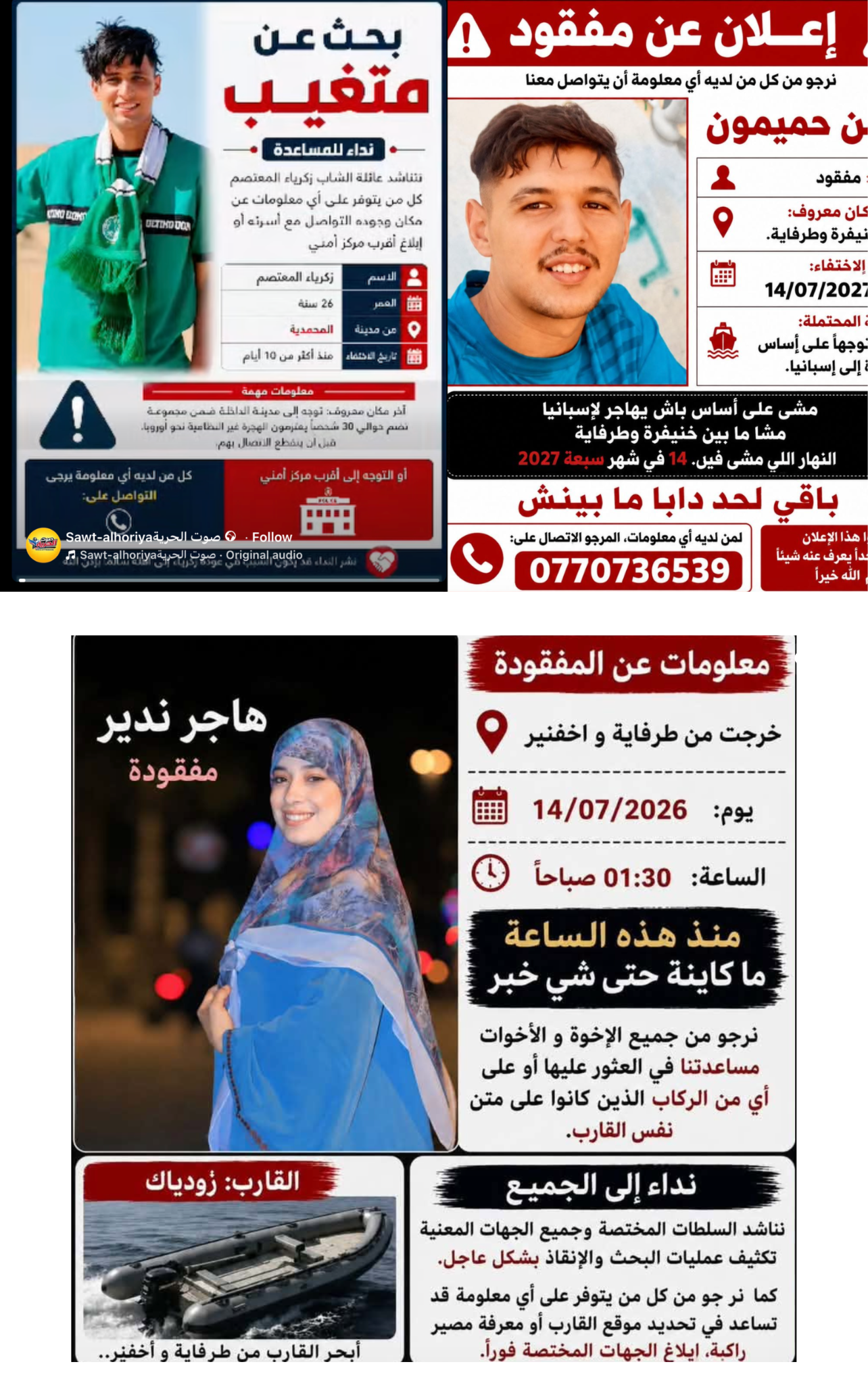
We also found photos of Aymen, who disappeared on July 14 and was last seen between Alcazarseguer and Tarfaya heading toward Spain; and of Abdelghani, 17, who left from Algeria on a motorized boat. This is the other reality — that of those who try to emigrate and never reach their destination, and of their relatives searching for them in groups where stories of those who do make it are shared, and even used to encourage others. Most are young people under 30.
In the WhatsApp groups there is also visible concern: "What happened to the few people who stayed behind in Ceuta, hiding or who didn't return?" asks one user.
Others ask for caution or hope to have the same luck when they attempt it: "My God, I hope you make it easy for me. My intention isn't just to flee misery; my intention is to build a future in this country," says a female user on Facebook.
*This article was updated on August 5 to add that Facebook users are asking for recommendations on fins and other items for going into the sea.