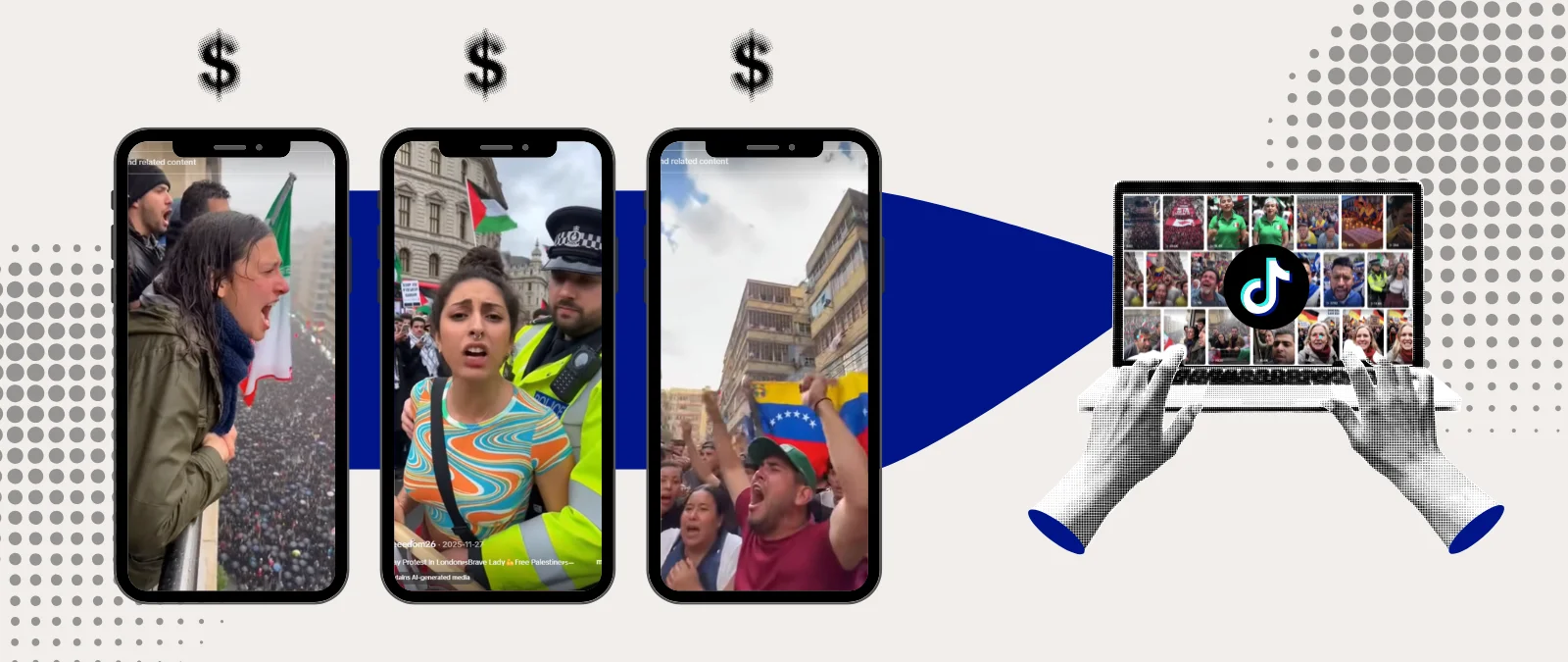
“A multitude of Venezuelans celebrate with tears and shouts of freedom”, “People of Iran raise their voices for freedom, justice, and human rights”, or “Today Protest In London, (...) Palestine Needs You”. These captions go with TikTok videos of scenarios that could seem plausible in the current context, but they are generated using artificial intelligence with a single goal: to quickly generate engagement and make money from disinformation, by exploiting the appeal of emotional, polarizing, topical, and false content.
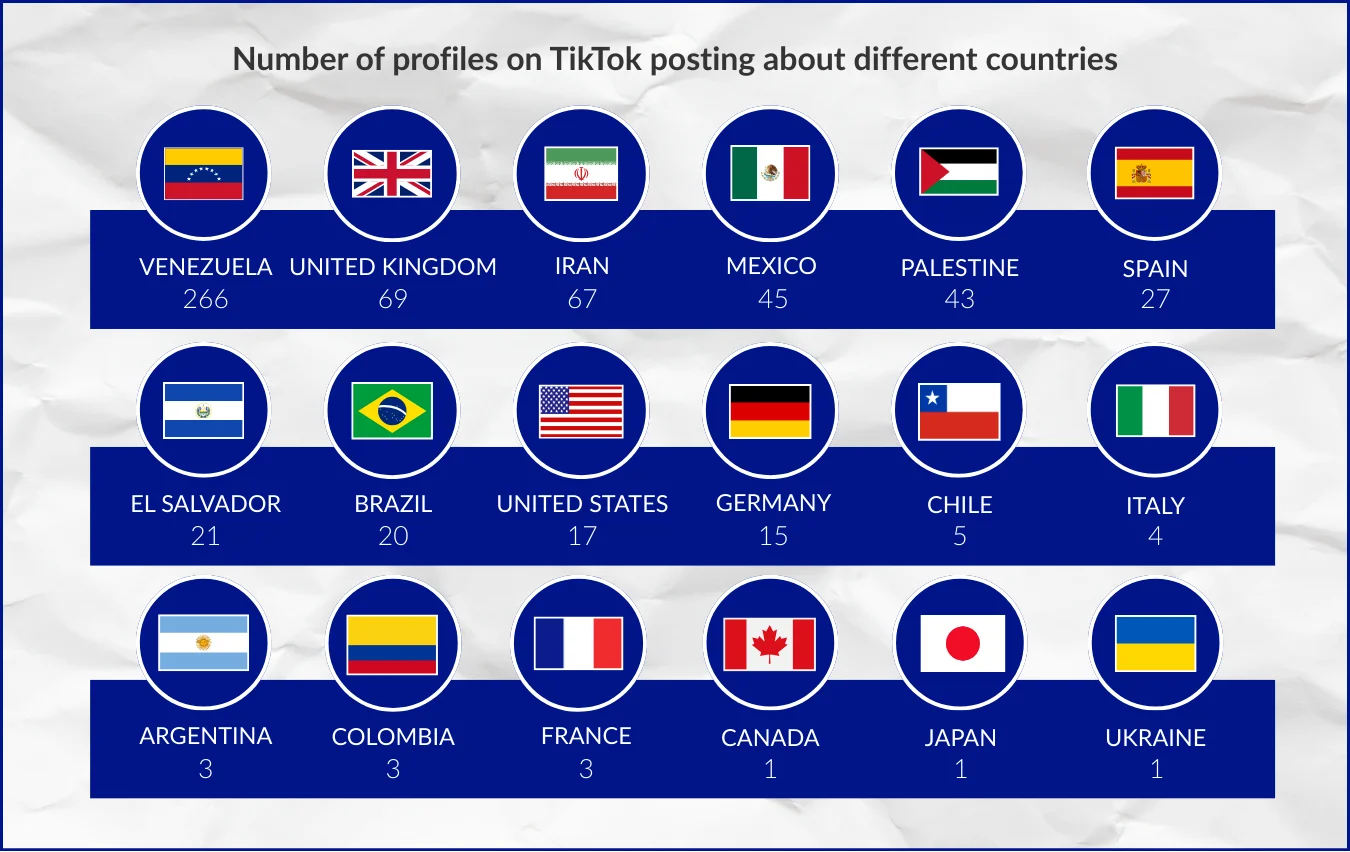
An investigation by Maldita.es has identified 550 TikTok accounts that have posted more than 5,800 of these AI-generated videos. These supposed protests are linked to 18 different countries and have generated more than 89 million views. Maldita.es had previously analyzed ten similar profiles that produced videos in support of Spanish Prime Minister Pedro Sánchez.
After contacting one of the people who manages at least three of these accounts, they confirmed that their goal is to make money and explained in detail how they do so through these videos. The first step is to use AI to generate emotional and polarizing disinformation to “fatten” the account by increasing its number of followers; the second is to join TikTok’s “Creator Rewards Program” so the platform pays them for posting videos like any other influencer, or to sell the account to someone else: the more followers it has, the higher the price.
Their statements appear on a blue background along the article.
Step 1: Growing the account
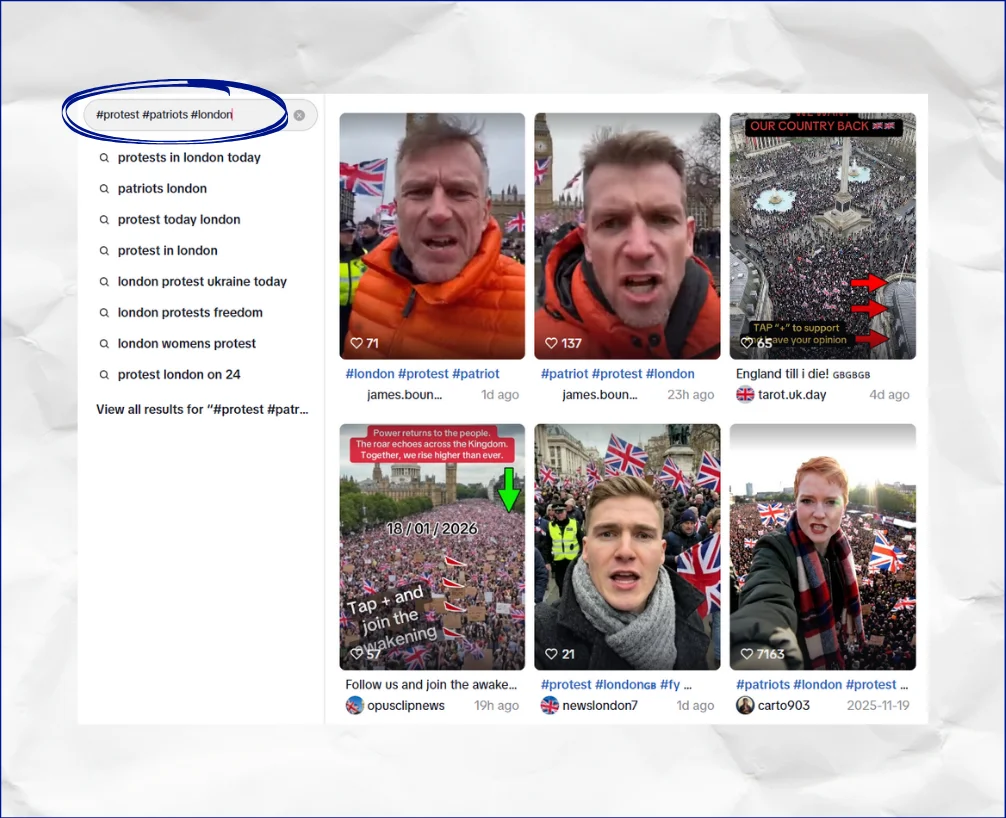
Using generative AI tools such as OpenAI’s Sora or Google Gemini’s Veo, they produce realistic videos of people protesting in different countries: waving flags, speaking angrily or tearfully to the camera, and even calling for protests on specific dates or in support of a particular political candidate.
These videos quickly go viral on TikTok because they support real causes that are part of the current public debate and also carry a strong emotional charge. This is how one of the creators behind several of these accounts explained it:
“We get a sense of trends from the news” “we’ll create march videos and content focusing on that country so that people watch them more”
This gives them a boost from TikTok’s algorithm, which pushes their videos onto the screens of more and more users, sometimes reaching up to four million views. In addition to using current political topics and polarizing content, they also add hashtags and explicit calls for users to comment on and share the video, or to follow the account.
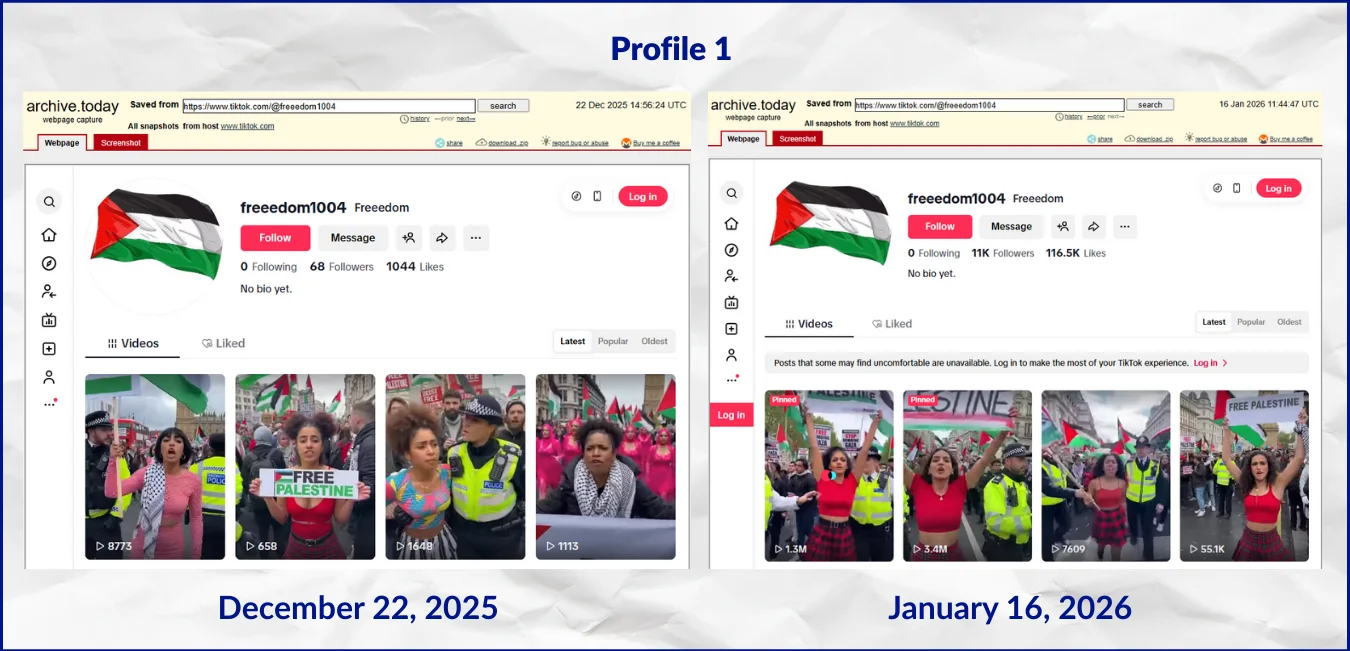
All of this helps the videos spread widely and causes the number of followers to grow very quickly. Here we can see how the same account increases its follower count exponentially after using this strategy for just a few days or weeks.
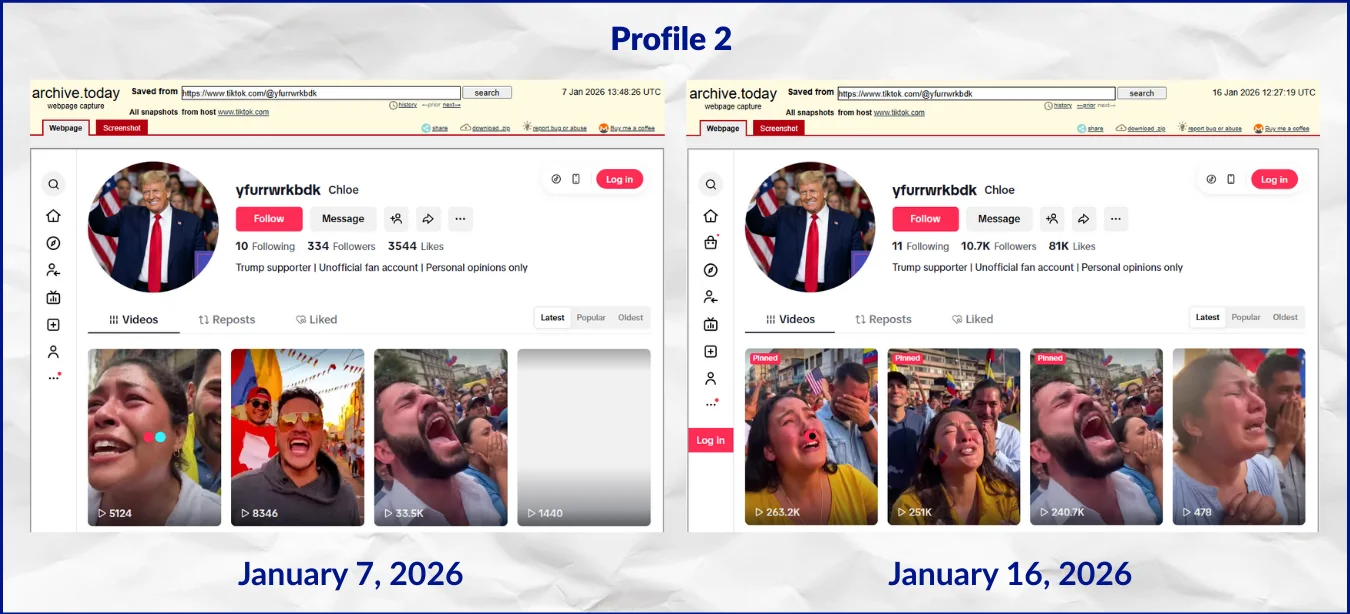
“This helps us gain followers quickly—sometimes we can get 50,000 followers in just three or four days if the trend is strong”
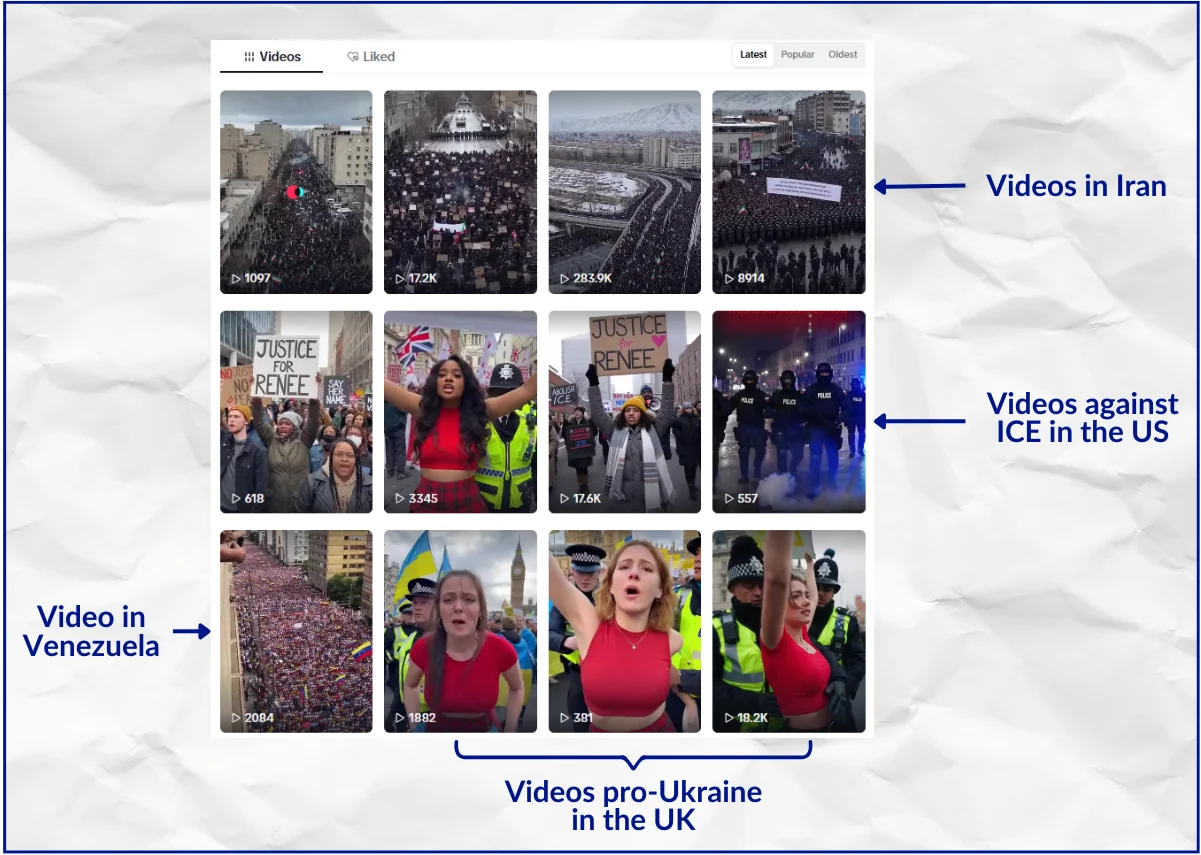
The political cause or ideology is not decisive. They jump between different topics depending on the political news cycle, use messages generic enough to appeal to any part of the political spectrum, or even support opposing candidates on the same account. For example, the account @mikaelitasiltop posted videos just hours apart supporting both candidates competing in Chile’s 2025 presidential election.
Step 2: Reaching 10,000 followers so TikTok pays you for posting videos, or selling the account
Despite dealing with political topics that influence public opinion, the main motivation behind these polarizing videos appears to be money. On the one hand, they aim to surpass 10,000 followers (many accounts explicitly mention this in their bios) in order to access TikTok’s “Creator Rewards Program,” which allows them to earn money directly from the platform.
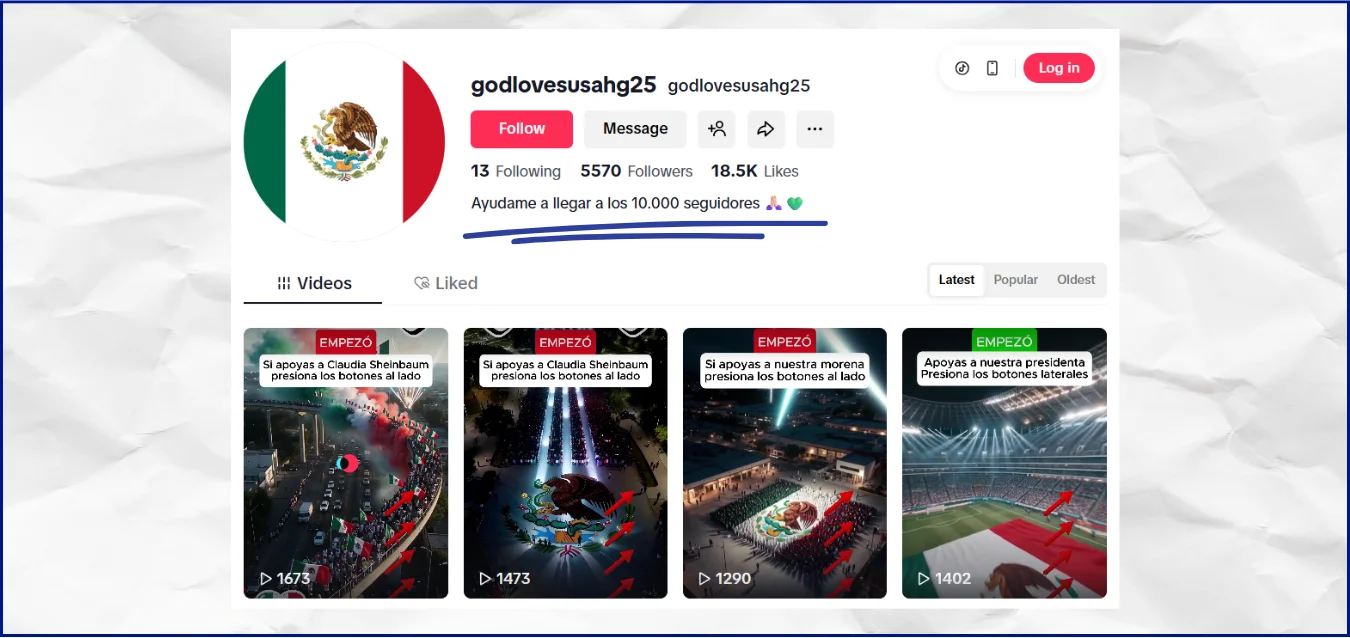
Although the program is only available in the United States, the United Kingdom, Germany, Japan, South Korea, France, Mexico, and Brazil, it is possible to set up accounts in a way that makes TikTok believe the user lives in one of those countries and thus receive payments. This is how our source explained it:
“You'll benefit by reaching your 10,000 followers” “After that, every one-minute video you post will earn you money." "You might get roughly $1,000 to $1,500 a month, depending on how much you work" "But if TikTok monetization isn’t available in your country, you can just set up your TikTok account in the U.S. region and upload there.”
Among the accounts identified by Maldita.es, more than 60 have surpassed this follower threshold, and several have recently begun posting videos (also generated with AI) that are longer than one minute, which is one of TikTok’s requirements for content to be eligible for rewards.
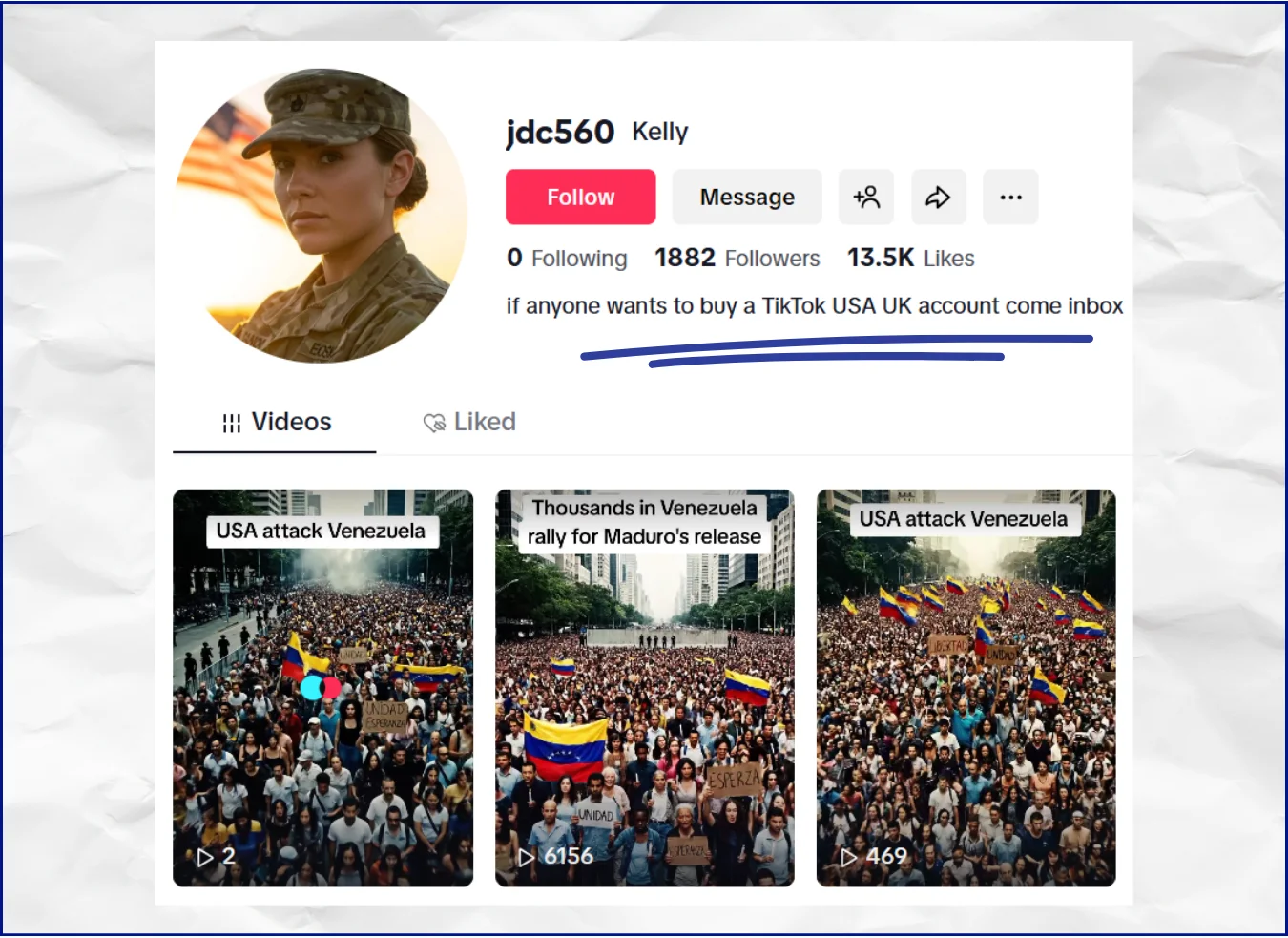
Another, more direct way to make money is by selling the account. Some accounts openly offer this in their bio or when contacted via TikTok direct messages. There are also online services dedicated to buying and selling accounts, where profiles are advertised based on their follower count: the more followers, the higher the price.
A way of making money that can be easily repeated again and again
Among the 550 accounts we detected publishing this type of AI-generated protest videos, we observed many signs of coordination: very similar usernames, identical creation dates, or even the same profile pictures.
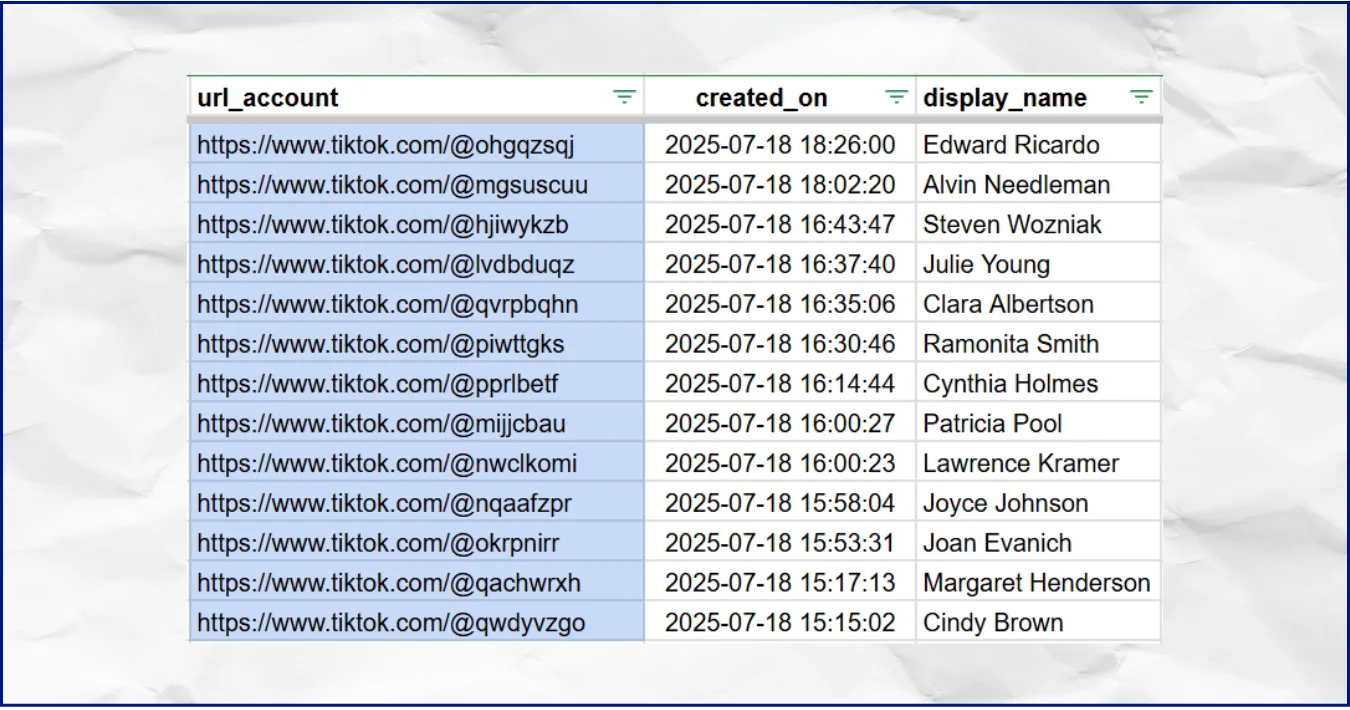
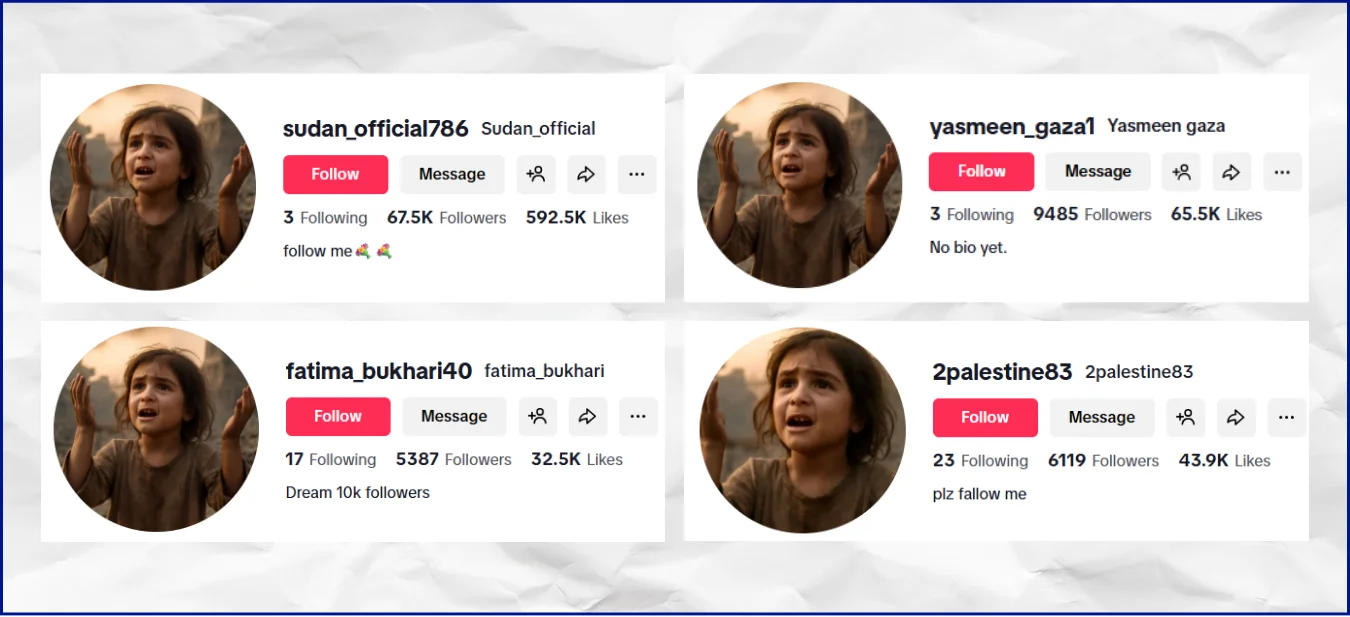
The coordination observed across several groups of the analyzed accounts suggests they are managed by the same person or group of people. Our source, who operates more than three TikTok accounts, explained their method to us:
“Use a temporary mail to create multiple accounts and remember those temporary emails. Then, use the Chrome browser to create the TikTok accounts.”
This way of generating income is not limited to videos about protests. There is a much broader ecosystem of accounts that seek to increase engagement and follower numbers by using AI to generate videos on a wide range of topics, from tarot and health to videos of babies or animals.
“Sora is free and lets you generate about 30 videos per temp mail account. If you hit the limit, just grab another temp mail, log in again, and keep going. You can easily make 500 to 600 videos this way”
The goal remains the same, and accounts like these are offered for sale on platforms such as FameSwap, a website that allows users to buy and sell profiles from different social networks.
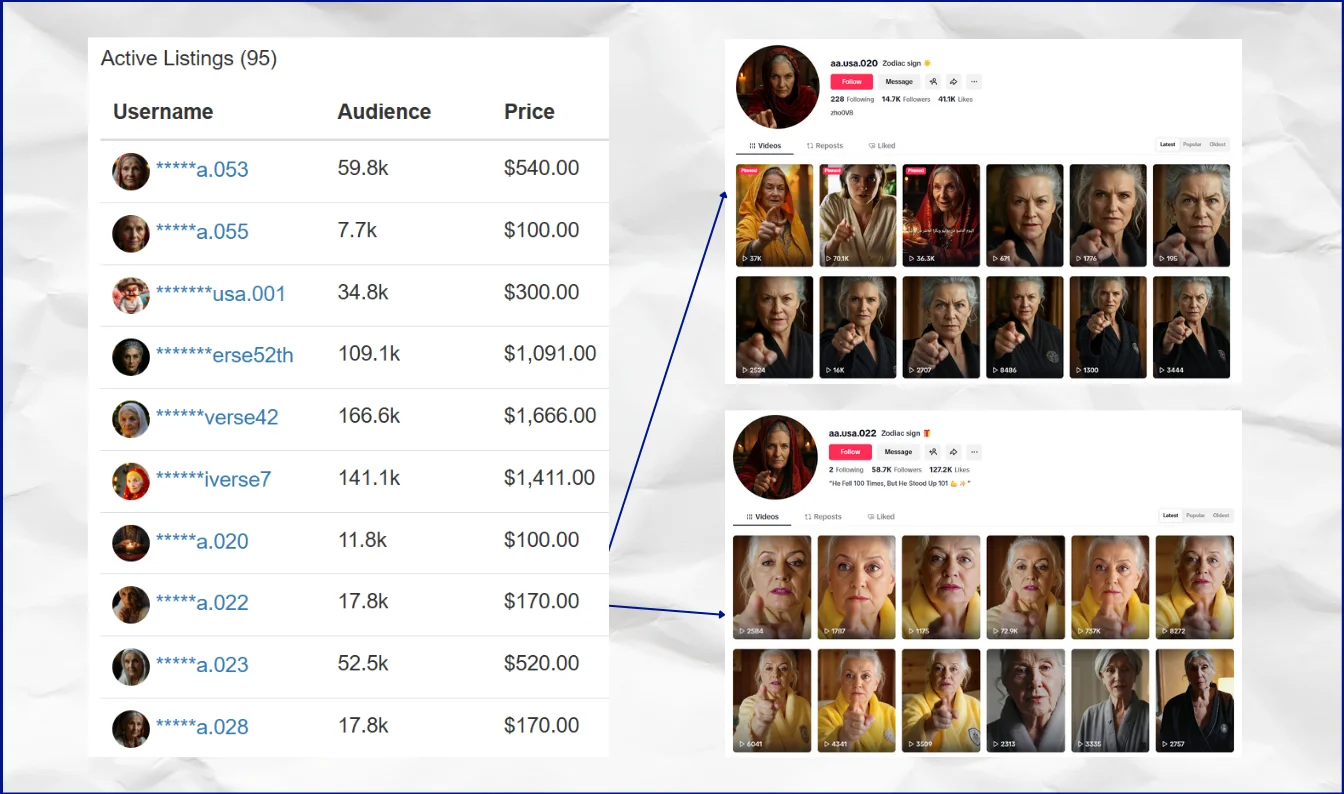
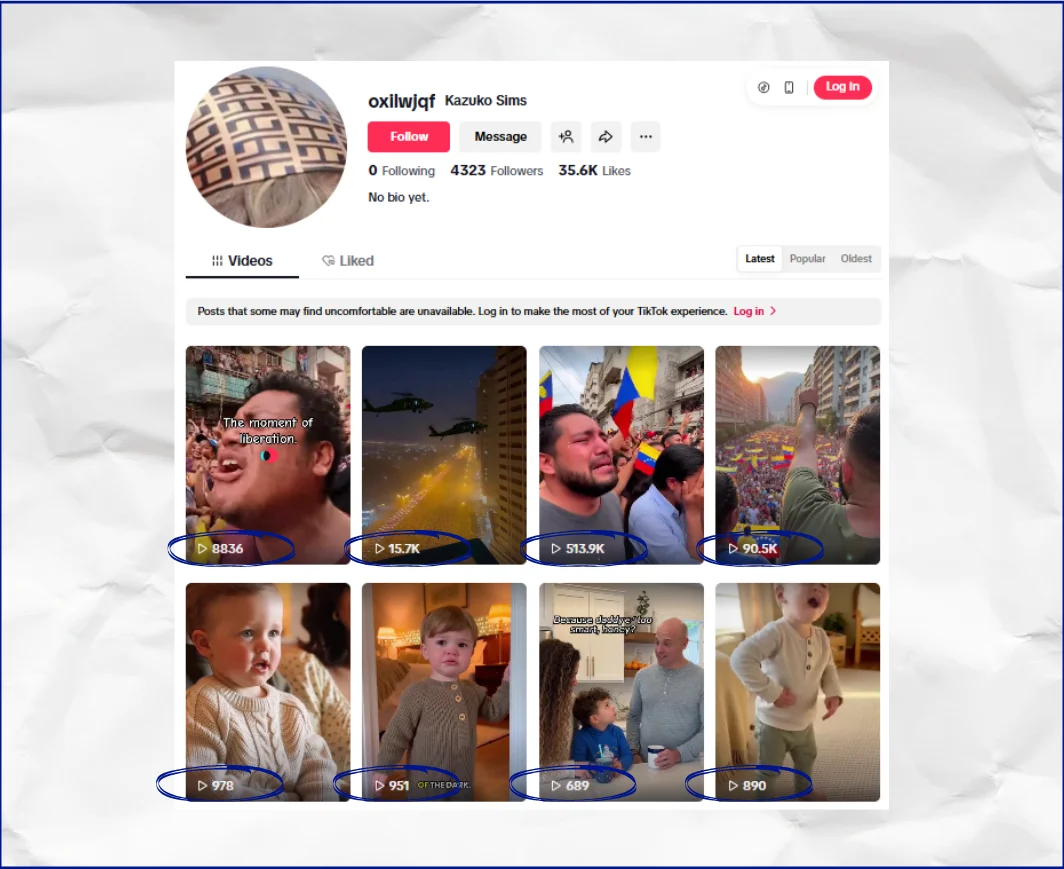
Profiles that post polarizing AI-generated videos often also experiment with other types of content before publishing protest-related videos, or return to these non-political topics when the news cycle shifts. However, exploiting polarization is the most effective way to achieve their goals, as reflected in the view counts of these videos.
The risk of funding disinformation and what the DSA and TikTok’s rules say about it
Although these profiles do not always seem to have an obvious political objective, and in some cases the videos are even labeled as AI‑generated, we have repeatedly seen how they go viral as if they showed real situations, especially when shared by larger (even verified) accounts. They also reach a wider audience when translated into different languages and shared on platforms like Facebook, Instagram, X, or YouTube, where they can accumulate thousands of interactions.
Generating media of current events can change how users perceive these events and divert attention from what is actually happening. TikTok is directly funding this content through its “Creator Rewards Program” and allowing disinformers to grow these kinds of accounts and later profit by selling them.
In addition, accounts that only post videos about a specific cause or political figure can, even unintentionally, segment an audience by political affinity and then sell those accounts to people looking for that type of audience. The threat this poses is clear, especially if an actor wanted to influence elections in a particular country from abroad.
TikTok has policies that should address this problem. For example, its rules ban AI‑generated content that is “misleading about matters of public importance” or that violates its community guidelines on misinformation.
The platform’s policies also prohibit practices common among these accounts that TikTok considers spam‑related, such as “using automation to manage many accounts,” as well as selling “all or part of any of the Services,” such as selling an account. TikTok also states that accounts that violate its rules cannot access its monetization program, restrictions that clearly are not being enforced in this case.
In any case, TikTok must not only enforce its internal policies but also has clear obligations under the European Digital Services Act (DSA). It must have effective measures to prevent its platform from being used to spread content that could have negative effects on “civic discourse and electoral processes.” Allowing accounts to systematically make money by posting false videos about protests goes against this obligation.