

A narrative that has circulated for weeks and affects nearly 30 countries worldwide
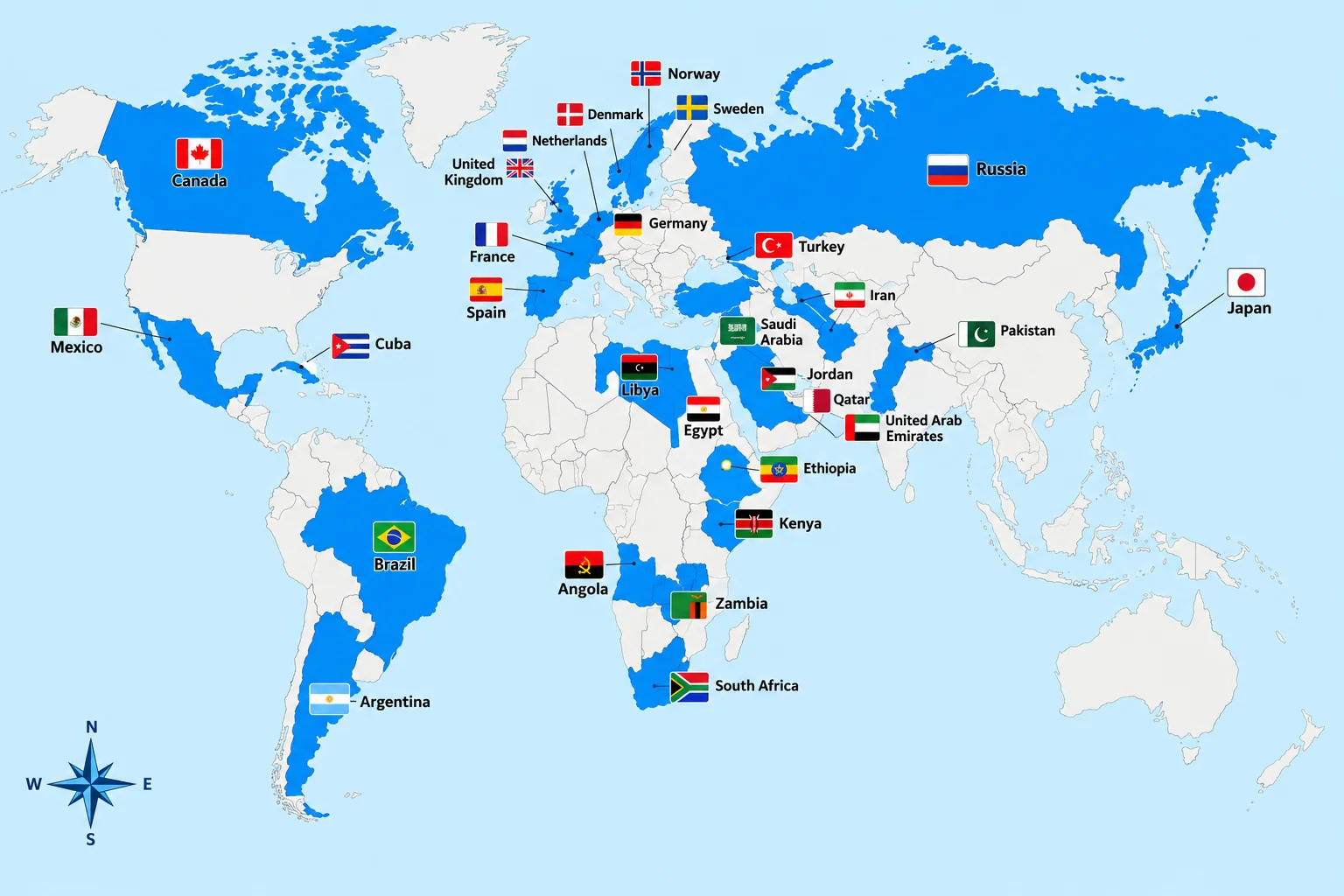
The 55 Facebook and Instagram posts analysed by Maldita.es link the narrative regarding the alleged replacement of the dollar with the yuan for trade with China to 29 countries across the globe. The majority of these are in Europe (eight), followed by Africa and Asia (seven countries on each continent) and the Americas (five). Two transcontinental countries—those with territory spanning two continents—are also mentioned: Russia and Turkey.
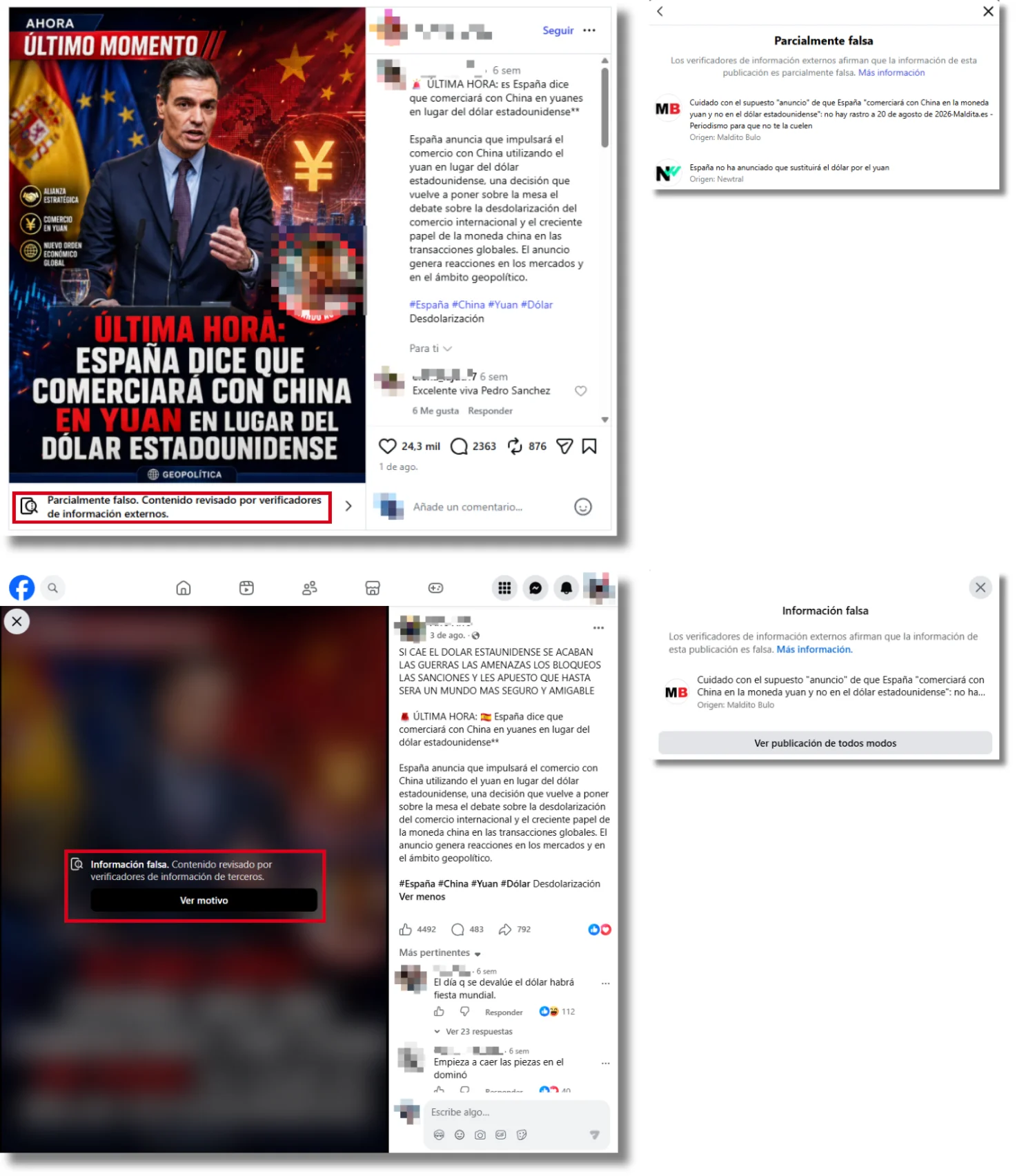
The content analysed was published between July 16 and August 30, 2026 (with 27% appearing during the first two weeks of August), and as of September 18, all items remain available. Although they have not been removed, three of them carry warnings from Meta’s fact-checking program indicating that the material constitutes “false information” or “partly false” content, based on posts by independent fact-checkers certified by the International Fact-Checking Network (IFCN) or the European Fact-Checking Standards Network (EFCSN).
It is being circulated without evidence and has been amplified by accounts posing as media outlets
Several users sharing this content appear to be media outlets. This is evident either from their profile names—using terms like "news," the Spanish equivalent "noticias," or "tv" (short for television)—or from their profile picture designs (mimicking the logos of TV programs or digital media outlets) and bio descriptions, where they claim, for instance, to be a "reference point for international news" or a "source of clear, straightforward information".
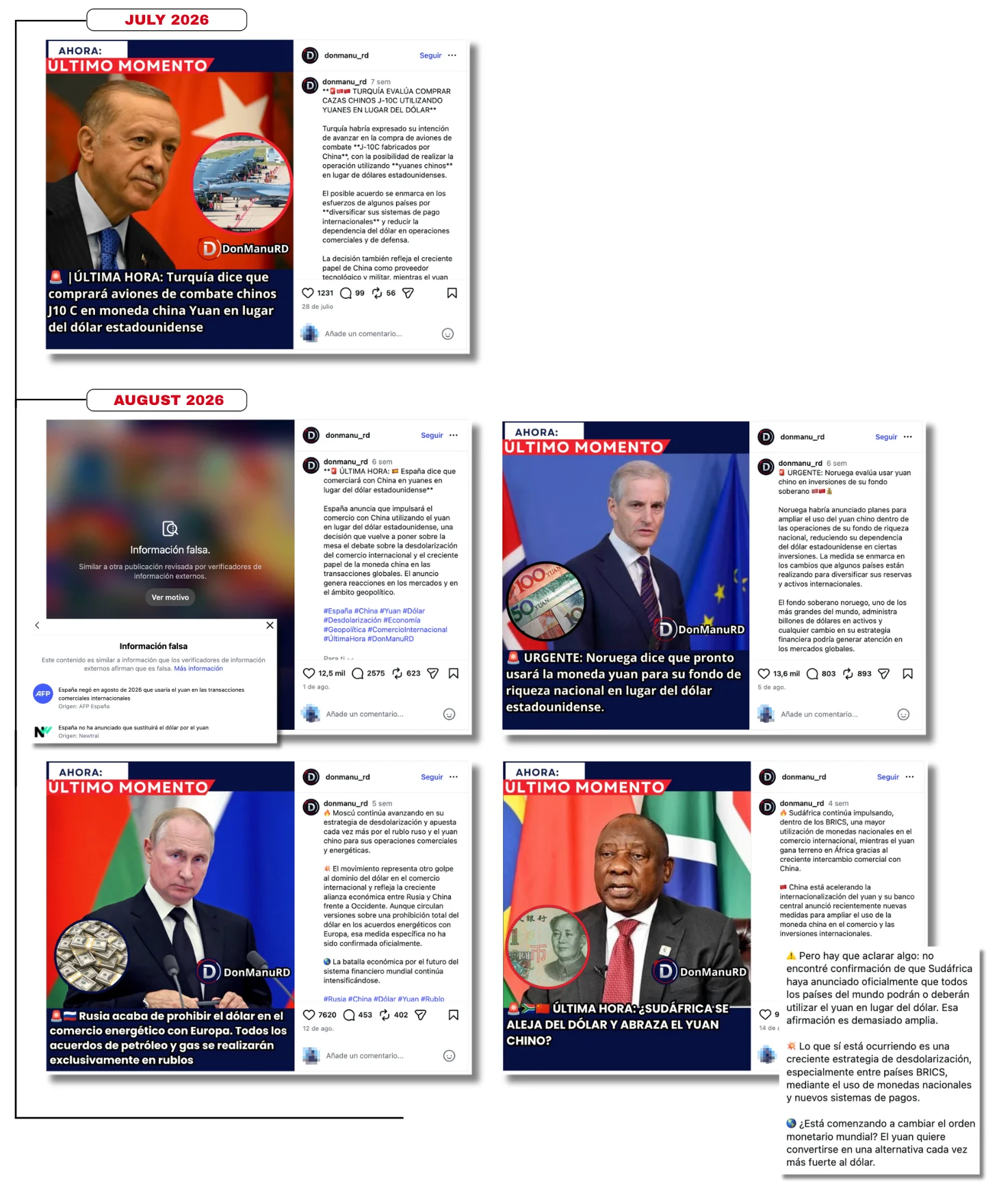
This is how the Instagram user "DonManuRD | Prensa Digital," who has over 35,400 followers, presents themselves. At least five posts reinforcing this narrative in Spanish have been published on this profile. On July 28, they shared an initial post claiming that Turkey would "buy Chinese fighter jets [...] using the Chinese yuan instead of the US dollar"—a claim verified by the Turkish fact-checking organisation Teyit. Subsequently, they disseminated four other similar posts targeting Spain, Norway, Russia, and South Africa. None of the posts provide evidence to support the claims, and the post regarding Spain has been flagged as "false information"—a claim we verified at Maldita.es.
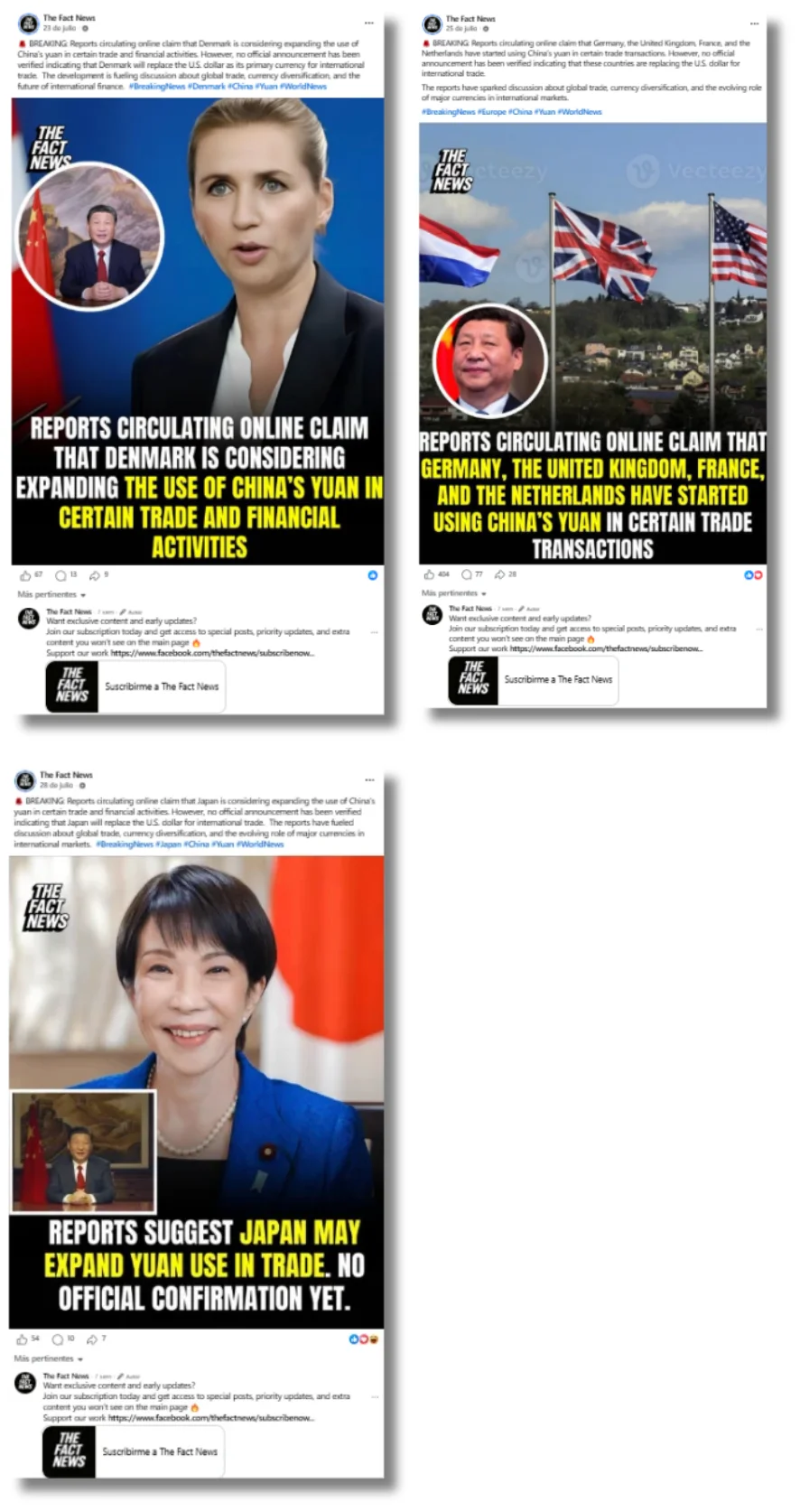
In English, a Facebook user with over 72,000 followers named "The Fact News" has shared at least three posts along these lines. On July 23, this profile—which describes itself as "an independent news website" with "no ties to any government body, official news network, or organization"—published a post stating that "Denmark is reportedly considering expanding the use of the Chinese yuan in certain commercial and financial activities." Two days later, it posted a similar message, but this time mentioning Germany, the United Kingdom, France, and the Netherlands. On the 28th of the same month, there was another post; this time, Japan was the focus.
In none of these instances does the account provide evidence, and in every case, it clarifies that "no official statement" has been confirmed to support what is being published. Furthermore, in the comments section of these posts, it shares a link to sign up for a monthly subscription of €4.99 for access to "special posts, priority updates, and additional content."
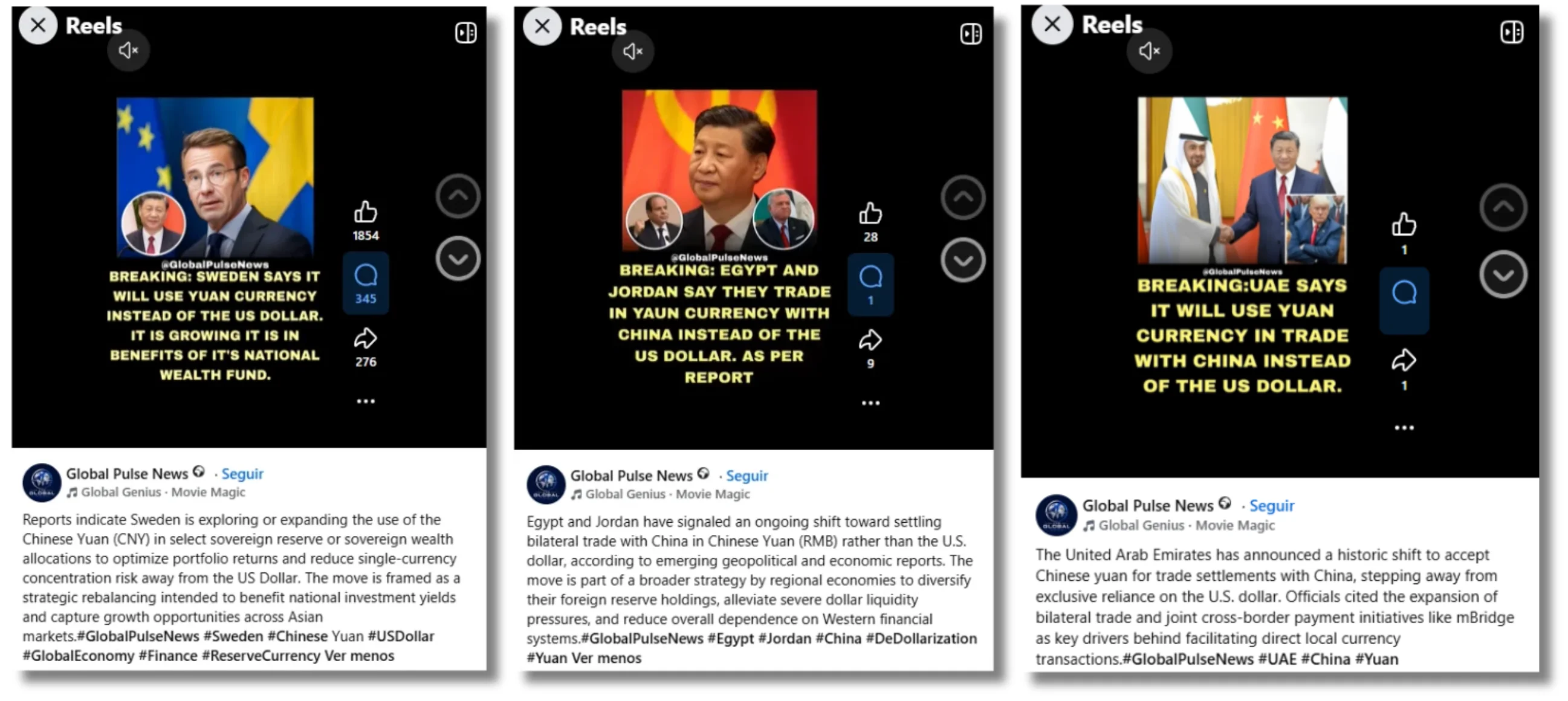
The same thing happens with another user of the same platform called Global Pulse News. This profile, created in July 2026, published three pieces of content in reel format (short vertical videos) in which it spread the same narrative pointing to Sweden, the United Arab Emirates, Egypt and Jordan. In all of them, he assures that these five countries will stop using the dollar in trade agreements with China and will “replace” it with the yuan, but he does not provide any evidence of this.
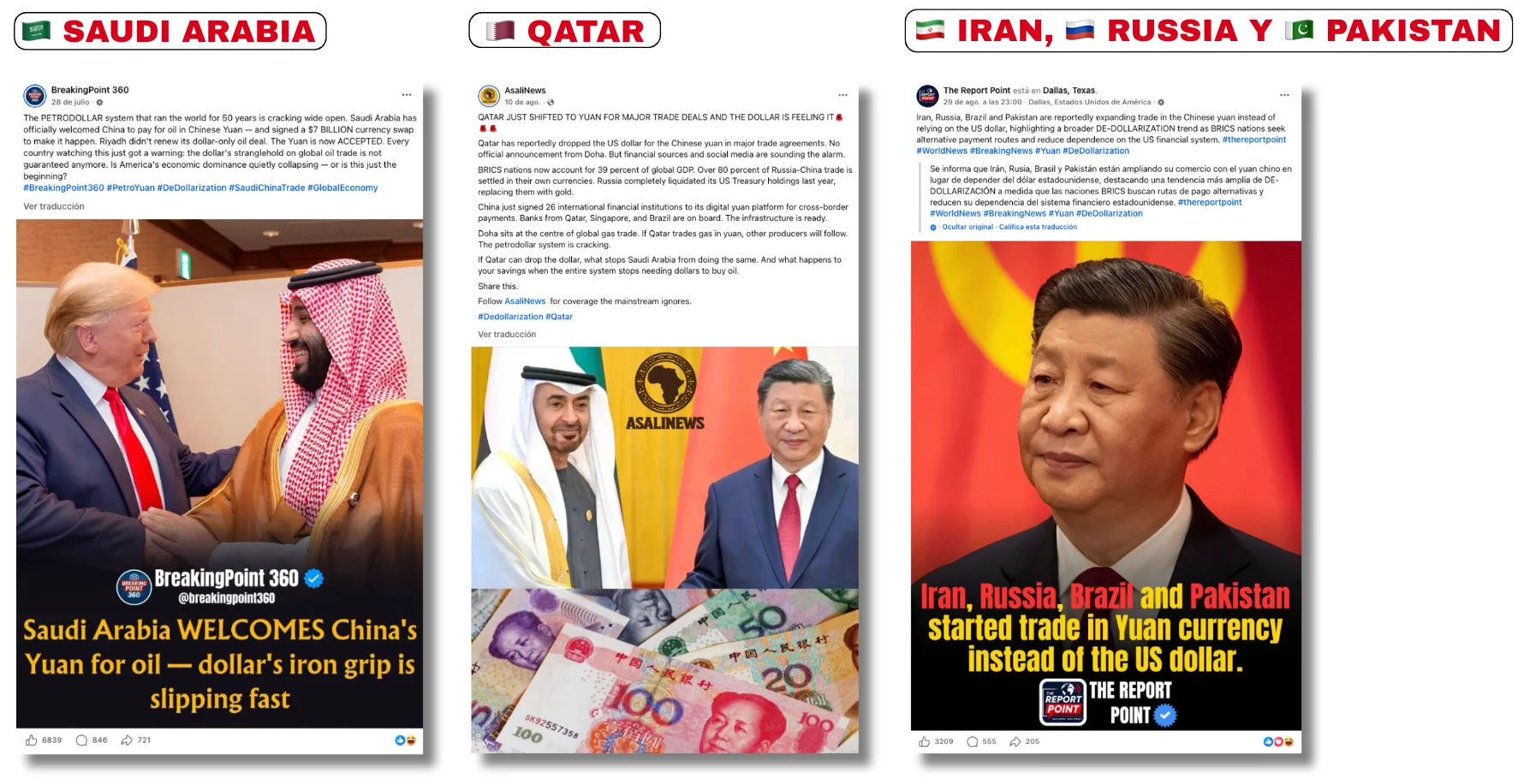
English-language posts from this type of user have also circulated, mentioning Saudi Arabia, Qatar, Iran, Russia, and Pakistan. "Saudi Arabia has officially welcomed China to pay for oil in Chinese yuan," a Facebook user named BreakingPoint 360 wrote on July 28. This profile has around 239,000 followers and describes itself as a "trusted source for real, unbiased, and breaking news." On August 10, AsaliNews (an account on the same platform with 58,000 followers) published a post claiming that Qatar "has replaced the US dollar with the Chinese yuan in major trade agreements." The same text noted that "there is no official statement from Doha."
Shortly thereafter, in late August of the same year, The Report Point (a profile created in December 2025 with 38,000 followers) wrote that Iran, Russia, Brazil, and Pakistan were "expanding their trade using the Chinese yuan instead of relying on the US dollar."
The decision regarding which currency to use in agreements depends on the countries involved; there are agreements with China to use the yuan
Spain’s Ministry of Economy confirmed to AFP—a member of the European Fact-Checking Standards Network (EFCSN), as is Maldita.es—that "there is no directive from any European or national authority" regulating this matter and that the "invoicing currency" depends "entirely" on the "discretion of the parties to each contract, in accordance with their commercial interests."
Certain countries have signed pacts to use the yuan for specific commercial transactions with China. Miguel Otero, a senior analyst at the Elcano Royal Institute and an expert on monetary affairs and the geopolitics of money, explains to Maldita.es that while there may be "agreements between central banks" or measures adopted to "stimulate or improve conditions to facilitate payment" in certain currencies, these are "not uniform decisions" affecting the entire commercial market of the signatory countries. For example, in March 2023, China announced an agreement with Brazil to use the Chinese renminbi and the Brazilian real for trade transactions between the two nations. In April of that same year, Argentina announced that it would pay for Chinese imports in yuan rather than US dollars.
As the Reserve Bank of Australia explains in a report on the internationalization of the yuan published in August 2026, “over the last decade, an increasing proportion of Chinese trade has been settled in yuan.” The rise in trade transactions using this currency between Russia and China—"particularly regarding Russian oil exports—initially drove this increase in 2022," but the document notes that it has likely since expanded "to a broader scope." It further states that "more recently, Chinese authorities have also signed a series of bilateral agreements to encourage the settlement of trade transactions in RMB or the trading partner's national currency, including agreements with Russia, Argentina, and Brazil."
Furthermore, "several foreign governments have also issued sovereign bonds (loans to the state: the investor buys the bond and lends the money to the state) denominated in yuan, including Indonesia, Russia, Hungary, Portugal, and Slovenia," the Reserve Bank of Australia notes in the same document.
In August 2026, the yuan—or renminbi—was the fifth most widely used currency for international payments, according to the Global Currency Tracker from the Society for Worldwide Interbank Financial Telecommunication (SWIFT). It currently accounts for 3.2% of the total (compared to 52% for the dollar and 21.3% for the euro). In September 2024, the yuan ranked as the fourth most used currency, at 4.7%; this was a result of Western sanctions imposed on Russia following its invasion of Ukraine. As Miguel Otero, a researcher at the Elcano Institute, explains, China uses the trading partner's local currency for only about 25% of its trade activity, while "the rest is conducted primarily in dollars."