
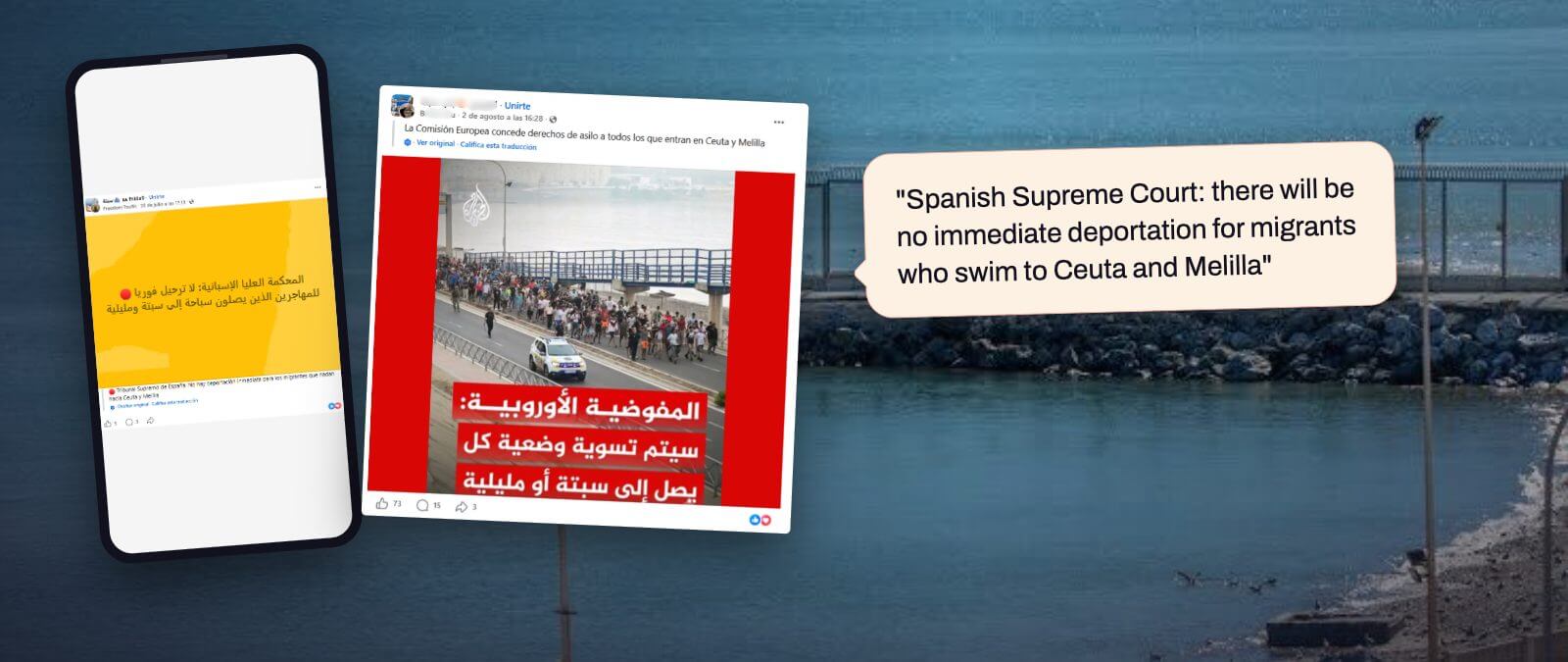
Asylum is not being granted to everyone who crossed irregularly, nor is that decision up to the European Commission
According to what Fernando Grande-Marlaska stated at a press conference on August 4, 2026, 70,000 of the 72,000 migrants who crossed irregularly into Ceuta during the last weeks of July have already returned to Morocco, without being granted asylum and without any evidence supporting the claim that people who are "skilled" in certain areas are being given shelter, as appears in one of the Facebook groups discussing entering Ceuta, specifically in a message posted on July 30, the day of the largest crossing.
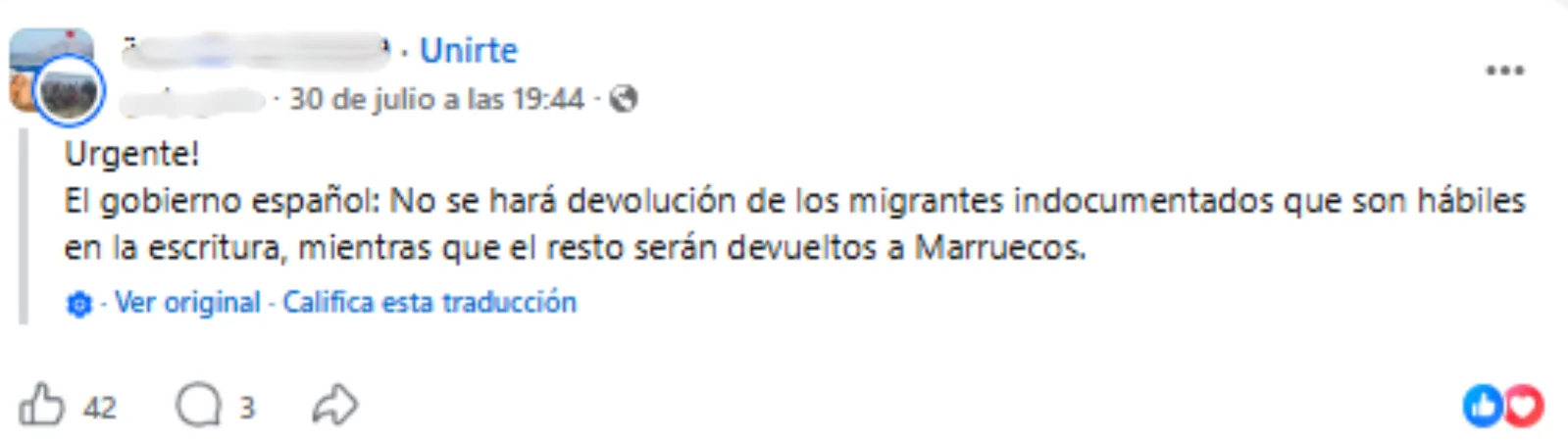
Message posted on Facebook on July 30, 2026
The Immigration Law, for the specific case of crossings into Ceuta and Melilla, establishes that applications for international protection must be formalized "at the places designated for that purpose" at border crossings. However, if this crossing occurs irregularly "through a place not designated for that purpose," taking advantage of "a large number of people" and using "force," states may reject the entry of these people even if there are potential asylum beneficiaries among them, as reflected in the case law of the European Court of Human Rights [starting on page 190].
Contrary to what is circulating, the European Commission does not decide who is or is not granted asylum. This decision depends on national authorities, in this case Spain, whose criteria for granting international protection are set out in Law 12/2009 regulating the right to asylum and subsidiary protection.
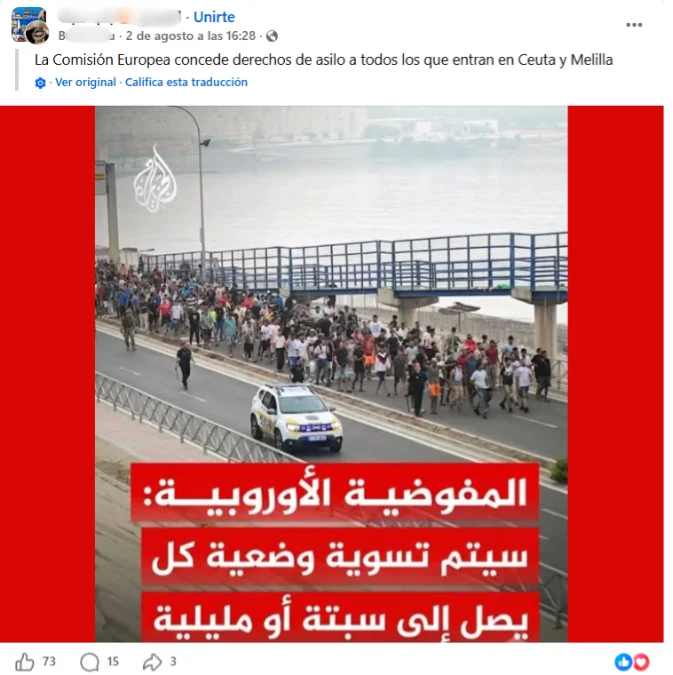
Content published on Facebook on August 2, 2026
In the specific case of Moroccan nationals, the latest asylum figures broken down by country of origin, corresponding to 2024, show that of 4,252 applications, 3,070 were rejected, representing 72% of the total.
The Supreme Court ruling does not authorize migrants who cross irregularly to remain in Spain or Europe
The ruling issued by the Supreme Court on June 29, 2026, regarding the "hot returns" (summary expulsions) of migrants who swim across the border to enter Ceuta or Melilla, does not mean that they are allowed to stay in Spain or Europe, despite what is claimed in some messages posted on Facebook the day before the crossing of thousands of people into Ceuta, which took place on July 30, and also in subsequent days. The Ministry of Foreign Affairs has explained, through a press release, that this ruling indicates what procedure must be followed when these people are intercepted, but "does not open any route of entry" nor does it "prevent return."
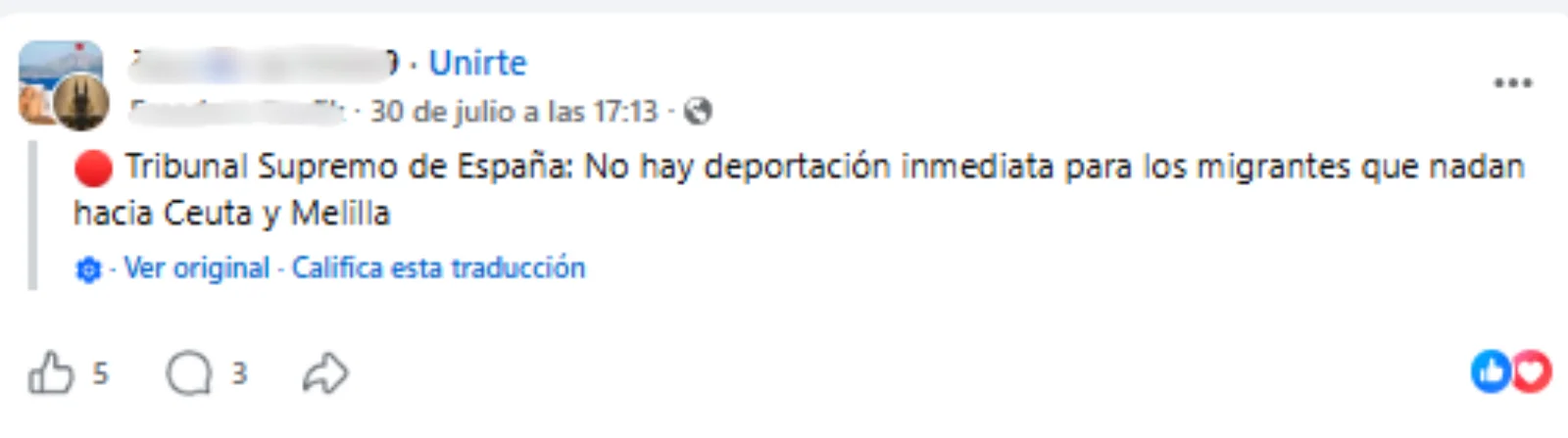
Message posted on Facebook on July 30, 2026
The ruling, based on two other Constitutional Court decisions, establishes that, since the Immigration Law, for the specific case of Ceuta and Melilla, refers to irregular border crossings "overcoming containment elements," such as fences, this provision cannot be applied to those who enter by swimming, since they do not overcome any physical barrier. Thus, "hot returns" cannot be applied to these people. Instead, they must be subjected to a return process, which must be carried out within 72 hours or, otherwise, they must be temporarily detained.
To adapt the situation at the border to this ruling, the Civil Guard has already deployed a "500-meter pneumatic containment barrier at the Tarajal breakwater" and "containment buoys to make access to the beach more difficult," as the Ministry of the Interior told Maldita.es. They also state that these have been fully operational since August 2. Since this is a physical element, as the ruling required, immediate returns are now permitted for migrants intercepted while trying to cross the Ceuta or Melilla border by swimming.
Facebook groups used to spread disinformation and organize new border crossings
The spread of this disinformation is not an isolated phenomenon; it moves through at least ten Facebook groups, which published it both before and after thousands of people entered through Ceuta on the night of July 30, 2026.

"Is the door still open or not?" Message posted on Facebook on July 30, 2026
This content is mixed in with other posts organizing "jumps" and new crossings, testimonies from people who supposedly already crossed into Spanish territory, and discussions about transport logistics and routes. Some users invite others to continue conversations in private channels out of fear of infiltration, especially after the crossing of thousands of people on July 30.
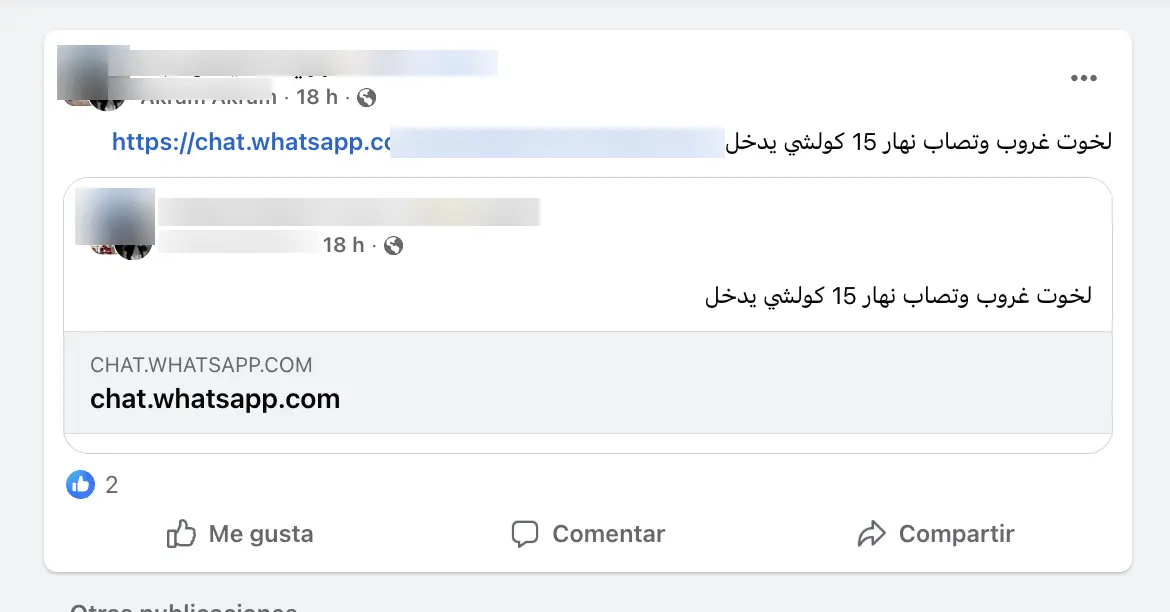
The link to join a Facebook group is shared with the message "Brothers, at dusk and dawn on the 15th everyone goes in." Source: Facebook.
The identification of these messages has not only taken place on Facebook; Maldita.es has also identified similar content in WhatsApp groups and Instagram posts. You can read more about this here.